In the Beginning (2025)
Directed by Ala Nunu
No · Based
How we score movies →Consciousness Markers
Environmental consciousness emerges through the juxtaposition of space exploration and animal cruelty, suggesting a critique of instrumental rationality and human domination of nature. However, this remains implicit rather than explicit.
The hamster cull sequence and the space probe narrative gesture toward critiques of commodification and instrumental rationality, but the film's absurdist tone prevents a stronger ideological commitment.
The film maintains aesthetic distance from explicit messaging and avoids preachiness, though its juxtaposition of images carries subtle argumentative weight. Relatively restrained compared to more overtly pedagogical work.
The film engages with true historical events but primarily as raw material for philosophical abstraction rather than historical reinterpretation.
An animated short with no voice cast or named characters. Representation casting is not applicable to this work.
No LGBTQ+ themes or representation evident in the film's surrealist narrative or thematic content.
No feminist agenda or gender-related themes present in this philosophical meditation on human narratives and meaning-making.
No racial or ethnic themes present. The film operates at a more abstract level of philosophical inquiry.
No body positivity themes or discussions of bodily autonomy and representation in this abstract animated work.
No representation or thematic engagement with neurodiversity in the film's philosophical framework.
Synopsis
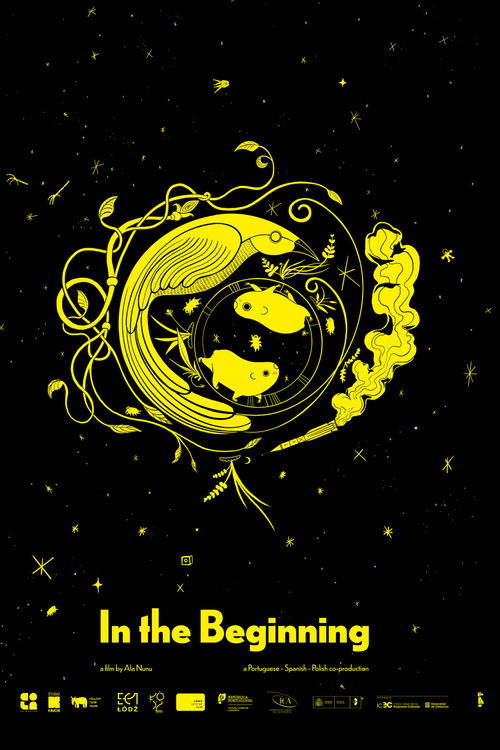
A spaceprobe called Beresheet, legless birds of paradise, hamster cull and humanity trying to make the world make sense.
Why it received this score
Ala Nunu's "In the Beginning" presents itself as a philosophical meditation on humanity's compulsive need to construct narratives, particularly around animals and natural phenomena. The film interweaves three ostensibly true stories: the Beresheet space probe's ill-fated lunar mission, the culling of hamsters in laboratories, and the peculiar existence of legless birds of paradise. Through surrealist animation and deadpan juxtaposition, Nunu suggests that these disparate phenomena reveal something about our species' pathological relationship with meaning-making itself.
The film's environmental consciousness emerges less from explicit moralizing than from its structural choices. By pairing the space probe, humanity reaching outward, with the hamster cull, humanity reaching downward into cruelty, the work constructs an implicit critique of instrumental rationality. There is something here about the subordination of other creatures to human purposes, though the film maintains enough aesthetic distance to avoid the more preachy registers of modern progressive filmmaking. This is not a work that lectures; it merely arranges troubling juxtapositions and allows them to breathe.
What prevents a higher score is the film's fundamental commitment to absurdism rather than to any coherent social argument. Its anti-capitalist and environmental elements feel more like aesthetic gestures than genuine ideological positions. The film traffics in the kind of philosophical irony that can accommodate progressive sensibilities without committing to them. Whether this constitutes genuine cultural awareness or merely its performative simulation remains productively unclear, which is perhaps the point entirely.
Analysis generated by our Consciousness Algorithm