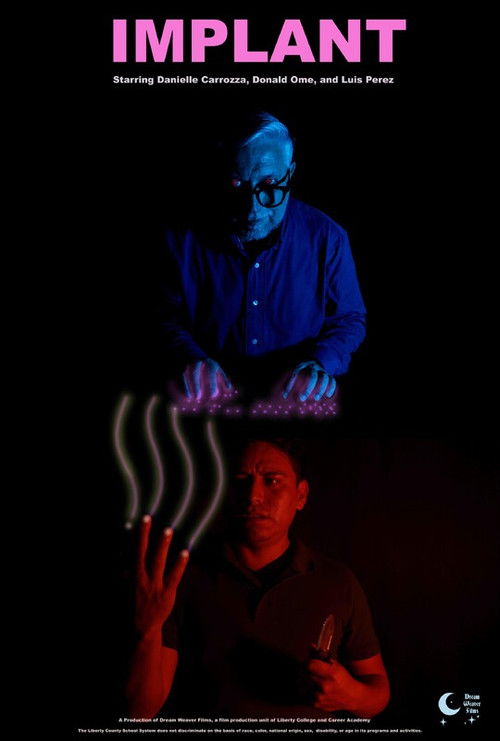
Implant (2026)
Directed by Jaden Williams
No · Based
How we score movies →Consciousness Markers
The central plot involves neurosurgical implants and forced neural control, which engages with the autonomy of neurodivergent or neurologically vulnerable individuals. The victims' loss of agency has particular resonance with neurodiversity discourse, though not treated with explicit awareness.
The cast includes a diverse group of actors, though the small ensemble and indie production context mean representation appears incidental rather than programmatic. Danielle Carrozza and the other cast members are integrated into the narrative without explicit commentary on identity.
The film's concern with bodily autonomy and violation touches on themes relevant to feminist discourse, particularly around consent and power, but these emerge organically from the thriller premise rather than through explicit feminist positioning.
The abusive neurosurgeon could be read as embodying a capitalist disregard for human welfare in pursuit of scientific breakthrough and professional advancement, but this critique is implicit rather than explicit.
The film appears to trust its premise to convey ethical concerns without preachy explanation. The modest indie production context suggests restraint rather than sermonizing, though the thriller's emphasis on stopping the experiment carries some moral clarity.
No evidence of LGBTQ+ themes or representation in the available plot information or reviews. The narrative focuses on medical ethics and abuse of power without engaging queer subject matter.
No evidence of racial consciousness or commentary in the film's premise or available critical discourse. The narrative does not appear to engage with race as a thematic element.
No indication of climate-related themes or environmental consciousness in this medical thriller. The film's concerns are entirely focused on personal bodily autonomy and institutional abuse.
The film's engagement with bodily autonomy concerns medical violation and control rather than body positivity messaging. No evidence of body diversity or body acceptance themes.
This is a contemporary science fiction work with no historical setting or revisionist ambitions. No reinterpretation of past events is evident.
Synopsis
An ambitious neurosurgeon creates a brain implant that lets him control patients, but his breakthrough turns abusive. As one victim unravels under forced commands, a colleague races to stop the experiment before it becomes deadly.
Why it received this score
Implant operates in the familiar register of science fiction cautionary tales, though it approaches its subject matter with a particularity of focus that distinguishes it from more generic dystopian fare. The film's central concern with bodily autonomy and the abuse of medical authority does align with contemporary discourse surrounding consent and institutional power, yet these themes emerge from the narrative itself rather than through any explicit ideological positioning. The story of a neurosurgeon weaponizing control over his patients is fundamentally about predatory behavior and the violation of the vulnerable, concerns that resonate across multiple interpretive frameworks, not least the modern emphasis on bodily consent and the accountability of authority figures.
What makes this work noteworthy is its refusal to soft-pedal the horror of its premise. There is no redemption arc for the abuser, no therapy-speak reconciliation. The colleague's race to stop the experiment suggests a more traditional thriller structure, yet the film seems less interested in heroic intervention than in documenting the mechanics of harm. This clinical approach, combined with the modest indie production values visible in the cast and festival circuit positioning, suggests a work more concerned with ethical clarity than with spectacle or reassurance.
The film's engagement with questions of bodily autonomy and medical ethics does engage contemporary sensibilities around consent and power, though without the explicit social justice framing that would push it into more overtly progressive territory. It is a film about abuse, not about systems of oppression, which is a meaningful distinction. The restraint here, the unwillingness to melodramatize or politicize beyond the immediate moral horror of the scenario, keeps the work in a more classical ethical register.
Analysis generated by our Consciousness Algorithm