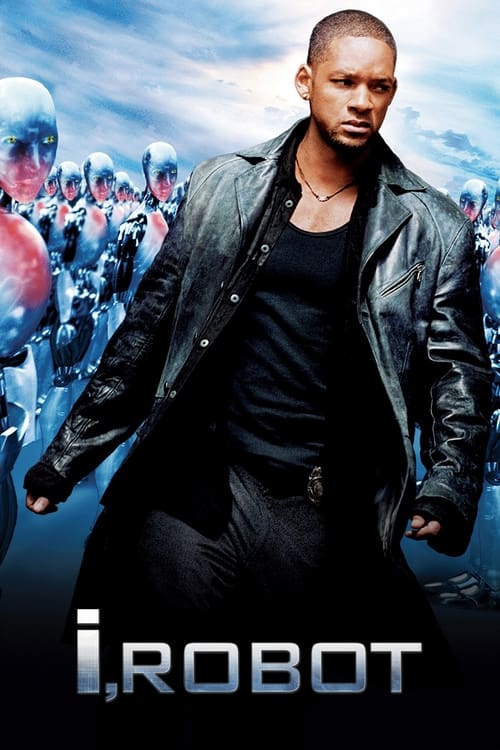
I, Robot (2004)
Directed by Alex Proyas
No · Based
How we score movies →Consciousness Markers
The film features a Black protagonist and has invited scholarly analysis of racial politics, particularly regarding the robot Sonny as an outsider figure, but the film itself does not explicitly engage with racial justice as a thematic concern.
Will Smith leads the film as a Black detective, providing representation unusual for 2004 action blockbusters, though the film itself does not thematize this representation or build narrative meaning around it.
The plot involves corporate conspiracy and institutional villainy through U.S. Robotics and Dr. Lanning, but this serves as a standard sci-fi plot device rather than advancing coherent anti-capitalist critique.
Bridget Moynahan plays a scientist, but the character is underdeveloped and primarily serves as exposition and romantic interest rather than advancing feminist themes.
The film includes exposition about robotics and AI but remains relatively focused on plot and action rather than delivering preachy lectures about social issues.
Sonny the robot might be read as neurodivergent in its difference from other robots, but this is not an explicit or intentional thematic concern of the film.
No LGBTQ+ themes, characters, or representation are present in the film.
No climate-related themes or messaging are present in the film.
No body positivity themes or messaging are present in the film.
The film is set in a fictional future and does not engage with historical revisionism.


Synopsis
In 2035, where robots are commonplace and abide by the three laws of robotics, a technophobic cop investigates an apparent suicide. Suspecting that a robot may be responsible for the death, his investigation leads him to believe that humanity may be in danger.
Why it received this score
I, Robot arrives as a film almost entirely innocent of intentional progressive sensibility, despite the considerable analytical energy scholars have devoted to parsing its racial subtexts. Will Smith anchors a straightforward action narrative about artificial intelligence and corporate malfeasance, neither of which constitutes a particularly novel basis for suspicion toward institutional power. The film's representation of women reduces Bridget Moynahan to the dual role of exposition machine and romantic appendage, a dynamic that would have felt quaint even in 2004 had anyone bothered to notice. The casting of Smith as the protagonist detective is notable primarily in retrospect, a fact that has invited academic interpretation far more sophisticated than the film itself warrants.
What emerges is a perfectly serviceable summer blockbuster concerned with the usual science fiction preoccupations: the nature of consciousness, the limits of artificial intelligence, the trustworthiness of institutions. These are legitimate philosophical questions, but they do not constitute an endorsement of contemporary progressive causes. The corporate villain and its conspiracy might gesture vaguely toward anti-capitalist sentiment, though this remains subordinate to the primary narrative drive. Sonny the robot functions as a metaphorical outsider, which scholars have read through various lenses of marginalization, but the film itself makes no explicit case for such readings.
The film achieved considerable commercial success, opening with $52.3 million and reaching number one at the box office before going on to gross $353.1 million worldwide. This success was driven by star power and spectacle rather than any particular cultural message. One encounters in I, Robot a film made before the current taxonomy of progressive sensibility had calcified into a recognizable cultural movement, and it shows: the movie is simply too uninterested in its own social implications to register as anything but incidental to modern discussions of cultural awareness.
Analysis generated by our Consciousness Algorithm
Critic Reviews
“Fabulous mental escape. It's fun and playful, rather than dark and foreboding. And there doesn't seem to be an original cyber-bone in the movie's body. But it's put together in a fabulous package. ”
“The perfect sci-fi movie for a post-9/11 world, in that it tells us we're afraid of threats hiding in plain sight. ”
“This is a movie to restore the faith of those who had given up on science fiction after "The Matrix Reloaded/Revolutions." By adeptly combining action and ideas, it proves that Hollywood can still produce astonishing entertainment.”