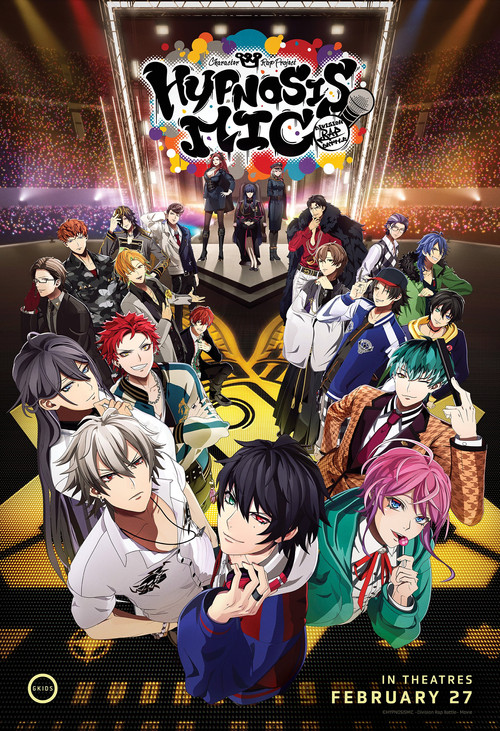
HYPNOSISMIC -Division Rap Battle- Interactive Movie (2025)
Directed by Takanori Tsujimoto
No · Ultra Based
How we score movies →Consciousness Markers
Character roster includes regional Japanese teams, but diversity appears to serve franchise world-building rather than deliberate representation. No evidence of casting as a social statement.
Regional Japanese teams exist, but this reflects geographic franchise structure rather than explicit racial or ethnic consciousness in a modern social justice sense.
The pacifist undertone of replacing violence with speech contains minimal preachy messaging. The film prioritizes entertainment and spectacle over instruction.
No detectable LGBTQ+ themes, representation, or narrative engagement in the available material about this film.
No feminist agenda or gender-conscious storytelling evident in the premise or promotional materials. The film centers on competitive rap battles without gendered social commentary.
No climate-related themes or environmental messaging present in this music-focused entertainment film.
The film operates within a competitive tournament framework without apparent critique of capitalism or wealth structures. It is itself a commercial entertainment product.
Body positivity messaging is not a discernible element of this rap battle competition film.
No representation or engagement with neurodivergent experiences or characters evident in available information about the film.
This is a contemporary fantasy/speculative fiction work set in an alternate present, not a historical film engaging in revisionism.
Synopsis
In the third year of the H. Era, KOTONOHATOH hosts the Final Division Rap Battle, where rap groups Buster Bros!!!, MAD TRIGGER CREW, Fling Posse, Matenro, DOTSUITARE-HOMPO, and Bad Ass Temple from Ikebukuro, Yokohama, Shibuya, Shinjuku, Osaka, and Nagoya divisions compete to prove their strength. In a world where words have replaced weapons, the ultimate rap battle that will decide the future of the nation is about to begin.
Why it received this score
This interactive anime spectacle represents a genuine innovation in theatrical delivery, allowing audiences to collectively determine narrative outcomes through smartphone voting. The premise itself, substituting rap battles for armed conflict, operates as pure speculative fiction rather than social commentary. The film exists primarily as a music-driven entertainment product tied to an established multimedia franchise, with its primary distinction being technological rather than thematic.
The world-building presents regional Japanese teams competing in a nationalized tournament structure, but this geographic diversity serves the entertainment format rather than functioning as meaningful representation or cultural consciousness. The film's engagement with social themes remains incidental to its core mission of providing a novel audience experience. There is no evident commitment to progressive sensibilities, nor should we expect one from what is essentially a genre exercise designed to showcase interactive cinema technology.
The most generous interpretation might identify the replacement of violence with competitive speech as containing vaguely pacifist undertones, though this reads as tonal rather than ideological. We are observing a franchise entertainment vehicle that has prioritized formal innovation over cultural statement. The interactive voting mechanism, while democratizing in structure, does not constitute progressive social consciousness. This is entertainment engineered to be participatory, nothing more.
Analysis generated by our Consciousness Algorithm
Critic Reviews
“The movie was fun, musically catchy, comical, and animated beautifully.”