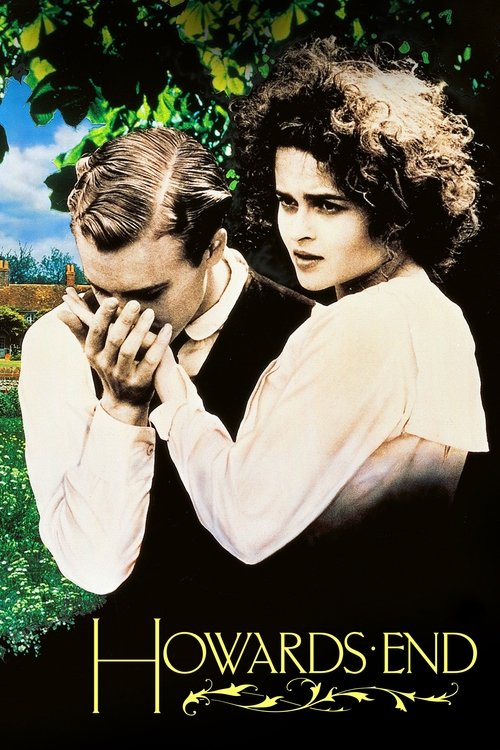
Howards End (1992)
Directed by James Ivory
No · Based
How we score movies →Consciousness Markers
The film critiques wealthy industrialist Henry Wilcox's materialism and sympathizes with Leonard Bast's downward mobility, but this is literary class critique from 1910, not modern anti-capitalist messaging.
Margaret Schlegel is portrayed as educated and independent-minded, but this reflects the novel's 1910 perspective rather than modern feminist consciousness or activism.
The film contains some expository dialogue about class and values, but this emerges naturally from character interaction and literary adaptation rather than modern preachy messaging.
The film features primarily white British actors in roles reflecting the historical Edwardian period and source material. No deliberate contemporary representation casting is evident.
No LGBTQ+ themes, characters, or representation present in the film.
The film is set in an entirely white British milieu with no engagement with racial themes or consciousness.
No environmental themes or climate consciousness present in the film.
No engagement with body positivity, body image, or related themes.
No representation or discussion of neurodivergence.
The film adapts a classic novel set in its historical period without attempting to rewrite history or challenge narratives in a modern progressive sense.


Synopsis
A saga of class relations and changing times in an Edwardian England on the brink of modernity, the film centers on liberal Margaret Schlegel, who, along with her sister Helen, becomes involved with two couples: wealthy, conservative industrialist Henry Wilcox and his wife Ruth, and the downwardly mobile working-class Leonard Bast and his mistress Jackie.
Why it received this score
Howards End arrives as a meticulously crafted period drama, the sort of film that James Ivory has spent a lifetime perfecting. It is, in nearly every conventional sense, an accomplished work: the cinematography is composed, the performances are nuanced, and the moral questions it asks about class and inheritance feel genuinely earned. Emma Thompson's Margaret Schlegel provides an intelligent counterpoint to the material greed of Henry Wilcox, and the film's sympathy for Leonard Bast's precarious position carries real weight. Yet we must understand what we are observing here. The film's critique of capitalism and its portrait of a thinking woman emerge directly from E.M. Forster's 1910 novel, not from contemporary cultural consciousness. A literary work written in the Edwardian era will naturally contain period-appropriate social commentary. The film's engagement with class dynamics, while earnest and well-executed, does not represent the specific markers of 2020s progressive sensibility that define the cultural moment we are measuring. Howards End is a serious film about serious matters, which is precisely why it scores so modestly on this particular scale. It was never designed to be a vehicle for modern social consciousness, and attempting to read such impulses into it would be to misunderstand both the work and the purpose of this evaluation.
Analysis generated by our Consciousness Algorithm
Critic Reviews
“The splendid cast embodies the characters so fully that the events actually seem to be happening to them, instead of unfolding from a screenplay.”
“Merchant, Ivory and Jhabvala triumph again with their entertaining, richly textured film. [13 March 1992]”
“Merchant and Ivory have regathered many of the cast and crew from their earlier films to work on this reproduction to exquisite effect.”
“This is the apotheosis of Classics Illustrated filmmaking, aiming at nothing more than tasteful reduction, and the fact that it's done so well here doesn't mean that it's necessarily worth doing.”