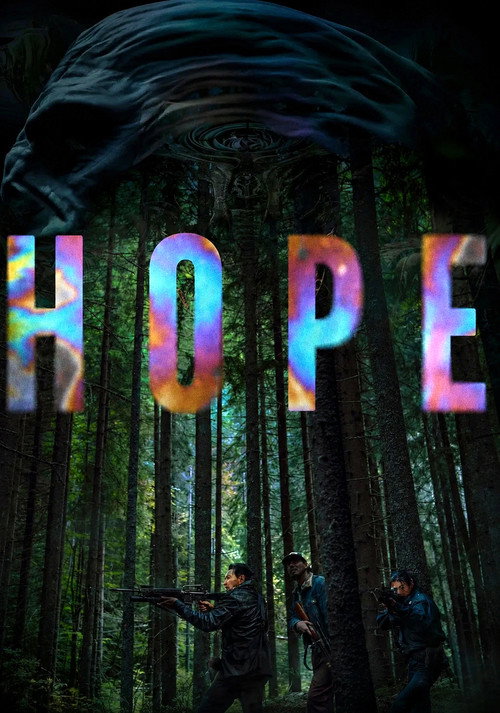
Hope (2026)
Directed by Na Hong-jin · $5.0M domestic
No · Based
How we score movies →Consciousness Markers
Critics explicitly identified the film's thematic core as an examination of xenophobia, mob paranoia, and the fear of the unknown, with narrative empathy deliberately redirected toward the alien entity. The Cannes press conference incident, in which a journalist's question about the film's Asian and Black cast members was perceived as racially insensitive, further embedded racial consciousness discourse into the film's public reception.
The film deploys Western Hollywood actors (Fassbender, Vikander, Russell, Britton) as motion-captured alien entities alongside a Korean ensemble, a structural choice that generated real-world discourse about racial representation at Cannes. The casting is architecturally unusual, though it functions more as genre innovation than as a deliberate diversity mandate.
The film's structural choice to shift audience sympathy from human hunters to the alien entity carries an implicit moral argument about ignorance and mob violence. Na Hong-jin's characteristically ambiguous and visceral filmmaking style, however, keeps this well short of sermonizing: the tragedy feels earned by chaos, not delivered by thesis.
No LGBTQ+ themes, characters, or narrative elements are present in the available evidence.
No feminist agenda is evident. Female cast members appear in the ensemble without the film centering a gender-politics argument.
No climate crisis themes or environmental messaging are present.
No anti-capitalist or class-critique themes are evident in the film's narrative.
No body positivity themes or relevant representation are present.
No neurodivergence themes or characters are identified in the available evidence.
The film is set in a fictional village near the DMZ but does not appear to engage in historical revisionism regarding Korean or world history.
Synopsis
In the remote South Korean village of Hope Harbor, police chief Bum-seok and officer Sung-ae are called to investigate a mysterious creature wreaking havoc on the community. But all is not as it seems, and perceptions can be misleading. What begins as ignorance plants the seed of disaster, escalating through human conflict into a tragedy of cosmic proportions.
Why it received this score
Na Hong-jin's *Hope* arrives as the most expensive South Korean film ever made, a distinction the film wears with the quiet confidence of a man who has spent 74 million dollars on a parable about how badly humans behave when frightened. Set in the fictional village of Hope Harbor near the DMZ, the film follows a police chief and his officer as they investigate an extraterrestrial presence, a premise that sounds like a genre exercise until the genre dissolves around the forty-minute mark and you realize you have been watching a meditation on collective hysteria dressed in a creature feature's clothing.
The casting architecture is the film's most discussed structural gambit: Western actors Fassbender, Vikander, Russell, and Britton perform the alien entities through motion capture, speaking an invented language, while the Korean ensemble plays the terrified and increasingly violent human community. Critics have noted, with varying degrees of enthusiasm, that this arrangement inverts the standard Hollywood logic of who gets to be the monster and who gets to be the hero. The Cannes press conference generated its own subplot when a journalist's question about the film's Asian and Black cast members was received as a racial provocation, briefly making the discourse about the film more thematically on-point than the film itself. Na Hong-jin expressed offense. The festival continued.
The film's social consciousness is real but operates at a mythic register, which is the Na Hong-jin house style. *The Wailing* was not about shamanism as a policy platform, and *Hope* is not about xenophobia as a talking point. The argument is embedded in the structure: we are the mob, the alien is not the threat, ignorance is the engine of catastrophe. This is a genuinely old idea delivered with kinetic force and Hong Kyung-pyo's cinematography. The lecture energy is low. The body count is not.
Analysis generated by our Consciousness Algorithm
Critic Reviews
“It’s an ode to the satisfactions of facing life head-on with whatever time you have left. And writer-director Maria Sødahl semi-autobiographical drama earns every iota of its hard-won uplift.”
“Hope isn’t about getting you to cry, even as some of its characters occasionally do, but rather giving you an invigorating, even uplifting sense of what hearts can do under duress; nothing is forcibly tragic here, just experienced fully and openly.”
“To be sure, cancer may not sound like an inviting cinematic subject, especially to families and individuals who—like this writer—have been faced with its sometimes-overwhelming trials. Yet the effect of Hope is anything but depressing; it’s reassuring proof of art’s ability to comfort as it clarifies. ”
“There is something, for me, unrevealing about the drama, and almost sentimental about the final moments. But Hovig and Skarsgård are both very good.”