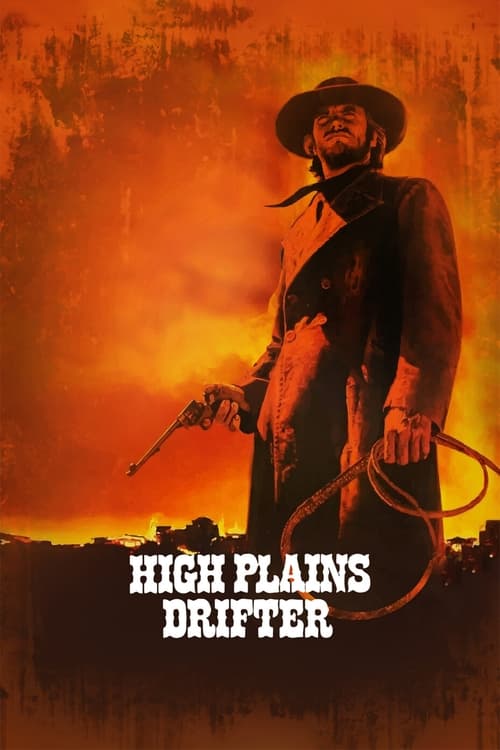
High Plains Drifter (1973)
Directed by Clint Eastwood
No · Ultra Based
How we score movies →Consciousness Markers
The film functions as Western revisionism by presenting the frontier as morally corrupt and the hero as potentially supernatural or demonic rather than virtuous. This challenges mythological narratives of the Old West, though not through a modern social justice lens.
The cast is uniformly white with no deliberate representation or diversity. Female characters occupy traditional gendered roles without subversion.
No LGBTQ+ themes, characters, or subtext present in the film.
Female characters are confined to traditional Western archetypes without any feminist interrogation or agency-centered narrative.
The film contains no engagement with racial injustice, colonialism, or racial dynamics of any kind.
No climate or environmental consciousness present in the narrative.
While the film critiques institutional corruption, it does not present any anti-capitalist or anti-wealth ideology.
No body positivity messaging or representation of diverse body types and abilities.
No neurodivergent characters or representation of mental health conditions.
The film maintains a consistently ambiguous, atmospheric tone without preachy messaging or explicit moral instruction.


Synopsis
A gunfighting stranger comes to the small settlement of Lago. After gunning down three gunmen who tried to kill him, the townsfolk decide to hire the Stranger to hold off three outlaws who are on their way.
Why it received this score
High Plains Drifter stands as a deliberate deconstruction of Western mythology, though its subversive impulses operate entirely outside the framework of contemporary social consciousness. Eastwood's mysterious stranger embodies moral ambiguity rather than heroic virtue, and the film uses this corruption as its central thesis. The town of Lago is presented as rotten, complicit in historical violence, and willing to hire vengeance to protect itself. This is institutional critique, but it is not the kind that concerns itself with representation or progressive sensibility. The film interrogates power, violence, and moral cowardice in ways that feel almost accidentally aligned with certain anti-establishment sentiments, yet it never articulates these concerns through a lens of social justice or collective responsibility.
The female characters present a particular study in the film's pre-contemporary approach. Sarah Belding, played by Verna Bloom, is positioned as the respectable woman, while Marianna Hill's Callie Travers occupies the traditional harlot role. These archetypes are not subverted or interrogated through a feminist lens, nor are they presented as commentary on gender dynamics. They exist as they always have in classical Westerns, serving the narrative without irony or self-awareness about their limited agency. The film's nihilism extends to its gender politics as readily as it does to its treatment of law and justice.
What makes High Plains Drifter barely register on any contemporary metric of social consciousness is its fundamental indifference to the categories that now define progressive filmmaking. There is no attempt at diverse casting, no LGBTQ+ representation, no examination of racial injustice, and no suggestion that these absences are anything but the default. The film is revisionist in that it rejects the clean morality of earlier Westerns, but it revises nothing about how it sees the world. It is, in this sense, a thoroughly 1973 artifact, ambitious in its moral pessimism but entirely unconcerned with the questions that would come to define cultural consciousness fifty years later.
Analysis generated by our Consciousness Algorithm
Critic Reviews
“Brutal story-line which is about as close to an explicit allegory as the western has ever come.”
“What’s most notable is how Eastwood holds fast to the rebel spirit of the spaghetti Westerns and revisionist New Hollywood Westerns of the previous decade, but packages it in a film that’s slicker and more mainstream-friendly. ”
“Clint Eastwood is the ultimate thinking man’s cinematic killing machine. High Plains Drifter is his spooky, dark, and vicious version of the Sergio Leone Man With No Name Spaghetti Westerns he once starred in, and a moody existential meditation on gunplay, revenge and karma. Payback! ”
“As a director, Eastwood is not as good as he seems to think he is. As an actor, he is probably better than he allows himself to be. Meanwhile, the best you can say for High Plains Drifter is that the title is a low pun. Rarely are humble westerns permitted to drift around on such a highfalutin plane. That, however, is small comfort as this cold, gory and overthought movie unfolds.”