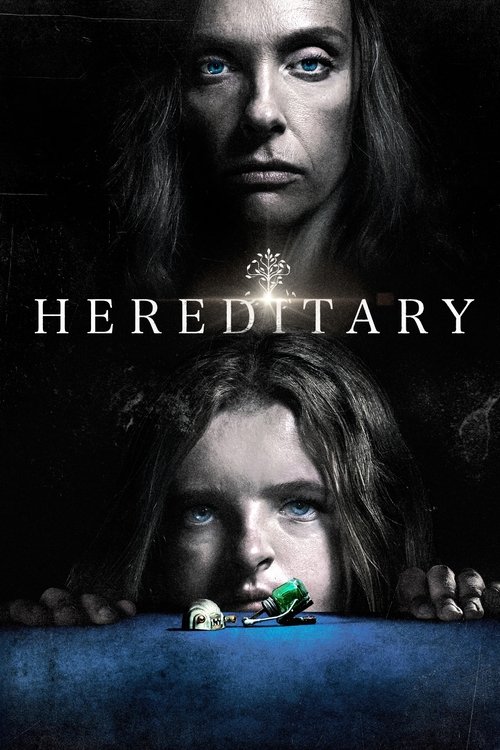
Hereditary (2018)
Directed by Ari Aster
No · Ultra Based
How we score movies →Consciousness Markers
The cast includes a female lead in Toni Collette, but this reflects narrative demands rather than deliberate representational choice. The supporting cast is predominantly white with no apparent attention to diversity.
The film explores maternal trauma and family dysfunction, which intersects with feminist concerns, but treats these as supernatural rather than social problems. No explicit feminist messaging.
Charlie exhibits neurodivergent traits (possibly autism spectrum), but her representation is portrayed as pathological and symptomatic of family curse rather than as neurodivergent representation or advocacy.
The film is primarily atmospheric and plot-driven rather than preachy. There is minimal exposition-heavy dialogue that might constitute 'lecture energy,' though the supernatural mythology requires some explanation.
No LGBTQ themes, characters, or content present in the film.
No racial themes, racial consciousness, or commentary on race present in the film.
No climate-related themes, messaging, or content present in the film.
No critique of capitalism, wealth disparity, or class consciousness present in the film.
No body positivity messaging, discussion of body standards, or related content present in the film.
No historical revisionism, alternative historical narratives, or engagement with historical events present in the film.


Synopsis
Following the death of the Leigh family matriarch, Annie and her children uncover disturbing secrets about their heritage. Their daily lives are not only impacted, but they also become entangled in a chilling fate from which they cannot escape, driving them to the brink of madness.
Why it received this score
Hereditary is a film almost entirely devoid of contemporary progressive social consciousness, which is to say it functions as a horror film rather than as a vehicle for cultural messaging. The narrative concerns itself exclusively with the particular agonies of family trauma, inherited psychological damage, and the supernatural consequences thereof. Toni Collette carries the film as Annie Graham, a woman unraveling under the weight of family secrets and grief, but her prominence as a lead actress reflects the demands of the story rather than any commitment to representational diversity. The film's universe is one in which gender, race, and social identity do not factor into the horror, which is to say the horror is apolitical.
What progressive elements exist are incidental rather than intentional. The family at the center of the narrative includes a teenage daughter, Charlie, whose neurodivergence (she exhibits what appear to be autistic traits) is portrayed not as a source of strength or self-discovery but as a symptom of the family curse, a marker of inherited instability. Her representation serves the plot mechanics rather than any advocacy for neurodivergent visibility. The film contains no LGBTQ content, no racial consciousness, no climate messaging, no anti-capitalist critique, and no body positivity subtext. It is, in short, a genre exercise of the highest order, one that has successfully evacuated itself of the cultural preoccupations that might otherwise infiltrate a contemporary drama.
The film's only mild engagement with progressive sensibility comes through its exploration of maternal trauma and the cyclical nature of family dysfunction, themes that have been central to feminist discourse for decades. Yet Hereditary treats these as existential and supernatural rather than social problems, locating the source of Annie's suffering not in patriarchal systems but in demonic inheritance. One might argue that the film's refusal to engage with contemporary social consciousness is itself a kind of statement, but that would be crediting the work with an intentionality it does not possess. It is simply horror, concerned only with dread.
Analysis generated by our Consciousness Algorithm
Critic Reviews
“A harrowing story of unthinkable family tragedy that veers into the realm of the supernatural, Hereditary takes its place as a new generation's The Exorcist—for some, it will spin heads even more savagely.”
“Hereditary is weighty horror that builds to an impossibly heavy finale, the metaphorical implications of which land on the heart like a ton of bricks.”
“A tour-de-force turn from Toni Collette powers one of the most affecting horrors in recent memory. Genuinely unsettling in a way few genre efforts are: you’ve been warned.”
“These days actors not only appear in bad movies, they are forced to produce their own flops themselves. Toni Collette and Gabriel Byrne co-executive produced Hereditary. They deserve what they get, in spades.”