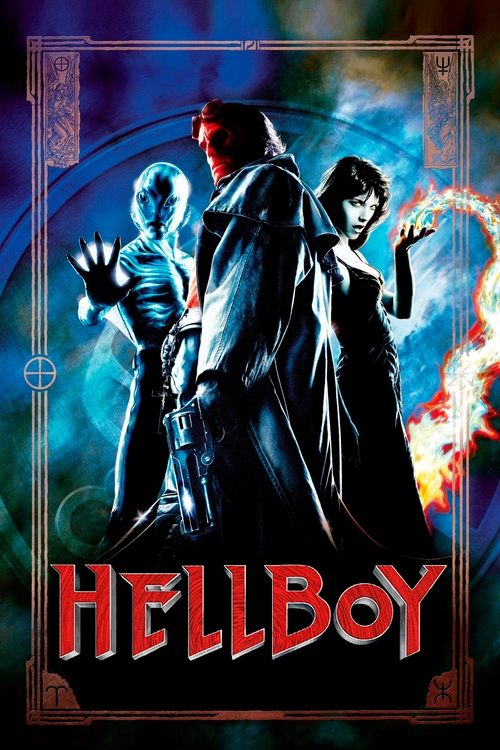
Hellboy (2004)
Directed by Guillermo del Toro
No · Ultra Based
How we score movies →Consciousness Markers
The film contains thematic material about acceptance of the other and prejudice, but these are explored through narrative and character rather than explicit preachiness.
Liz Sherman possesses significant power and agency, but her arc centers on romantic involvement with Hellboy rather than independent feminist narrative.
Female lead with agency and power, but no deliberate contemporary representation politics evident. Casting appears practical rather than ideologically motivated.
No LGBTQ+ themes, representation, or subtext present in the film.
No exploration of racial themes, racial justice, or racial consciousness in the film.
No climate-related themes or environmental consciousness present.
No critique of capitalism, wealth inequality, or economic systems present.
No body-positive messaging or commentary on body diversity present.
No representation or discussion of neurodivergence in the film.
While the film opens with WWII, it does not engage in revisionist historical reinterpretation of actual events.


Synopsis
In the final days of World War II, the Nazis attempt to use black magic to aid their dying cause. The Allies raid the camp where the ceremony is taking place, but not before they summon a baby demon who is rescued by Allied forces and dubbed "Hellboy". Sixty years later, Hellboy serves the cause of good rather than evil as an agent in the Bureau of Paranormal Research & Defense, along with Abe Sapien - a merman with psychic powers, and Liz Sherman - a woman with pyrokinesis, protecting America against dark forces.
Why it received this score
Guillermo del Toro's Hellboy presents a curious case of thematic innocence, a film so committed to its pulp fantasy origins that it remains almost entirely untouched by the particular anxieties of modern progressive sensibility. The narrative concerns itself with acceptance of the monstrous and othered, but this operates within the register of timeless fantasy rather than contemporary social consciousness. Hellboy is a demon raised by humans who must reconcile his demonic nature with his human upbringing; Liz Sherman wields destructive fire; Abe Sapien inhabits an inhuman form. These are archetypal struggles with identity and belonging, rendered through supernatural metaphor in a manner that would have been unremarkable in 1954 or 2044.
The casting presents a mixed picture from the perspective of contemporary representation politics. Selma Blair plays a woman with significant agency and power, though her character exists primarily in relation to Hellboy's emotional arc. Doug Jones, a non-human character, is played by an actor of average build in prosthetics, which raises no particular flags either way. The ensemble includes John Hurt and Jeffrey Tambor in supporting roles. Yet none of this reflects deliberate contemporary thinking about representation; it simply reflects the practical casting decisions of a 2004 superhero adaptation. The film contains no explicit commentary on racial justice, gender politics, environmental concerns, or economic structures. It offers no lectures, no visible neurodivergence, no body-positive messaging, no queer subtext, no climate anxiety, no revisionist historical claims.
What we have is a film of genuine craft and imagination that remains indifferent to the cultural preoccupations of 2020s progressive discourse. This is not to its discredit as cinema, but it disqualifies it from any significant position on the wokeness spectrum. It is, in the most literal sense, a film from before the cultural moment that created the very concept being measured.
Analysis generated by our Consciousness Algorithm
Critic Reviews
“Del Toro moves his story along with unrelenting energy and wit while introducing the opposing parties with admirable efficiency.”
“A perfect fit in the category of instant classic, and, not incidentally, fits the profile of super-profitability. Bursting the bonds of its genre, Hellboy fills the screen with gorgeous imagery, vertiginous action and a surprising depth of feeling.”
“Surprisingly smart, graphically faithful live-action adaptation of the Mike Mignola series”
“Hellboy is as much a wreck as "The League of Extraordinary Gentlemen" or "The Punisher," coming and going in two weeks, and as much a bore as "The Hulk."”