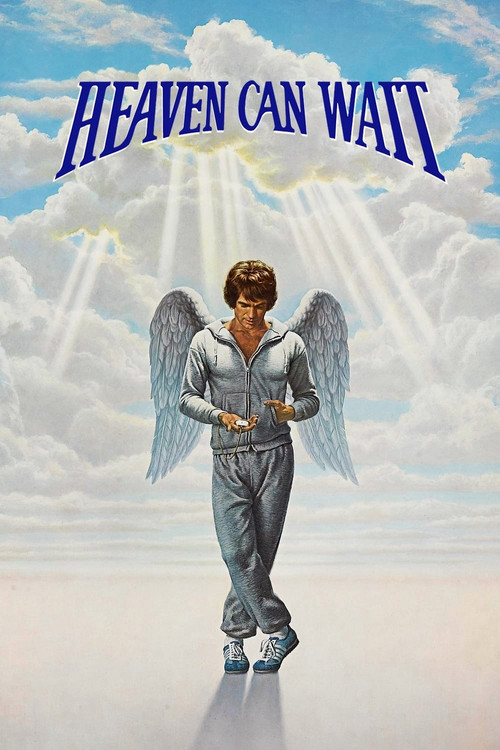
Heaven Can Wait (1978)
Directed by Warren Beatty
No · Ultra Based
How we score movies →Consciousness Markers
Julie Christie's character exists primarily to validate the male protagonist's emotional arc. While she is portrayed as intelligent and capable, her agency is subordinated to his narrative needs. The film reflects conventional 1978 gender dynamics in romantic comedy.
The cast is entirely white in all significant roles. The film makes no effort toward diverse casting and reflects the homogeneity typical of 1978 Hollywood romantic comedies for mainstream audiences.
The protagonist's journey involves acquiring wealth and using it to purchase a professional sports franchise. The film treats capitalism and billionaire status as desirable endpoints rather than systems worthy of critique.
The film's central conceit involves acquiring a more desirable body, implying that the original body was deficient. No genuine body positivity messaging appears, though this is unsurprising for 1978.
The film demonstrates no engagement with racial themes or consciousness. The absence of any significant characters of color reflects the production's lack of concern with racial representation or equity.
The film delivers entertainment without preachy intent. It contains minimal moralizing or educational messaging about social issues, preferring to focus on romantic comedy mechanics.
No LGBTQ+ themes, characters, or representation appear in the film. The narrative is entirely structured around heterosexual romance.
Climate change and environmental concerns are entirely absent from the film's narrative and thematic concerns. This is typical of 1978 cinema.
Neurodivergence and disability representation are entirely absent. The film contains no engagement with these themes.
The film makes no attempt to reframe historical narratives or challenge conventional historical understanding. It is a fantasy comedy without historical pretensions.


Synopsis
Joe Pendleton is a quarterback preparing to lead his team to the superbowl when he is almost killed in an accident. An overanxious angel plucks him to heaven only to discover that he wasn't ready to die, and that his body has been cremated. A new body must be found, and that of a recently-murdered millionaire is chosen. His wife and accountant—the murderers—are confused by this development, as he buys the L.A. Rams in order to once again quarterback them into the Superbowl.
Why it received this score
Heaven Can Wait presents itself as a vehicle for Warren Beatty's considerable romantic appeal, wrapped in the gossamer of metaphysical whimsy. The film concerns itself primarily with the travails of a quarterback and a billionaire, a demographic combination that suggests the filmmakers anticipated no shortage of sympathy for the male lead's predicament. Julie Christie occupies the space of romantic interest and moral compass, a capable actress deployed in the service of validating the protagonist's life choices rather than pursuing her own narrative arc. The film's engagement with class, wealth, and murder is strictly comedic in nature, treating the killing of its previous body's owner as a plot device rather than a matter warranting any genuine moral reckoning.
The production is a glossy affair, executed with technical competence and aimed at audiences with disposable income to spend on fantasy romance. One notes the complete absence of any character of color in positions of narrative significance, a reflection of 1978 Hollywood's persistent comfort with homogeneity among its romantic leads and power players. The film's universe operates according to the logic of wish fulfillment for the already-privileged. A man gets a second chance at life, at football, at romance, at wealth. The angels themselves seem to exist primarily to facilitate his desires.
To score this film on contemporary markers of progressive cultural consciousness is to engage in an exercise of historical measurement. Heaven Can Wait simply does not occupy itself with such concerns. It is a period piece in the strictest sense, a snapshot of 1978 sensibilities regarding gender, class, and the proper ordering of romantic narrative. One might praise it for honest craftsmanship and entertainment value. One cannot credibly claim it engages with the cultural anxieties that have come to define progressive filmmaking in the decades since.
Analysis generated by our Consciousness Algorithm
Critic Reviews
“Warren Beatty's Heaven Can Wait is the most delightful movie the year has offered. Funny, fantastical, fast on its feet, this romantic fantasy comes closer than any film of the past decade to capturing the ingenious, madcap spirit of '30s comedies. [03 July 1978, p.90]”
“From beginning to end, for kids and adults, Heaven Can Wait is nonstop —and blissfully uncomplicated—pleasure.”
“Heaven Can Wait is an outstanding film. Harry Segall's fantasy comedy-drama play, made in 1941 by Columbia as Here Comes Mr Jordan, returns in an updated, slightly more macabre treatment.”
“There are a few laughs from Grodin and Cannon, but Beatty and Christie are like 400-pound gorillas chasing a milkweed seed. The more Beatty concentrates, the more glazed and distracted he looks.”