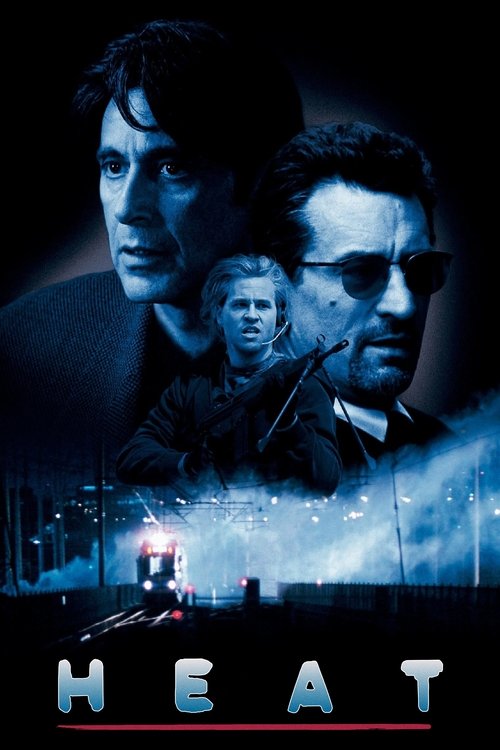
Heat (1995)
Directed by Michael Mann
No · Ultra Based
How we score movies →Consciousness Markers
The film includes actors of color in the supporting cast (Mykelti Williamson, Wes Studi), but they occupy peripheral roles with minimal narrative agency or thematic significance.
While the cast includes racial diversity, the film demonstrates no engagement with race as a thematic concern or structural element of its narrative.
Female characters exist primarily as romantic interests and supportive figures tied to male protagonists, lacking substantive agency or narrative centrality.
The film presents theft as a philosophical pursuit and celebrates criminal enterprise, but lacks systemic critique of capitalism or examination of economic inequality.
The coffee shop dialogue between Pacino and De Niro contains philosophical discussion, but the film generally prioritizes action and narrative momentum over explicit moral instruction.
No LGBTQ+ characters, relationships, or themes are present in the film.
No climate-related themes or environmental consciousness appears in the film.
The film does not engage with body image, representation, or body positivity themes.
No neurodivergent characters or representation appear in the film.
The film is set in contemporary 1995 Los Angeles and does not engage in historical revisionism.


Synopsis
Obsessive master thief Neil McCauley leads a top-notch crew on various daring heists throughout Los Angeles while determined detective Vincent Hanna pursues him without rest. Each man recognizes and respects the ability and the dedication of the other even though they are aware their cat-and-mouse game may end in violence.
Why it received this score
Heat stands as a monument to 1990s masculine preoccupation, a three-hour meditation on the lives of powerful men pursuing their respective callings with single-minded devotion. Michael Mann constructs his narrative entirely around male agency, ambition, and philosophical clarity, leaving female characters to orbit the central figures like concerned satellites. The film's diversity exists primarily in its supporting cast, present but narratively inert, functioning as set dressing rather than active participants in the moral universe Mann constructs. What emerges is a film fundamentally indifferent to questions of social consciousness or cultural awareness, content instead to explore the abstract purity of professional dedication across opposing sides of the law.
The famous coffee shop scene between Pacino and De Niro functions as the film's philosophical heart, two men of different stations recognizing in each other a shared commitment to excellence and risk. Yet this moment of understanding exists in a vacuum, untethered to any broader examination of systemic inequality, gender dynamics, or the human costs of the criminal enterprise. Mann's Los Angeles is a playground for masculine ambition where consequences matter only to the men who pursue their goals, never to the communities surrounding them. The film asks us to admire the dedication of thieves and detectives alike, presenting their struggle as somehow transcendent and worthy of our three-hour attention.
This is filmmaking of considerable technical achievement and narrative ambition, but also profound narrowness of vision. Heat represents a moment in cinema when such narrowness seemed not just acceptable but artistically necessary, when the story of powerful men could occupy the entire landscape without apology or interrogation. For a 1995 release, this represents the period's baseline cultural sensibilities, neither ahead of nor behind the curve of its moment.
Analysis generated by our Consciousness Algorithm
Critic Reviews
“Stunningly made and incisively acted by a large and terrific cast, Michael Mann's ambitious study of the relativity of good and evil stands apart from other films of its type by virtue of its extraordinarily rich characterizations and its thoughtful, deeply melancholy take on modern life.”
“One of the most intelligent crime-thrillers to come along in years.”
“A sleek, accomplished piece of work, meticulously controlled and completely involving. The dark end of the street doesn't get much more inviting than this.”