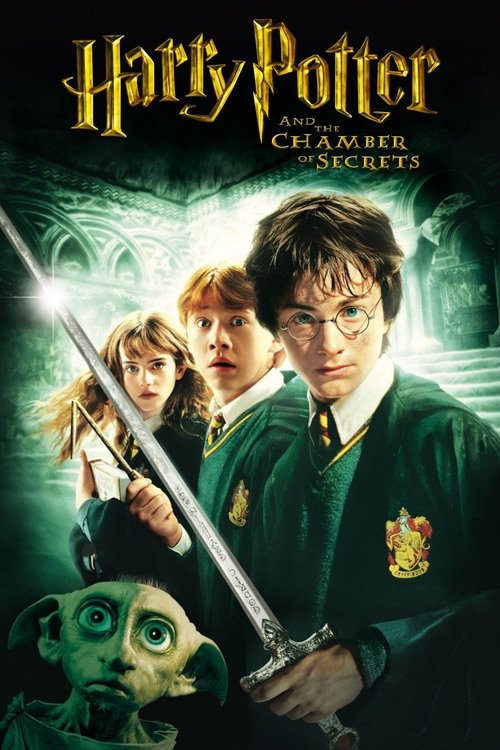
Harry Potter and the Chamber of Secrets (2002)
Directed by Chris Columbus
No · Ultra Based
How we score movies →Consciousness Markers
Hermione is present as an intelligent female character, but the narrative remains male-centric with Harry as the clear protagonist and primary agent of the plot.
The film features a predominantly white British cast with minimal diversity among speaking roles. This reflects 2002 casting conventions rather than any intentional commitment to representation.
House-elves exist in servitude but function as worldbuilding elements rather than critique of exploitation. No anti-capitalist messaging is present.
The film displays no racial consciousness or exploration of racial themes. The wizarding world is presented as racially homogeneous without comment.
While the film contains expository dialogue, it does not feel preachy about social issues. The storytelling is straightforward adventure-focused narrative.
No LGBTQ+ themes, characters, or representation present in the film. It is a straightforward children's fantasy adventure.
No environmental themes or climate-related messaging appears in the film.
No commentary on body image, body positivity, or related themes appears in the film.
No representation or discussion of neurodivergence is present in the film.
The film does not attempt to revise real-world history. It adapts fantasy source material to screen.


Synopsis
Cars fly, trees fight back, and a mysterious house-elf comes to warn Harry Potter at the start of his second year at Hogwarts. Adventure and danger await when bloody writing on a wall announces: The Chamber Of Secrets Has Been Opened. To save Hogwarts will require all of Harry, Ron and Hermione's magical abilities and courage.
Why it received this score
Harry Potter and the Chamber of Secrets arrives as a product of its time, a 2002 children's fantasy adventure that bears all the cultural markers of early-2000s Hollywood blockbuster filmmaking. The film makes no pretense of addressing contemporary social consciousness, nor does it particularly merit scrutiny through such a lens. Chris Columbus' straightforward adaptation is concerned primarily with spectacle, narrative momentum, and the faithful translation of J.K. Rowling's source material to the screen.
The cast is predominantly white and British, reflecting the demographics of both the source material and the casting conventions of mainstream cinema circa 2002. Hermione exists as an intelligent female character, though the narrative gravitates decisively toward Harry's perspective and agency. The house-elves, while present as plot elements, function as worldbuilding apparatus rather than commentary on labor exploitation or systemic inequality. The film presents its fantasy setting as fundamentally apolitical, concerned with the immediate adventure rather than the social structures that undergird its magical society.
What distinguishes this film from more recent entries in the franchise is its complete indifference to questions of representation, diversity, or social messaging. It is not hostile to such concerns so much as entirely pre-occupied with other matters. The scoring reflects not moral judgment but rather the straightforward assessment that this is a film from an era before the cultural preoccupations we are measuring became salient in mainstream blockbuster cinema. One examines an artifact from before the conversation shifted entirely.
Analysis generated by our Consciousness Algorithm
Critic Reviews
“Brimming with invention and new ideas, and its Hogwarts School seems to expand and deepen before our very eyes into a world large enough to conceal unguessable secrets -- What a glorious movie.”
“It's definitely an enchanting spectacular for Potter fans anxious to ride the Hogwarts Express toward a new year of magic and mischief.”
“Best of all, the second Potter movie reunites its adult cast: Harris, Maggie Smith, Robbie Coltrane, John Cleese, Alan Rickman, Julie Walters and others -- a veritable Who's Who of British actors that single-handedly elevates the proceedings out of the kid's movie genre into something special.”
“Big, dull and empty -- nobody associated with this production appears to have thought hard about storytelling.”