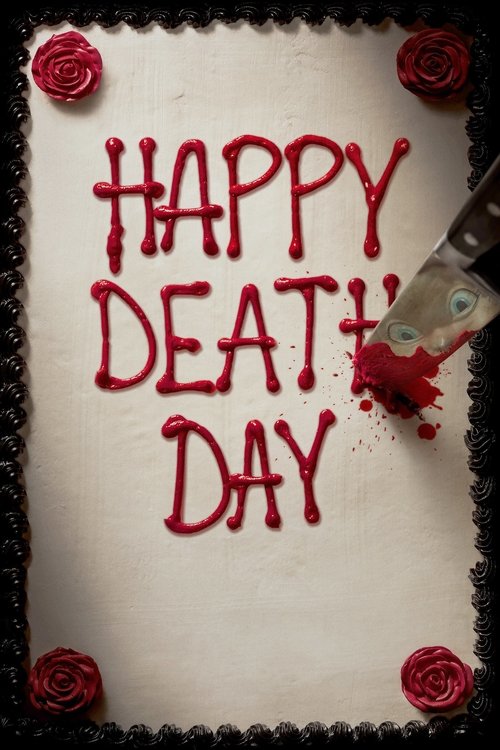
Happy Death Day (2017)
Directed by Christopher Landon
No · Ultra Based
How we score movies →Consciousness Markers
The cast is predominantly white with minimal racial diversity. While the film does not actively exclude minorities, it makes no effort toward inclusive representation either.
The protagonist is female, but the film does not engage with feminist themes or commentary on gender dynamics. Tree's character development is personal rather than political.
No LGBTQ+ characters, themes, or representation present in the film.
The film contains no exploration of racial consciousness, systemic racism, or racial identity.
No climate-related themes, environmental messaging, or climate consciousness present.
No critique of capitalism, wealth inequality, or systemic economic exploitation.
No body positivity themes or commentary on body image and acceptance.
No representation of or commentary on neurodivergence or mental disability.
No revisionist historical narrative or reframing of historical events.
The film contains no preachy messaging, moral lectures, or explicit attempts to educate audiences about social issues.


Synopsis
Caught in a bizarre and terrifying time warp, college student Tree finds herself repeatedly reliving the day of her murder, ultimately realizing that she must identify the killer and the reason for her death before her chances of survival run out.
Why it received this score
Happy Death Day arrives as a thoroughly conventional time-loop slasher that treats its female protagonist with the same commercial indifference as any other horror commodity. Tree Gelbman is not a character designed to make statements; she is a vehicle for plot mechanics. The film's commitment to genre convention is absolute and unironic, which is to say it has committed to nothing at all beyond the mechanics of murder and repetition. Jessica Rothe carries the film with considerable charm, but the character exists in a narrative vacuum untethered to any meaningful social context or commentary.
The supporting cast is uniformly white, and the film expends no energy whatsoever on questions of representation or why this might matter. The college setting provides ample opportunity for commentary on institutional power, sexual violence, or the social dynamics of campus life, yet the screenplay ignores every single one of these avenues. Tree's journey is purely personal and psychological; she must become a better person, not a more conscious one. This is not a moral failing of the film so much as a confirmation of its fundamental disinterest in the cultural conversations that define contemporary cinema.
What we have here is a film content to occupy the middle ground between horror and comedy without interrogating anything about either genre or the world it depicts. It is neither aggressively regressive nor particularly progressive. It simply exists, executing its premise with professional competence and no broader ambitions. This is the default setting for mainstream American entertainment in the 2010s: not hostile to progressive values, but entirely unconcerned with them.
Analysis generated by our Consciousness Algorithm
Critic Reviews
“Happy Death Day is directed with vim, vigor, and heart by Christopher Landon (Scouts Guide to the Zombie Apocalypse), and boasts a winning central performance from Rothe.”
“What’s lurking beneath the surface of this ruthlessly violent horror movie is a glimmer of gold. Happy Death Day is fun enough to be worth watching.”
“Hilarious, raucous and smarter than it’s likely to get credit for, Happy Death Day is an absolute blast for both horror junkies and those just looking for a fun jolt on Friday the 13th.”
“Despite its sometimes bloody content, the mood of Happy Death Day is remarkably sappy, aimed at the broadest possible audience for a film of its genre. Think of it as “slasher lite” and an acceptable date movie for unadventurous types, and you have the gist of it.”