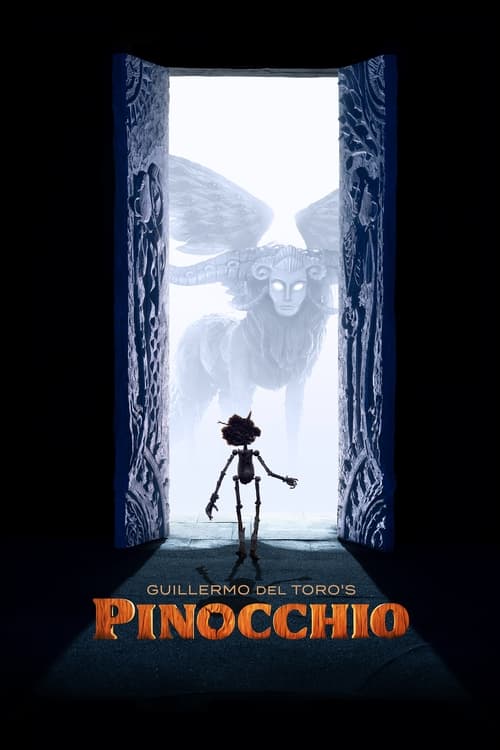
Guillermo del Toro's Pinocchio (2022)
Directed by Mark Gustafson · $17.3M domestic
No · Ultra Based
How we score movies →Consciousness Markers
The film carries a preachy weight regarding the dangers of fascism and blind obedience to authority, with clear moral messaging about state indoctrination of children.
Voice cast is reasonably diverse, though this reflects industry standards rather than progressive intent. The characters themselves are not designed around representation politics.
The film creatively reimagines Pinocchio within fascist Italy, but this is artistic adaptation rather than progressive revisionist history of actual events.
The film critiques totalitarian authority and state power, but this is anti-fascist rather than specifically anti-capitalist in the modern progressive sense.
No meaningful feminist agenda. The narrative centers father-son dynamics and political power, with minimal female characters of substance.
No LGBTQ+ themes, characters, or representation present in the narrative.
No racial consciousness or racial themes evident. The film is set in fascist Italy and focuses on political rather than racial dynamics.
No climate themes or environmental messaging present in the film.
No body positivity messaging or themes present in the narrative.
No neurodivergence representation or themes evident in the film.


Synopsis
During the rise of fascism in Mussolini's Italy, a wooden boy brought magically to life struggles to live up to his father's expectations.
Why it received this score
Guillermo del Toro's Pinocchio is a somber meditation on fascism, fatherhood, and the corruption of innocence, which is to say it is a film of considerable moral weight but minimal engagement with contemporary progressive sensibilities. The filmmaker has taken the Italian puppet tale and relocated it to Mussolini's Italy, where the wooden boy becomes a pawn in a state apparatus designed to strip children of autonomy and remake them as obedient soldiers. The resulting film is darkly beautiful, genuinely unsettling, and absolutely devoid of the cultural markers that would register on a modern sociological scale.
What emerges from the narrative is a story about the dangers of authoritarianism, the seductive appeal of belonging to something larger than oneself, and the bonds between parent and child. These are serious, universal themes that transcend contemporary identity politics. The military academy sequence replaces the classic Pleasure Island corruption arc, and children are literally transformed into soldiers through indoctrination. It is bleak, it is intended to disturb, and it does neither of these things by leaning on the vocabulary of 2020s progressive discourse.
The film's sensibilities are fundamentally pre-postmodern. It believes in good and evil as distinct forces, in the corrupting nature of totalitarian power, in the redemptive potential of love and sacrifice. These are classical humanist positions, not progressive ones, and they predate the cultural frameworks we now associate with social consciousness by decades. Del Toro has made a film about resisting fascism, which is admirable, but resistance to fascism is not inherently woke, no matter how much contemporary critics might wish to claim it. The stop-motion animation is exquisite, the voice performances are committed, and the film won an Academy Award for animated feature, all of which matters not at all to the present assessment.
Analysis generated by our Consciousness Algorithm
Critic Reviews
“Pinocchio feels like the best mix of classic del Toro and new del Toro, with the wisdom and melancholy that comes with age and experience, yet his bright-eyed love of fairy tales from his Spanish-language films. Perhaps more impressive is how Pinocchio pushes the oldest form of animation to new places, and like the puppet himself, breathes life into inanimate objects.”
“Though it may not be as iconic as the 1940s version, Guillermo del Toro’s Pinocchio is still astounding. Every character is fleshed out and filled with eccentricities lacking in prior versions. Themes of empathy, fascism, dealing with death, and learning to live again run deep within this masterpiece. And for all the complexities, the film is just plain enjoyable.”
“It’s a remarkably life-affirming message coming from a mess of animated puppets and a monster-loving filmmaker.”
“It’s evident that the filmmakers wanted to create a different, tougher and putatively more serious Pinocchio than the Disney version that has been lodged in the popular imagination for decades. But the movie’s decontextualized and disturbingly ill-considered use of Fascism is reductive and finally grotesque.”