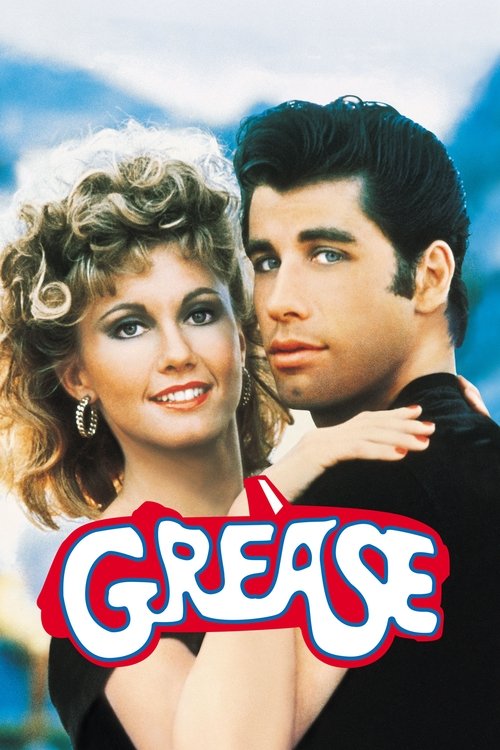
Grease (1978)
Directed by Randal Kleiser
No · Ultra Based
How we score movies →Consciousness Markers
The cast is predominantly white with minimal representation of other ethnicities. While Stockard Channing is present, the film offers no meaningful effort toward diverse casting in 1978.
The film contains minimal preachy messaging. It is a light musical entertainment that does not attempt to lecture audiences on social or political issues.
Grease contains no explicit LGBTQ+ representation or themes. The film is a heterosexual romance centered entirely on Danny and Sandy's relationship.
The film makes no attempt to engage with racial consciousness or systemic inequality. It exists in a racially monolithic world that simply does not acknowledge such issues.
The film presents a sanitized, nostalgic version of 1950s high school life that omits the era's serious social injustices and racial tensions, though this is more romanticization than revisionism.
The narrative culminates with Sandy abandoning her identity and adopting a sexualized persona to win Danny's affection, the antithesis of modern feminist sensibilities about self-acceptance and equality.
Climate consciousness is entirely absent from this 1950s high school musical set piece, which contains no environmental themes whatsoever.
The film contains no anti-capitalist messaging or critique of wealth and economic systems. Class conflict is not a thematic concern.
Body positivity is entirely absent. The film reinforces narrow beauty standards and Sandy's transformation involves conforming to conventional attractiveness norms.
No representation or acknowledgment of neurodivergence exists in the film. No characters with autism, ADHD, or other conditions are depicted with awareness or sensitivity.


Synopsis
Australian good girl Sandy and greaser Danny fell in love over the summer. But when they unexpectedly discover they're now in the same high school, will they be able to rekindle their romance despite their eccentric friends?
Why it received this score
Grease arrives as a cultural artifact so thoroughly innocent of modern progressive sensibilities that scoring it on contemporary markers feels rather like analyzing a Roman coin for its WiFi connectivity. The film is a 1978 musical celebration of heterosexual teenage romance, set in a nostalgic 1950s that bears only passing resemblance to historical reality. It contains no diversity initiatives, no LGBTQ+ representation, no environmental consciousness, and no anti-capitalist positioning. The most damning element by current standards is its narrative arc, which asks its female lead to renounce her identity and adopt a sexualized persona to secure romantic validation from a male character. This is not merely dated, it is actively contrary to contemporary values regarding gender equality and self-acceptance.
What remains striking about Grease is its complete indifference to social messaging of any kind. It does not lecture, moralize, or attempt to teach lessons about systemic inequality. It simply exists as entertainment, a big musical spectacle designed to make audiences sing along and feel nostalgic about a fictional high school experience. In this regard, it is almost refreshingly absent of the cultural self-consciousness that defines modern filmmaking. The film predates the social justice frameworks we now use to evaluate media by decades, and it shows no awareness that such frameworks might eventually emerge.
The low score reflects not a judgment of the film's quality as entertainment, but rather the simple fact that it exhibits virtually none of the markers we now associate with progressive cultural production. Grease is what happens when filmmakers make art without any concern for representation, inclusivity, or social commentary. Whether one views this as a virtue or a vice depends entirely on one's perspective about what cinema ought to accomplish.
Analysis generated by our Consciousness Algorithm
Critic Reviews
“It's every bit the great songfest it's hailed as, with bucketloads of innuendo thown in behind some of the most energetic musical numbers ever to grace the inside of a movie theatre.”
“Grease is a pure pop construct, fueled by movie-star poses, hit songs, and persistent audience fantasies of being an acceptable kind of "bad." Barry Gibb-penned disco theme aside, Grease doesn't really belong to any one era. It's like it's always existed.”
“Grease has got it, from the outstanding animated titles of John Wilson all the way through the rousing finale as John Travolta and Olivia Newton-John ride off into teenage happiness.”
“A limp, cheaply made version of the Broadway. Director Randal Kleiser shows no real sense of how a musical is constructed: the songs are bunched together, the production numbers don't move, and the whole project shifts awkwardly between naturalism and stylization.”