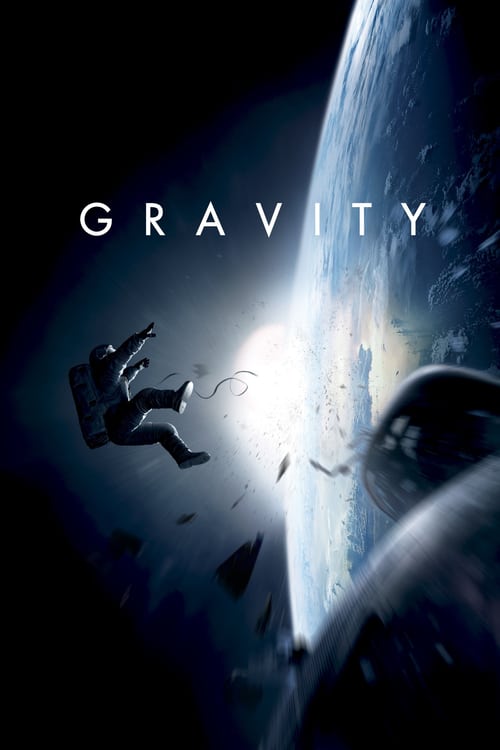
Gravity (2013)
Directed by Alfonso Cuarón
No · Based
How we score movies →Consciousness Markers
The female protagonist is a scientist and engineer of considerable competence, though this is never framed as a progressive statement. She simply happens to be the character.
Cuarón occasionally uses dialogue to explain technical concepts and Stone's emotional state, though the film prioritizes visual storytelling over exposition.
While Stone is a capable female lead, the film makes no ideological statements about gender. Her competence is presented as character trait, not as commentary on patriarchy or gender relations.
The film depicts space exploration and NASA operations, presenting them as essentially heroic endeavors. No revisionist critique of historical narratives present.
The cast includes minor characters of various backgrounds, but their presence serves purely functional roles with no attention to racial themes or consciousness.
No LGBTQ themes, representation, or narrative elements present in the film.
No climate change themes, environmental consciousness, or ecological commentary present in this space survival narrative.
The film contains no critique of capitalism, wealth inequality, or systemic economic oppression.
No body positivity themes or commentary on body standards and acceptance appear in this technical survival thriller.
No representation of neurodivergence, mental disability, or any related themes present in the narrative.


Synopsis
Dr. Ryan Stone, a brilliant medical engineer, is on her first Shuttle mission, with veteran astronaut Matt Kowalski in command of his last flight before retiring. But on a seemingly routine spacewalk, disaster strikes. The Shuttle is destroyed, leaving Stone and Kowalski completely alone-tethered to nothing but each other and spiraling out into the blackness of space. The deafening silence tells them they have lost any link to Earth and any chance for rescue. As fear turns to panic, every gulp of air eats away at what little oxygen is left. But the only way home may be to go further out into the terrifying expanse of space.
Why it received this score
Gravity arrives as a triumph of technical filmmaking and existential inquiry, a film so preoccupied with the physics of orbital mechanics and the texture of cosmic void that it scarcely pauses to consider contemporary cultural anxieties. Alfonso Cuarón has constructed a meditation on isolation and human resilience that operates almost entirely in the language of cinema itself, where every cut, every sound design choice, and every frame composition serves the narrative of survival. The film's central character happens to be a woman, Dr. Ryan Stone, and she is competent, intelligent, and fully capable of solving the problems that threaten her life. This is presented as a simple fact, not as a provocation or statement.
What emerges from Gravity is a work fundamentally indifferent to the contemporary cultural conversation. The film does not announce itself as progressive, does not invite us to contemplate its casting choices as meaningful commentary, and does not pause to explain why its protagonist deserves our attention through the lens of representation. Stone survives because she is clever and resourceful, not because the film wishes to make a point about the capacity of women to survive. Clooney's Kowalski perishes early, leaving Stone alone to navigate the void, and the narrative proceeds with the cold logic of orbital decay and oxygen depletion. There is no lecture about gender, no moment where another character remarks upon her achievements as woman in a male-dominated field.
The film's restraint on matters of cultural consciousness is perhaps its most distinctive feature. In an era increasingly attuned to the symbolic weight of casting and representation, Gravity simply casts a capable actor in a role written for a capable character and moves forward. The result is a film that will likely register as insufficiently progressive to some and as authentically indifferent to others. It remains, above all else, a technical marvel in service of a story about survival, and that singular focus is precisely what keeps it from wandering into the territory of contemporary social messaging.
Analysis generated by our Consciousness Algorithm
Critic Reviews
“Gravity is about as visceral an experience as you can have in a cinema, it’s a technical marvel, and it’s a blockbuster with heart and soul in spades.”
“The director’s long-overdue follow-up to “Children of Men” is at once a nervy experiment in blockbuster minimalism and a film of robust movie-movie thrills, restoring a sense of wonder, terror and possibility to the bigscreen.”
“At once the most realistic and beautifully choreographed film ever set in space, Gravity is a thrillingly realized survival story spiked with interludes of breath-catching tension and startling surprise.”
“Accept Gravity as pure, popcorn-munching show business fun and nothing else, and you won’t go away disappointed.”