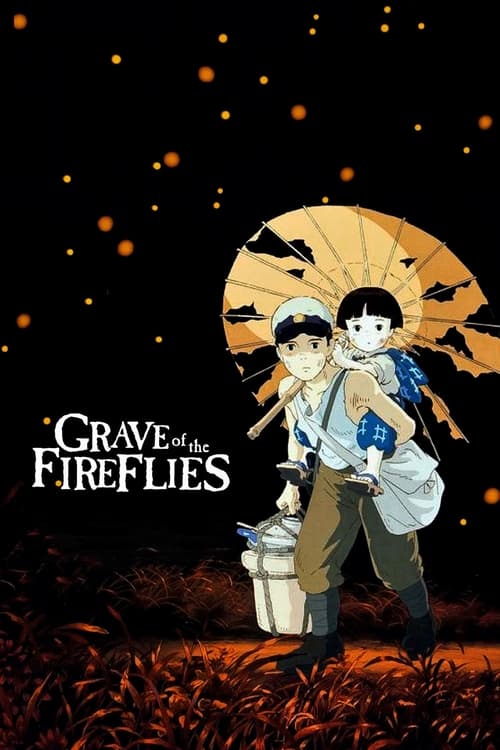
Grave of the Fireflies (1988)
Directed by Isao Takahata
No · Ultra Based
How we score movies →Consciousness Markers
The film depicts the destruction wrought by Japanese militarism on Japanese civilians, which carries implicit critique of nationalism, but this emerges from historical reality rather than contemporary racial consciousness frameworks.
The film trusts its audience to draw conclusions from observed suffering and loss. While deeply moral, it never pauses to explain or moralize about events, maintaining artistic restraint throughout.
The film features Japanese characters in a Japanese setting during a specific historical moment. There is no attempt at demographic representation or casting decisions that reflect contemporary diversity concerns.
No LGBTQ+ themes, representation, or subtext appear in the film. The narrative focuses entirely on familial relationships and wartime survival.
While the film centers on a girl character, it does not engage with feminist ideology or critique patriarchal structures. Setsuko is portrayed as a child, not as a site for commentary on gender.
Climate themes are entirely absent. The destruction depicted stems from warfare, not environmental degradation or climate activism.
While the film portrays economic desperation and resource scarcity, it does not articulate anti-capitalist ideology or critique wealth accumulation as a system.
The film depicts malnutrition and physical decline without any agenda related to body image or body positivity discourse. These are consequences of starvation, presented without commentary.
No representation of or commentary on neurodivergence appears in the film. Characters are portrayed without reference to contemporary disability or neurodiversity frameworks.
The film presents historical events as they occurred, grounded in autobiographical source material. It does not reframe history through a contemporary revisionist lens.


Synopsis
In the final months of World War II, 14-year-old Seita and his sister Setsuko are orphaned when their mother is killed during an air raid in Kobe, Japan. After a falling out with their aunt, they move into an abandoned bomb shelter. With no surviving relatives and their emergency rations depleted, Seita and Setsuko struggle to survive.
Why it received this score
Grave of the Fireflies is a masterwork of animated cinema and a shattering portrait of civilian suffering during wartime. Isao Takahata's 1988 film eschews the grandiose rhetoric of war narratives to focus instead on the mundane, desperate mechanics of survival: a girl asking for candy she will never eat, a boy's mounting desperation as his sister fades, the slow dissolution of childhood in the face of institutional indifference. The film operates in the register of profound humanist tragedy, not contemporary cultural commentary. Its power derives from the specificity of its historical moment and the universality of loss, not from any desire to interrogate modern social structures or consciousness.
The film's restraint in this regard is, in fact, its greatest strength. Takahata does not pause to lecture about systemic injustice or demand that we perform our recognition of the characters' suffering. The aunt's cruelty toward the orphans stems from her own desperation and resource scarcity, a complexity that precludes simple moral categorization. The children's sister-brother relationship, while tender, is not deployed as a vehicle for contemporary identity politics. We are asked simply to witness, to feel the weight of historical contingency, to recognize that these were real children who died while the world moved forward. This is the work of a mature artistic intelligence, one that trusts the audience to arrive at their own moral conclusions without intermediation.
The film's cultural context matters here. Released in 1988 Japan, it represented a reckoning with national trauma from a distinctly Japanese perspective, not through the lens of contemporary progressive sensibilities. That it has endured and deepened in power over decades speaks to something beyond fashion. We are left with hunger, with loss, with the sound of fireflies. This is cinema as art, not as activism.
Analysis generated by our Consciousness Algorithm
Critic Reviews
“The movie remains one of the most startling and moving animated films ever. It is also, with the likes of “The 400 Blows,” “Kes,” and “Vagabond,” one of the finest films about being young in an indifferent world.”
“An emotional experience so powerful that it forces a rethinking of animation.”
“This animated Japanese masterpiece is a war story as wrenching as any live-action movie.”
“Isao Takahata, Studio Ghibli's second best-known filmmaker and co-founder, adapts Akiyuki Nosaka's short story of the same name to great effect, using animation to create a film that emphasizes the horrors of war better than most live-action films. [21 Jun 2016]”