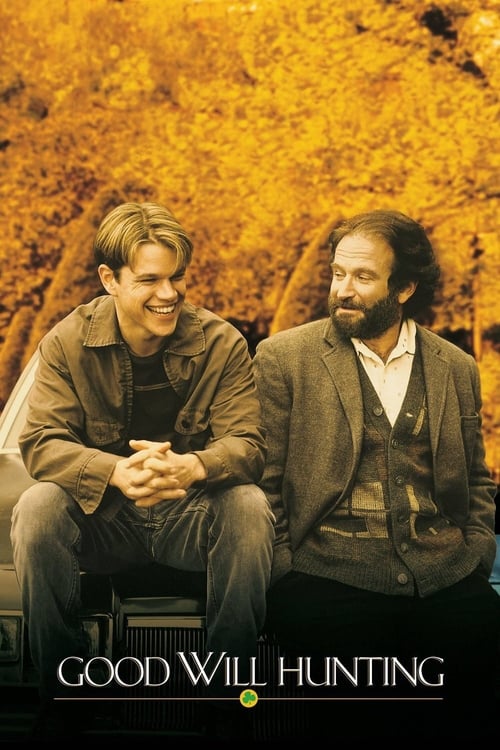
Good Will Hunting (1997)
Directed by Gus Van Sant
No · Based
How we score movies →Consciousness Markers
The film contains several preachy moments where characters explain emotional and psychological truths to one another, particularly in Robin Williams' therapeutic monologues. This creates a moderate degree of 'lecture energy' typical of the earnest 1990s drama.
The cast is predominantly white and male, with Minnie Driver relegated to a supporting romantic role. While the film features working-class characters authentically, there is minimal racial or ethnic diversity in significant roles.
The film critiques class barriers and suggests sympathy for working-class struggle, but ultimately endorses upward mobility and integration into elite institutions as the solution, rather than systemic critique.
Will's genius is treated as exceptional rather than neurodivergent, though his trauma responses and emotional dysregulation could be read as forms of neurodivergence. The film does not explicitly engage with this framework.
Skylar functions primarily as a romantic motivation for Will's character development rather than as a fully realized character with her own arc. The film's focus on male bonding and emotional expression comes at the expense of female agency.
There are no meaningful LGBTQ+ themes, characters, or subtext. The film is entirely heteronormative in its romantic and relational framework.
The film shows no particular consciousness of racial themes or dynamics. Working-class identity is centered, but racial identity is entirely absent from the narrative.
There is no engagement with climate or environmental themes whatsoever.
No meaningful engagement with body image, disability representation, or body positivity themes. The film operates within conventional standards of attractiveness.
There is no historical revisionism or engagement with reframing historical narratives.


Synopsis
Will Hunting is a headstrong, working-class genius who is failing the lessons of life. After one too many run-ins with the law, Will's last chance is a psychology professor, who might be the only man who can reach him.
Why it received this score
Good Will Hunting arrives at a peculiar historical moment in the trajectory of progressive cinema, occupying a space between genuine social consciousness and what we might charitably call proto-woke sensibilities. The film's central preoccupation with class trauma and working-class dignity suggests a filmmaker interested in material inequality, yet the execution relies heavily on the redemptive power of male mentorship and emotional vulnerability rather than any systematic critique of the systems that produce Will's circumstances. We watch a genius imprisoned by his circumstances escape through the intercession of a brilliant professor, a narrative that flatters the audience's belief in individual transcendence over structural change.
The film's treatment of its female character, Skylar, has aged poorly and has become something of a critical touchstone for discussions about how cinema marginalizes women as romantic obstacles to male development. She exists primarily to represent the life Will might choose if he abandons his working-class identity, making her function less as a character than as a symbol of bourgeois aspiration. The supporting cast is predominantly male, with Minnie Driver's limited screen time devoted largely to being the love interest who motivates the protagonist's emotional journey. This is not necessarily damning in itself, but it reflects the limited scope of the film's progressive vision.
What emerges most clearly is that Good Will Hunting is fundamentally a film about individual psychology and therapeutic intervention in the Freudian tradition. Its concern with trauma, emotional authenticity, and the healing power of human connection reads as earnest rather than performative, yet these preoccupations occupy a realm distinct from the specific markers of contemporary cultural awareness. The film genuinely cares about working-class experience and male emotional expression, but it channels these concerns through a therapeutic lens that has become increasingly recognizable as a hallmark of a particular species of 1990s progressivism. It is neither actively regressive nor particularly engaged with the constellation of social justice frameworks that would later define the 2020s cultural moment.
Analysis generated by our Consciousness Algorithm
Critic Reviews
“Intimate, heartfelt and wickedly funny, it's a movie whose impact lingers.”
“First and foremost, Good Will Hunting is a film riding young, exuberant energies.”
“With its sweet soul and sharp mind, it's one of the most heartening films of the year.”
“The acting is top-notch and some scenes are authentically well-observed.”