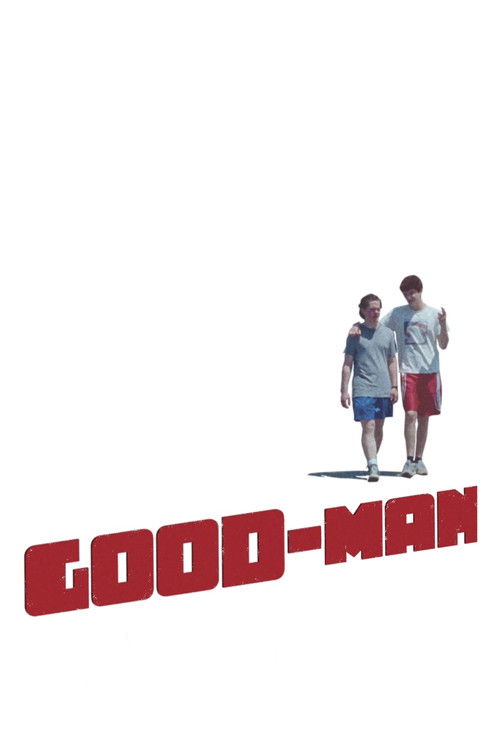
GOOD-MAN (2026)
Directed by JM Salamone
No · Ultra Based
How we score movies →Consciousness Markers
A coming-of-age story built around liberating one's mind from a father's small-town worldview carries an inherent sermonizing structure, positioning the audience to endorse the protagonist's enlightened departure from traditional values.
The film critiques traditional, inherited definitions of masculinity and male identity, which carries feminist-adjacent energy, though the lens remains male-centered and personal rather than broadly ideological.
The ensemble cast includes several names suggesting some diversity in casting, but there is no evidence of deliberate or self-conscious representation politics driving the film's casting choices.
The critique of suburban conformity carries a faint anti-establishment undercurrent, but no explicit class critique, wealth disparity messaging, or anti-capitalist framing has been identified.
No LGBTQ+ themes, characters, or storylines are evident in any available research or promotional material for this film.
No racial themes, racial identity politics, or racial consciousness messaging appear in any available description or review of the film.
There is no evidence of climate, environmental, or ecological themes anywhere in the film's premise, setting, or available critical commentary.
No body positivity themes or messaging are present in any available material about this film.
No neurodivergent characters, themes, or related messaging appear in any available description or review of the film.
The film is set in 2010 suburban America with no revisionist or recontextualized historical framing evident in any available material.
Synopsis
Set in suburban America, Henry Goodman fights to liberate his own mind and overcome his father's small-town ideas of being a good man.
Why it received this score
GOOD-MAN arrives from director JM Salamone as a Kickstarter-funded independent production set in Summerville, North Carolina in the summer of 2010, which already tells us a great deal. The film follows eighteen-year-old Henry Goodman on the first day of summer after his senior year, as he endeavors to escape his father's definitions of masculinity and forge his own understanding of what a good man looks like. The premise is, in the grand tradition of suburban coming-of-age cinema, approximately as old as the suburb itself. Henry's father holds small-town ideas. Henry does not wish to hold small-town ideas. The audience is invited to side with Henry.
The film's engagement with gender norms is genuine but modest. It interrogates traditional masculinity from the inside, through a young man's personal struggle, rather than arriving with a prepared lecture and a podium. This is the more dramatically honest approach, and it keeps the film from fully committing to the sermonizing register that its premise so openly invites. There is some earnest moralizing in the architecture of the story, as indie coming-of-age films of this type tend to carry a quiet confidence that the audience needs to be shown the correct way to think about fathers and sons. The absurdist comedic escalation reportedly on display suggests Salamone is at least aware of this tendency and is trying to have some fun with it.
On the spectrum of social consciousness, GOOD-MAN registers as a faint signal. It is concerned with masculinity as a construct, but in the way that films have been concerned with masculinity as a construct since at least the 1950s. The racial, environmental, and economic dimensions of modern progressive filmmaking are entirely absent. No one delivers a speech about systemic anything. The film appears to be, at its core, a story about a boy and his father and a summer in North Carolina, which is a perfectly respectable thing to be. The woke sommelier sets down his glass, notes a mild masculinity-critique on the nose, and moves on.
Analysis generated by our Consciousness Algorithm