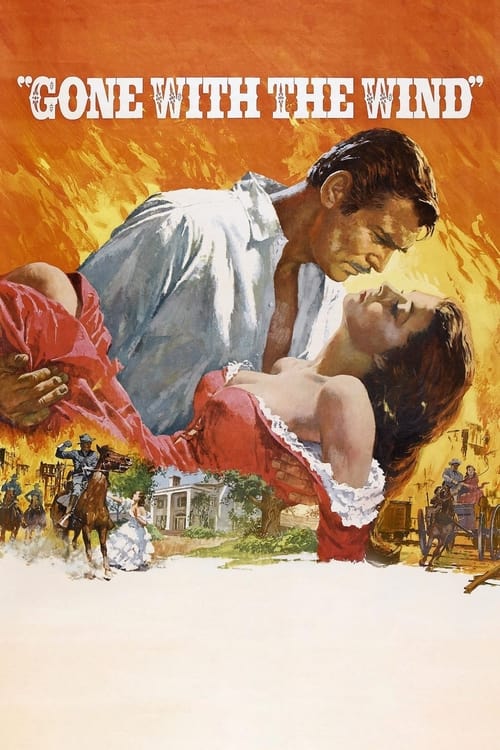
Gone with the Wind (1939)
Directed by Victor Fleming
No · Ultra Based
How we score movies →Consciousness Markers
Scarlett O'Hara possesses agency and defies social conventions, but this reflects 1939 progressive attitudes rather than modern feminist consciousness or structural critique.
The film presents a sanitized, romanticized version of the antebellum South that avoids confronting slavery's brutality and treats the Confederacy sympathetically.
The film romanticizes plantation life and slavery without moral examination, treating Black characters as supporting fixtures in a white-centered narrative.
Hattie McDaniel appears as Mammy, the first Black Oscar winner, but the role reinforces the mammy stereotype and segregation was practiced at the premiere itself.
The narrative occasionally moralizes but primarily focuses on personal drama rather than delivering preachy messages about social issues.
No LGBTQ+ representation or themes present in the film.
Climate themes are entirely absent from this historical drama.
No anti-capitalist sentiment or critique of economic structures is present.
The film reflects 1939 beauty standards without any modern body positivity messaging.
Neurodivergence representation is not a concern in this era's filmmaking.


Synopsis
The spoiled daughter of a Georgia plantation owner conducts a tumultuous romance with a cynical profiteer during the American Civil War and Reconstruction Era.
Why it received this score
Gone with the Wind occupies a peculiar position in cinema history, celebrated as a technical and narrative achievement while simultaneously serving as a textbook example of historical revisionism. The film treats the plantation South as a romantic backdrop for personal drama, a choice that requires viewers to accept the erasure of slavery's moral dimensions. Scarlett O'Hara's independence and cunning might seem progressive for 1939, yet the film frames her agency within a context of racial oppression presented as merely scenic.
The casting of Hattie McDaniel, though historically significant for her Oscar win, reinforces rather than challenges the stereotypes embedded in the narrative. McDaniel's Mammy remains a figure of servitude whose loyalty to her white family supersedes all other dimensions of her character. The film's treatment of Black characters as decorative elements in a white story, combined with the historical reality that Black cast members were barred from the Atlanta premiere, underscores the institutional racism that shaped the production itself.
This is not a morally engaged work grappling with difficult history. It is propaganda dressed as entertainment, a Gone with the Wind that chose to let history blow away entirely. The score reflects not the film's undeniable craftsmanship, but rather its profound indifference to the humanity of those depicted as background figures in someone else's romance.
Analysis generated by our Consciousness Algorithm
Critic Reviews
“A towering landmark of film, quite simply because it tells a good story, and tells it wonderfully well.”
“Well, even if it is essentially four hours about a selfish, silly cow, it's impeccably well made, and should be seen by anyone with even a passing interest in romance or movies.”
“One of the truly great films, destined for record-breaking box office business everywhere. The lavishness of its production, the consummate care and skill which went into its making, the assemblage of its fine cast and expert technical staff combine in presenting a theatrical attraction completely justifying the princely investment of $3,900,000.”
“Rather than confront the guilt related to the sins of the past it paints over them in vivid colours, hoping the viewer will collude in its melodramatic muddying of the water.”