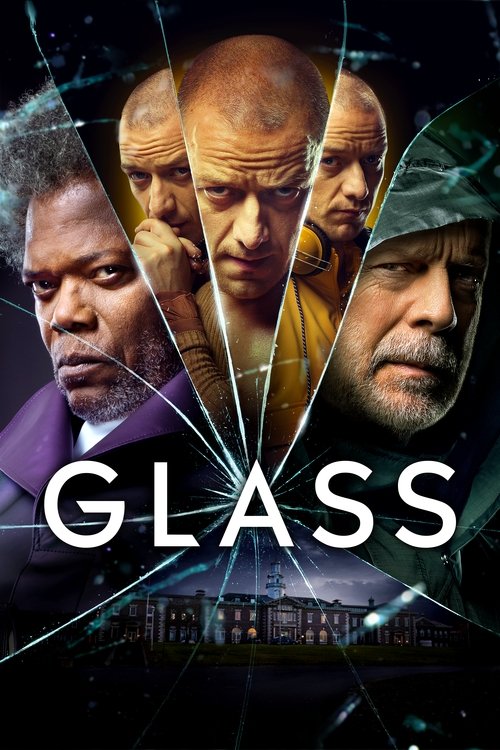
Glass (2019)
Directed by M. Night Shyamalan
No · Ultra Based
How we score movies →Consciousness Markers
The cast includes Samuel L. Jackson, Sarah Paulson, and Anya Taylor-Joy alongside the leads, providing racial and gender diversity. However, this diversity is largely incidental to the narrative and not thematically engaged with.
While neurodivergence is central to the plot through the DID character, the representation is actively harmful, perpetuating stereotypes that equate mental illness with violence and predatory behavior rather than offering nuanced understanding.
While the film occasionally gestures toward commentary on psychiatric institutions and surveillance, it lacks the preachy tone or explicit messaging that would constitute strong 'lecture energy.' The themes remain largely implicit.
Sarah Paulson's character is a psychologist in a position of authority, though her role is primarily functional to the plot rather than advancing any feminist agenda or commentary.
No LGBTQ+ themes, characters, or representation are present in the film.
While the cast includes actors of color, the film does not engage with racial themes or consciousness in any meaningful way.
The film contains no environmental or climate-related themes or messaging.
There is no critique of capitalism, wealth inequality, or corporate structures in the film.
The film does not engage with body positivity, body diversity, or related themes.
The film does not engage with historical revisionism or reinterpretation of historical events.


Synopsis
In a series of escalating encounters, former security guard David Dunn uses his supernatural abilities to track Kevin Wendell Crumb, a disturbed man who has twenty-four personalities. Meanwhile, the shadowy presence of Elijah Price emerges as an orchestrator who holds secrets critical to both men.
Why it received this score
Glass represents a curious case study in how progressive casting choices can coexist with deeply regressive ideological commitments. The film assembles a reasonably diverse ensemble, with Samuel L. Jackson and Sarah Paulson sharing significant screen time alongside Bruce Willis and James McAvoy. Yet this surface-level representation masks a far more troubling preoccupation: the film's central conceit depends entirely upon the demonization of mental illness, specifically dissociative identity disorder. McAvoy's "Beast" is not a character so much as a cultural repository for every harmful stereotype about DID, reinforcing the persistent mythology that trauma-induced mental illness produces superhuman violence and predatory behavior. The narrative apparatus of the film treats psychiatric institutions as oppressive systems worthy of critique, but only insofar as they restrain the "exceptional" and "special" rather than offering any genuine advocacy for those who suffer from the conditions depicted.
Shyamalan's trilogy presents itself as a meditation on superheroism and the thin line between hero and villain, yet it reveals itself as fundamentally invested in a worldview where disability and mental difference are precisely what require containment. The film contains no discernible feminist agenda, no climate consciousness, no anti-capitalist positioning, and no meaningful engagement with LGBTQ+ themes. Its one gesture toward neurodivergence representation is entirely corrosive, treating the condition as a vehicle for spectacle and horror rather than understanding. The surveillance apparatus that becomes visible in the film's final act might suggest some critique of institutional power, but this is incidental to the film's primary project of vindicating the superiority of those born with "special" abilities. We are left with a work that mistakes stylistic ambition for thematic substance, offering surface diversity while trafficking in the most conventional anxieties about difference.
Analysis generated by our Consciousness Algorithm
Critic Reviews
“It’s a film that sometimes plays more as a rambling TED Talk than as a straightforward thriller. But, in this case, I admired Shyamalan’s overreach, even as the auteur laid meta-textual twist atop twist in the movie’s giddily loopy ending.”
“This movie treats comics not as a narrative format to be recycled and adapted, but as religious myths to be followed and fulfilled. It is a single, impassioned vision that is totally uncompromising and utterly its own, comprised of layers and ideas that, while messily delivered, deserve to be turned over and explored.”
“I’ve liked certain Marvel films better than any of these three, but no MCU installment (by no fault of its own) can offer what Glass does: the experience of opening a comic book for the first time.”
“Unoriginal, except in the ways that it’s bad.”