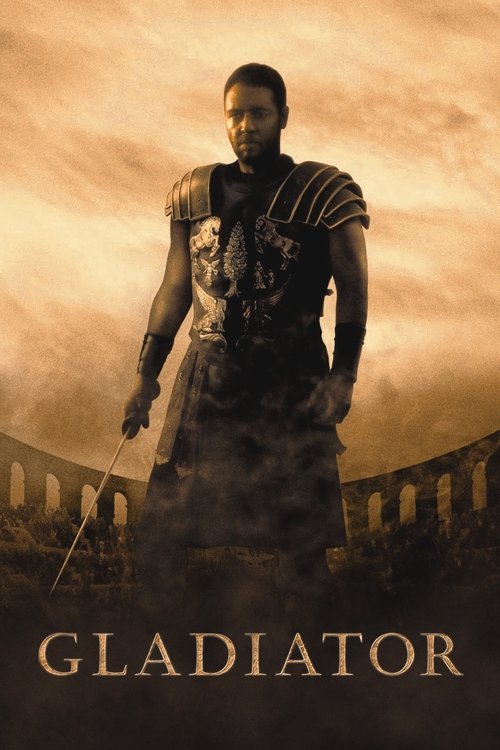
Gladiator (2000)
Directed by Ridley Scott
No · Ultra Based
How we score movies →Consciousness Markers
Djimon Hounsou appears in a supporting role, providing minor racial diversity, but the casting is unremarked upon and lacks any conscious engagement with representation.
While Hounsou's casting provides diversity, the film shows no conscious engagement with racial themes or historical racial dynamics.
The film takes considerable liberties with Roman history, though not in service of contemporary progressive narratives or social consciousness.
The narrative is male-dominated with women serving functional roles. Connie Nielsen's character exists primarily to motivate the male protagonist's revenge.
While the film depicts the spectacle economy of gladiatorial games, it does not critique this system from an anti-capitalist perspective but rather uses it as narrative backdrop.
Minimal preachy or preachy tone. The film prioritizes spectacle over messaging, though occasional dialogue gestures toward philosophical themes.
No LGBTQ themes or representation present in the film.
No climate-related themes or environmental consciousness present.
No body positivity themes present. The film celebrates athletic, muscular bodies as ideals.
No representation of or engagement with neurodivergence.


Synopsis
After the death of Emperor Marcus Aurelius, his devious son takes power and demotes Maximus, one of Rome's most capable generals who Marcus preferred. Eventually, Maximus is forced to become a gladiator and battle to the death against other men for the amusement of paying audiences.
Why it received this score
Ridley Scott's Gladiator presents itself as a grand historical spectacle concerned with the virtue of wronged men and the corruption of power, yet it operates entirely within pre-millennial sensibilities about heroism and masculine honor. Russell Crowe's Maximus embodies a fantasy of individual merit triumphing through combat, a narrative that asks us to invest in personal vengeance rather than systemic critique. The film's world is one of tyrants and heroes, not structural oppression or the lived experiences of the marginalized who populate its arenas.
The inclusion of Djimon Hounsou as Juba represents the film's sole gesture toward casting diversity, a choice that goes unremarked upon and unexamined by the narrative itself. His character exists as a loyal companion and fellow sufferer, a role that demands no interrogation of historical power dynamics or modern considerations of representation. The film treats its ancient world as a playground for action sequences and melodrama, not as a space for reflecting on contemporary cultural consciousness or historical revisionism.
What Gladiator lacks is any hint of the cultural self-awareness that would mark a film as engaged with modern progressive sensibilities. There is no feminist interrogation of its male-dominated narrative, no climate considerations, no anti-capitalist examination of the spectacle economy, no neurodivergent representation, no body positivity, no LGBTQ themes. The film simply exists as entertainment, which is perhaps its most honest position. It is a relic of an earlier moment in cinema, before such markers became central to cultural discourse.
Analysis generated by our Consciousness Algorithm
Critic Reviews
“It's that very rare feeling that you're settling into a movie whose individual elements are so finely attuned they fuse into a singular construct of pure entertainment.”
“A gloriously entertaining thrill-packer of truly epic proportions.”
“Friends, Washingtonians, countrymen, I come not to praise Gladiator but to bury it.”