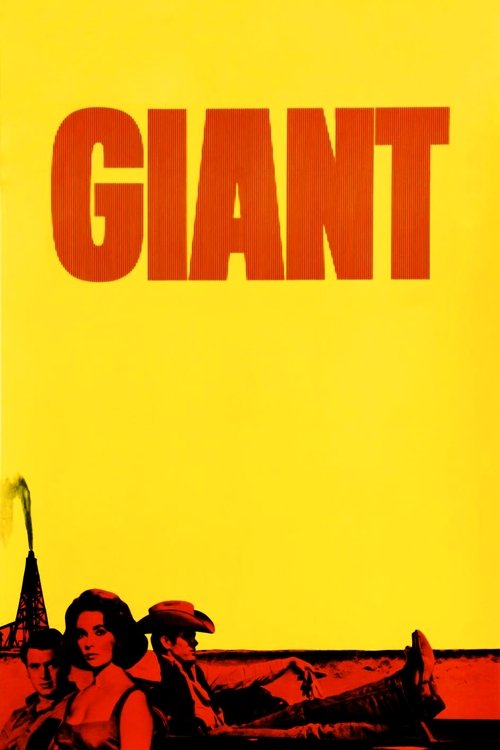
Giant (1956)
Directed by George Stevens
No · Based
How we score movies →Consciousness Markers
The film explicitly addresses racial prejudice against Mexican Americans, which was bold for 1956. However, solutions focus on individual virtue and white male heroism rather than systemic change.
The cast includes Mexican American actors like Sal Mineo, but roles remain supporting and secondary to the white leads. Representation exists but operates within hierarchical narrative structures.
Leslie occasionally delivers speeches about the wrongness of prejudice, and the film's messaging about racial equality is fairly explicit, though not heavy-handed by modern standards.
Leslie represents moral consciousness but remains confined to supporting the male narrative arc. Her agency exists primarily through influence on men rather than autonomous action.
The film presents a sympathetic view of Texas history that acknowledges racism but does not fundamentally challenge the narrative of westward expansion or settler colonialism.
The narrative celebrates Jett Rink's capitalist success through oil discovery as a central plot point. Wealth acquisition drives the entire conflict.
No LGBTQ+ themes or characters present in the film. The romantic and sexual dynamics are entirely heterosexual and conventional.
No climate-related themes or environmental consciousness present. Oil discovery is treated as economic opportunity without ecological consideration.
No body positivity framework or discussion of body diversity. The film operates within conventional 1950s beauty standards without interrogation.
No representation of neurodivergent characters or conditions. No meaningful engagement with disability or neurological difference.


Synopsis
Wealthy rancher Bick Benedict and dirt-poor cowboy Jett Rink both woo Leslie Lynnton, a beautiful young woman from Maryland who is new to Texas. She marries Benedict, but she is shocked by the racial bigotry of the White Texans against the local people of Mexican descent. Rink discovers oil on a small plot of land, and while he uses his vast, new wealth to buy all the land surrounding the Benedict ranch, the Benedict's disagreement over prejudice fuels conflict that runs across generations.
Why it received this score
Giant stands as a fascinating historical artifact of mid-century liberalism, a film that genuinely attempted to grapple with racial prejudice at a moment when most American cinema ignored the subject entirely. Elizabeth Taylor's Leslie functions as the moral center of the narrative, increasingly appalled by the casual racism of Texan society and ultimately serving as a voice for Mexican American dignity and education. For 1956, this positioning represented a significant cultural statement, particularly in a mainstream epic that reached millions. The film's willingness to present racism as morally indefensible, rather than merely unfortunate or inevitable, placed it ahead of its contemporaries in terms of explicit social messaging.
However, the film's progressive posture operates within constraints that reveal the limitations of its era's understanding of social consciousness. The Mexican American characters, while sympathetically portrayed, remain largely peripheral to the narrative machinery, functioning primarily as catalysts for the white characters' moral education rather than as protagonists of their own stories. The visual and narrative language often exoticizes Mexican culture, treating it as colorful backdrop rather than complex lived experience. More fundamentally, the film's solutions to prejudice center on individual virtue and personal transformation, suggesting that good-hearted white men can solve racial injustice through kindness and physical defense, instead of interrogating the structural systems that perpetuate discrimination.
The film's representation of women through Leslie reflects more conventional gender dynamics of its era, with her moral clarity functioning somewhat as a civilizing force rather than as a full character with agency beyond her role as conscience. The narrative ultimately contains her progressive impulses within the family structure, and her most significant victories come through influencing men rather than through autonomous action. There is no meaningful interrogation of class structures beyond the individual rise of Jett Rink, no climate consciousness, no genuine neurodivergent representation, and no body positivity framework. Giant is best understood as a pre-contemporary progressive film, morally serious within its own historical moment but not aligned with the specific markers of 21st century progressive sensibility.
Analysis generated by our Consciousness Algorithm
Critic Reviews
“Gigante represents the sort of artful low-budget accomplishment that could, and should, be coming out of distressingly stingy Chicago once a year — whatever the subject, whatever the sensibility.”
“Camandule gives a strong performance as the lovesick guard, but Svarcas gets little chance to show her skills. There's minimal dialogue and camera movement -- but lots of charm.”
“Because of the limitations imposed by the nature of Gigante, and because of Jara's simple, almost childish shyness, the film doesn't transcend its characters. Like Jara, it waits and watches.”
“Though it takes time to find its courage and heart, Gigante, like its oversized hero, merely has a slow, shy way of doing things.”