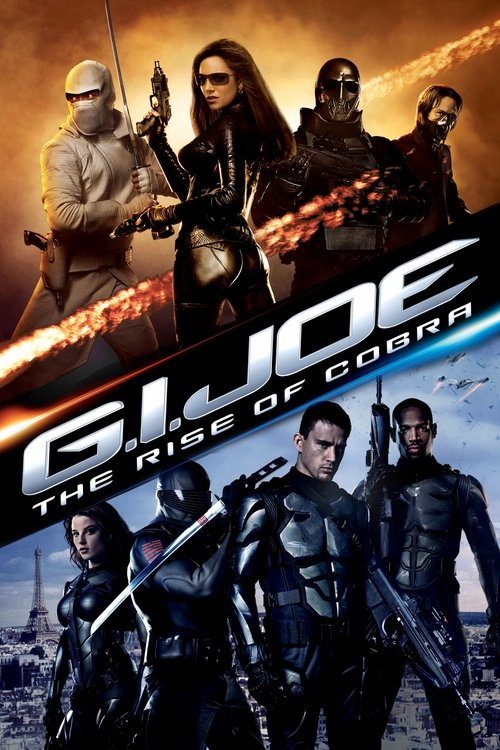
G.I. Joe: The Rise of Cobra (2009)
Directed by Stephen Sommers
No · Ultra Based
How we score movies →Consciousness Markers
The cast includes actors of various ethnic backgrounds, but their presence serves purely functional narrative roles with no thematic engagement with representation.
While the ensemble includes actors of color, the film makes no attempt to examine racial dynamics, colonial legacies, or systemic inequality.
No evidence of LGBTQ+ themes, characters, or representation in the film.
No feminist critique or engagement with gender issues. Female characters exist as supporting action figures without thematic depth.
No climate consciousness or environmental themes present in the film.
The film does not interrogate capitalism or present any critique of corporate or economic systems.
No body positivity messaging or diversity in body representation; typical action film physiques dominate.
No representation of or engagement with neurodivergence in any form.
The film does not engage with historical narratives or attempt revisionist history.
No preachy moralizing or lectures about social issues; the film prioritizes action spectacle over any educational messaging.


Synopsis
From the Egyptian desert to deep below the polar ice caps, the elite G.I. JOE team uses the latest in next-generation spy and military equipment to fight the corrupt arms dealer Destro and the growing threat of the mysterious Cobra organization to prevent them from plunging the world into chaos.
Why it received this score
G.I. Joe: The Rise of Cobra represents the quintessential pre-woke action spectacle, a film that has absorbed demographic changes in entertainment without altering its fundamental ideological commitments. The ensemble cast includes Adewale Akinnuoye-Agbaje, Lee Byung-hun, and Saïd Taghmaoui, demonstrating a baseline level of racial diversity typical of post-2000s action films. However, this diversity exists entirely in service of plot mechanics rather than any genuine engagement with representation or cultural consciousness. The film makes no attempt to interrogate power structures, colonial legacies, or systemic inequity.
The narrative concerns itself solely with spectacle, international espionage, and the deployment of increasingly improbable technology against a faceless evil organization. There is no feminist critique, no climate consciousness, no interrogation of capitalism's role in global conflict, and no neurodivergent representation. The characters simply happen to exist in various ethnic configurations while executing military operations, functioning as interchangeable units within the larger machinery of action cinema.
The film operates entirely within the framework of 1980s action cinema, updated with 2009 CGI and a slightly more diverse color palette. It is a product that has absorbed the surface aesthetics of contemporary casting practices while remaining fundamentally indifferent to questions of systemic inequality, representation beyond counting, or any broader social consciousness. It exists as pure entertainment machinery, neither progressive nor regressive, simply agnostic to the cultural concerns that would later define the decade.
Analysis generated by our Consciousness Algorithm
Critic Reviews
“The Rise Of Cobra holds to a thrill-ride sensibility that’s unchallenging and more than a little goofy, but exciting and consistently well-managed.”
“While thesping is not the main game here, having a cast of bright young things certainly helps, and Quaid gets in a few nice John Wayne-like moments as the no-nonsense boss.”
“The loudest, flashiest, silliest and longest blockbuster in a summer full of long, silly, flashy, loud blockbusters (long and silly "Transformers," flashy and loud "Wolverine").”
“This pricey, juiceless pulp could never have been killed by critics, simply because it was already dead.”