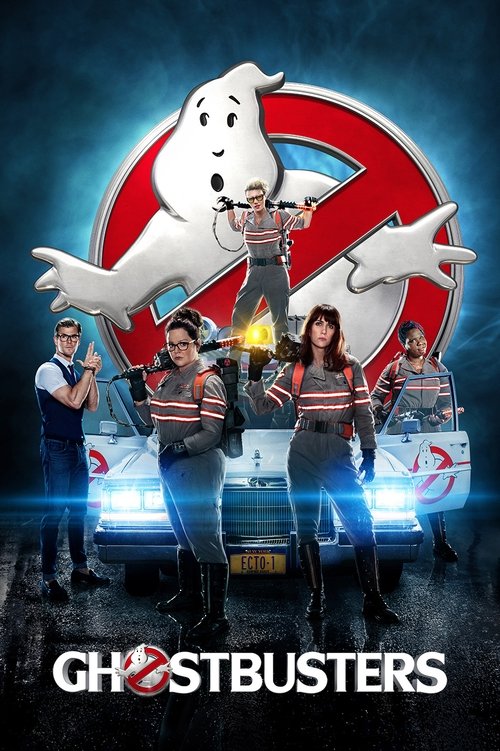
Ghostbusters (2016)
Directed by Paul Feig
Partly · Woke-Adjacent
How we score movies →Consciousness Markers
All-female lead cast explicitly replaces the original male team, representing a significant shift in Hollywood casting practices and receiving substantial media attention for its gender representation.
While women are protagonists, the film lacks substantive feminist narrative content, systemic critique of gender inequality, or exploration of female experience in male-dominated fields.
Leslie Jones is cast as a working-class subway employee, representing racial diversity in the lead cast, but the film contains minimal engagement with race-specific themes or racial justice.
Melissa McCarthy's presence as a lead in an action film challenges conventional beauty standards in the genre, though the film does not explicitly engage with body positivity messaging.
Kate McKinnon's character has subtle coding that some interpreted as suggesting queerness, but no explicit LGBTQ+ themes or relationships are present in the narrative.
The film occasionally acknowledges its gender-swapped premise through dialogue and the secretary character inversion, but lacks sustained preachy messaging or explicit social commentary.
No climate-related themes, environmental consciousness, or ecological messaging are present in the film.
The narrative involves standard capitalist structures with no critique of wealth inequality, corporate power, or economic systems.
No characters are portrayed as neurodivergent, and no neurodivergence-related themes are explored in the narrative.
The film makes no attempt to reexamine or reframe historical events, featuring supernatural fiction rather than historical narrative.


Synopsis
Following a ghost invasion of Manhattan, paranormal enthusiasts Erin Gilbert and Abby Yates, nuclear engineer Jillian Holtzmann, and subway worker Patty Tolan band together to stop the otherworldly threat.
Why it received this score
The 2016 Ghostbusters reboot presents a textbook case of progressive casting divorced from thematic depth. An all-female team of paranormal investigators replaces the original male cast, a choice that generated considerable cultural commentary upon release. However, the film itself remains a conventional action-comedy where gender functions as a surface-level characteristic rather than a substantive narrative element. The team's expertise in science and problem-solving is presented as gender-neutral; there is no exploration of systemic barriers, workplace discrimination, or the female experience in male-dominated fields like physics or engineering. The gender swap exists as a marketing premise and representation metric rather than as a vehicle for progressive consciousness or critique. Chris Hemsworth's male secretary character inverts the typical eye-candy trope, a mild subversion that registers as comic relief rather than meaningful commentary. The film engages minimally with racial consciousness, body positivity, neurodivergence, climate themes, or anti-capitalist messaging. The cultural polarization surrounding its release became more significant than the film's actual content, transforming a straightforward studio comedy into a cultural proxy war. The film works as entertainment, functions adequately as representation, but operates without the thematic engagement that would elevate its progressive sensibilities beyond casting choices.
Analysis generated by our Consciousness Algorithm
Critic Reviews
“Ghostbusters is one of those rare movies where the original, fragile comic vision has survived a multimillion-dollar production.”
“Ghostbusters is a hoot. It's Murray's picture, and in a triumph of mind over matter, he blows away the film's boring special effects with his one-liners. Spotting a lusty, totally transformed, fire-breathing Slgourney Weaver, whose body has been overtaken by a spirit, Murray walks past her saying, "That's a new look for you, isn't it?" Thank you, Bill. And don't get outta here, you knucklehead. We like you in this kind of movie.”
“Whoever thought of having evil's final manifestation take the form of a 100-ft. marshmallow deserves the rational mind's eternal gratitude. But praise is due to everyone connected with Ghostbusters for thinking on a grandly comic scale and delivering the goofy goods, neatly timed and perfectly packaged.”
“However good an idea it may have been to unleash Mr. Murray in an ''Exorcist''-like setting, this film hasn't gotten very far past the idea stage. Its jokes, characters and story line are as wispy as the ghosts themselves, and a good deal less substantial.”