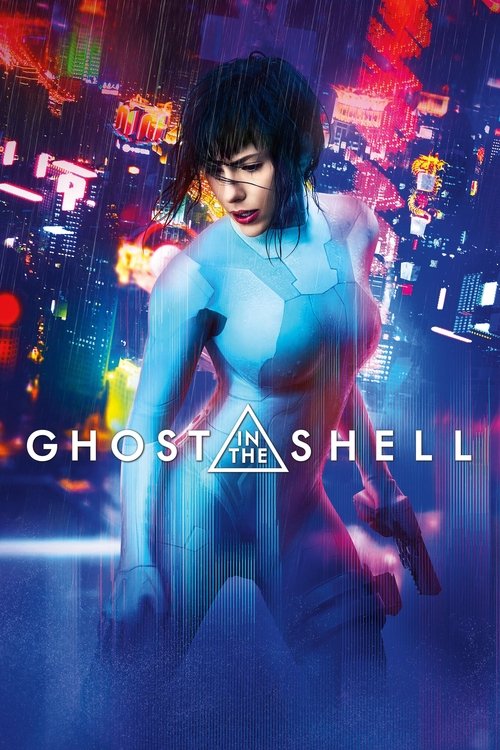
Ghost in the Shell (2017)
Directed by Rupert Sanders
No · Based
How we score movies →Consciousness Markers
Strong supporting Asian cast and production company involvement, but severely undermined by the whitewashing controversy of casting Scarlett Johansson as the traditionally Japanese Major.
The film explores identity and consciousness but fails to engage meaningfully with the racial dimensions of its own casting choices and source material adaptation.
Female action lead with agency, but the film's visual approach emphasizes her body as spectacle rather than as an instrument of feminist empowerment.
Philosophical dialogue about consciousness and identity exists but remains relatively restrained and does not dominate the narrative in a preachy manner.
Major's cybernetic body is presented as an idealized, perfect form rather than embracing body diversity or challenging conventional beauty standards.
Corporate antagonists exist in the narrative, but anti-capitalist critique remains underdeveloped and superficial.
No LGBTQ+ themes, characters, or representation present in the film.
No climate-related themes or environmental concerns are present.
No neurodivergent representation or exploration of neurodiversity.
The film does not engage in historical revisionism.


Synopsis
In the near future, Major is the first of her kind: a human saved from a terrible crash, then cyber-enhanced to be a perfect soldier devoted to stopping the world's most dangerous criminals.
Why it received this score
The 2017 Ghost in the Shell presents a study in contradictions, or perhaps more accurately, a masterclass in how structural problems can persist despite surface-level attempts at diversity. The film assembles an impressive supporting cast featuring Takeshi Kitano, Rila Fukushima, and Chin Han, yet the casting of Scarlett Johansson as the lead character remains the unavoidable center of gravity, a choice that generates its own gravity well of cultural subtext that overwhelms nearly everything else in the frame. The source material's Japanese origin and cultural specificity are rendered somewhat abstract, transformed into a glossy, internationally-financed meditation on consciousness that could exist anywhere and therefore exists nowhere in particular.
Major herself is presented as a capable action protagonist, though the film's visual language treats her cybernetic form as an object of aesthetic contemplation rather than as a vehicle for genuine feminist exploration. The supporting narrative includes philosophical discussions of identity and selfhood, which carry some weight, but these conversations feel more like intellectual window-dressing than organic expressions of the film's thematic concerns. The corporate villains lurking in the background suggest anti-capitalist impulses that never quite crystallize into actual critique.
What remains is a film caught between its own contradictions, featuring moments of progressive casting and representation undermined by choices that speak louder than any dialogue about identity and belonging. The irony of casting a white American actress to explore questions of identity, consciousness, and the search for one's true self in a Japanese narrative is perhaps too heavy-handed to be accidental, yet the film itself seems largely unaware of the commentary it inadvertently generates.
Analysis generated by our Consciousness Algorithm
Critic Reviews
“There are gripping chases and balletic combat scenes, painstakingly realised by Oshii’s animators, but the mood is mostly cold and melancholic, as Kusanagi broods over the fleshly implications of living in a world of data”
“It's not the mega-tech or the shootouts that make Ghost in the Shell memorable, but the ghostliness of it, its ability to convince us that Kusangai - no less than Rutger Hauer's strangely noble android in "Blade Runner" - has a human's ability to conceptualize her own mortality. Nor does arid intellectual speculation make Ghost in the Shell what it is. [1 Mar 1996, p.29]”
“Technically, Ghost in the Shell is astonishing, not only for its smooth meld of cell animation and state-of-the-art computer animation, but also for its imaginative storytelling and mood-setting (thanks to an eerie, non-thumping score by Kenji Kawai). ”
“Ghost in the Shell is a slick but plodding recycling of tired cyberpunk clichés that adds nothing new to the genre. ”