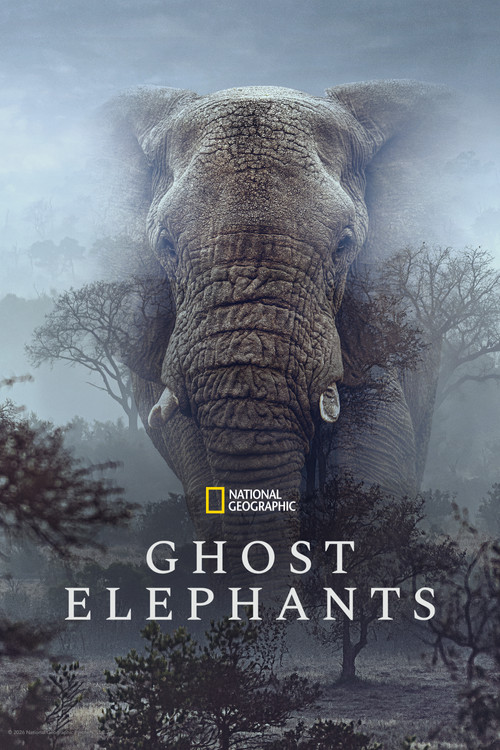
Ghost Elephants (2026)
Directed by Werner Herzog
Partly · Woke-Adjacent
How we score movies →Consciousness Markers
KhoiSan trackers are centered as protagonists and knowledge experts rather than supporting characters. The film prioritizes their agency and expertise, though the framing remains under Herzog's directorial control.
The film explicitly engages with indigenous identity and positions KhoiSan people as holders of ancestral knowledge. This reflects contemporary racial consciousness, though mediated through Herzog's European perspective.
The film implicitly critiques technological civilization and Western scientific extraction, positioning ancestral memory and spiritual knowledge against modern rationalism. Yet it remains ambivalent about these tensions.
Herzog's narration carries philosophical weight and interpretive framing that guides viewer understanding. The film educates about indigenous knowledge systems, though in an artistic rather than preachy register.
Conservation themes are present through the search for endangered elephants and the protection of wilderness. However, the film prioritizes spiritual and philosophical inquiry over climate activism rhetoric.
The film engages with indigenous history and memory systems as valid forms of knowledge, implicitly challenging Western historical narratives. However, this is not a primary focus of the work.
One female tracker is present among the three protagonists, but gender dynamics receive minimal explicit attention or analysis in the narrative.
No LGBTQ+ themes, characters, or representation present in the film.
No body positivity themes or relevant content in this nature documentary.
No neurodivergence representation or themes in the film.


Synopsis
In Angola's mist-shrouded highlands, three KhoiSan master trackers embark on a spiritual quest to rediscover the legendary "ghost elephants" of Lisima-creatures presumed lost by technology but remembered in ancestral trance, ritual, and memory.
Why it received this score
Werner Herzog's "Ghost Elephants" presents the paradox of a filmmaker whose entire career has been devoted to the sublime and the obsessive, now turned toward a subject that sits uncomfortably between conservation heroism and the aestheticization of indigenous knowledge. The film follows Steve Boyes and three KhoiSan trackers into Angola's highlands in search of possibly mythical elephants, and Herzog's camera treats their expedition with the same romantic intensity he once reserved for conquistadors and mad dreamers. The result is a film that wants to celebrate indigenous wisdom and ancestral memory while remaining a Herzog production, which means we are always watching Herzog's vision of these people and places, not inhabiting their own understanding of them.
The progressive framework is present and deliberate. The KhoiSan trackers are positioned as keepers of ancient knowledge that technology and Western science have rendered obsolete, and the film honors their spiritual relationship to the landscape. Yet this honoring occurs within a specific contemporary cultural vocabulary: indigenous peoples as repositories of ecological wisdom, their knowledge systems as counterweight to capitalist extraction, their presence as moral corrective to Western hubris. These are not false observations, but they are observably the language of 2020s cultural consciousness rather than the trackers' own framework. Herzog does not pretend to be a neutral observer, which is honest, but his narration and framing choices ensure that we see their world through his philosophical lens rather than their own.
The film's relationship to representation is complicated. It centers KhoiSan people as protagonists and experts rather than subjects, which marks a shift from earlier documentary practice. Yet the very act of a European filmmaker documenting their search, with cinematography designed for aesthetic rapture, reproduces a familiar colonial visual grammar. One might argue this is simply documentary practice in 2025, or one might observe that the film's cultural consciousness about representation exists in tension with its fundamental structure. The film is earnest in its progressive intentions and sophisticated in its execution. Whether that sincerity resolves the underlying contradictions is a question each viewer must settle for themselves.
Analysis generated by our Consciousness Algorithm
Critic Reviews
“Ghost Elephants is a portrait of obsession that, while gentler than some of Herzog’s other works, is mesmerizing from the first moment to the last, yet another title of note in what remains one of the most incredible filmographies of our time.”
“Herzog, for his part, remains firmly interested in both nature and man. His camera is enthralled by the animals that occasionally steal into the frame: a venomous spider, covered by its equally dangerous young, gets a frightening cameo. But what absorbs him most is the intense kinship that the San feel with the elephants.”
“The lean, athletic Mr. Herzog, 83 years old, seems as spry and eager as ever, and his global enthusiasm remains a force of nature in itself. Ghost Elephants takes its place as yet another of the director’s essential forays into the wild and unknown.”
“Ghost Elephants shows that Werner Herzog is fiercely determined to explore new frontiers while they still exist and capture the poetic phenomena of nature and the unshakeable dreams it continues to instill in mankind.”