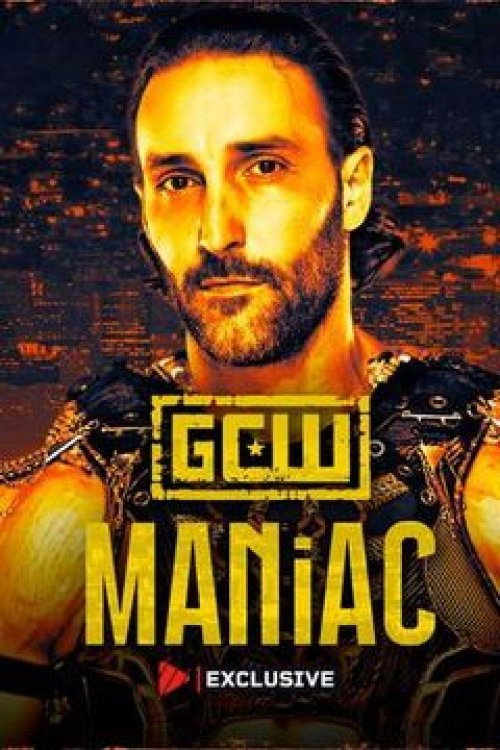
GCW: Maniac 2026 (2026)
No · Ultra Based
How we score movies →Consciousness Markers
The card features international talent including Japanese wrestler Daisuke Sasaki and a Latino competitor in Francisco Rueda, alongside two women on the card. This is less a conscious casting statement than the natural cosmopolitanism of independent wrestling, where the best available body is the best available body.
Megan Doheny and Stephanie De Landre appear on the card, which in GCW's context means they are probably going to hit someone with a chair. This is inclusion in the most primal sense. No feminist framing is applied.
GCW's self-branding as 'The Last Outlaws of Pro Wrestling' carries a faint anti-establishment posture directed at WWE corporatism. This is more aesthetic rebellion than structural critique, and nobody is reading Engels in the green room.
No LGBTQ+ themes, characters, or messaging are present or documented in this event.
No racial consciousness themes or commentary are present. The cross-cultural Japan vs. America main event is framed as a championship match, not a geopolitical seminar.
No climate themes are present. The environmental footprint of a deathmatch wrestling event is, one suspects, not on the promotional materials.
No body positivity messaging is present. The performers are professional athletes who get hit with light tubes for money.
No neurodivergence themes or representation are present or documented.
No revisionist history is present. The history being made here is of the 'someone went through a table' variety.
GCW's programming is, to its credit, entirely devoid of lecture energy. The audience is there to watch Atticus Cogar do something inadvisable with a skewer. Nobody is being educated.
Synopsis
GCW Maniac 2026 was a professional wrestling event promoted by Game Changer Wrestling (GCW), held on April 4, 2026 at The Ukrainian Culture Center, Los Angeles, CA,
Why it received this score
GCW: Maniac 2026 is a professional wrestling event, which is to say it is a choreographed athletic spectacle involving folding chairs, light tubes, and the kind of interpersonal violence that would concern a social worker if it were not consensual and ticketed. Game Changer Wrestling, which bills itself as "The Last Outlaws of Pro Wrestling," has chosen to hold this particular edition of its ongoing outlaw enterprise at the Ukrainian Culture Center in Los Angeles. The venue choice is, in the grand tradition of independent wrestling, both logistically pragmatic and accidentally poetic.
From a social consciousness standpoint, Maniac 2026 presents a profile so sparse it is almost meditative. The card's international dimension, specifically the main event pitting GCW World Champion Atticus Cogar against DDT Universal Champion Daisuke Sasaki of Japan, represents genuine cross-cultural exchange. It does not, however, represent a statement about it. No one will be handed a pamphlet. The presence of women on the card is noted and then immediately subsumed by the more pressing question of what implement they will be using. GCW's faint anti-corporate posturing, the "outlaw" branding aimed squarely at WWE's sanitized product, is the closest this event comes to ideological content, and it is an ideology best described as "we prefer blood to production values."
The overall score here is the wrestling equivalent of a clear broth: there is almost nothing in it, and that is precisely the point. In a media landscape where everything from breakfast cereal commercials to superhero films arrives pre-loaded with messaging, GCW: Maniac 2026 offers the radical proposition that two men can fight over a championship belt without the proceedings being freighted with cultural significance. This critic, having sat through a great many films that desperately wanted to change the world, finds this restraint, if not admirable, then at least honest.
Analysis generated by our Consciousness Algorithm