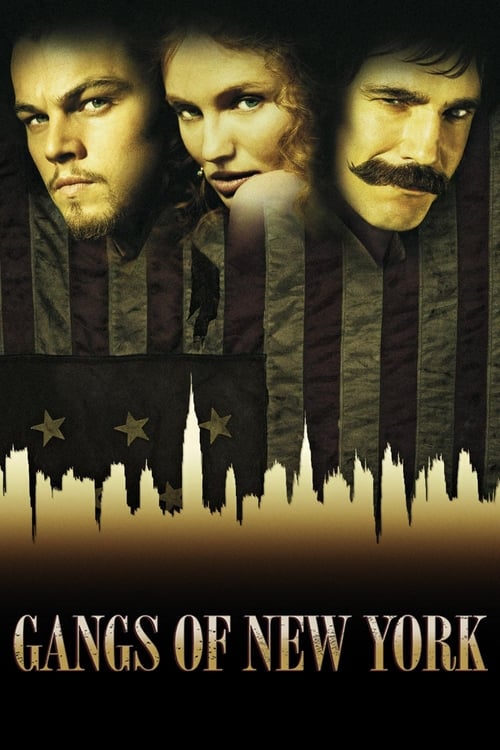
Gangs of New York (2002)
Directed by Martin Scorsese
No · Ultra Based
How we score movies →Consciousness Markers
The film depicts anti-Irish racism and nativist violence, but as historical documentation rather than through a modern progressive framework of systemic analysis.
Cameron Diaz's character provides minimal female perspective and exists primarily as a narrative device within a male-centered revenge story.
The cast is predominantly white and male, reflecting both the historical period and early 2000s casting norms. No apparent effort toward contemporary diversity representation.
Scorsese conveys historical context through narrative and character rather than through preachy exposition or heavy-handed messaging.
No LGBTQ+ themes, characters, or representation evident in the film.
No climate-related themes, messaging, or environmental consciousness present in the film.
No anti-capitalist agenda or critique of economic systems evident in the narrative.
No body positivity messaging or representation of diverse body types as a thematic concern.
No representation of neurodivergent characters or themes related to neurodiversity.
The film adapts historical source material without apparent revisionist intent to reframe events through modern ideological lenses.


Synopsis
In early 1860s New York, Irish immigrant Amsterdam Vallon is released from prison and returns to the Five Points, seeking revenge against his father's killer, William Cutting, a powerful anti-immigrant gang leader. He knows that revenge can only be attained by infiltrating Cutting's inner circle. Vallon's journey becomes a fight for personal survival and to find a place for the Irish people.
Why it received this score
Martin Scorsese's "Gangs of New York" is a thoroughly historical document, a work of period filmmaking that concerns itself with the mechanics of 19th-century urban violence and ethnic displacement rather than the sensibilities of the 2020s. The film depicts racism and nativist brutality as historical facts to be shown, not as symptoms to be diagnosed through the lens of contemporary social consciousness. DiCaprio and Day-Lewis inhabit their roles as products of their violent era, not as vehicles for commentary on modern identity politics.
Cameron Diaz provides the film's only female perspective, though her character exists primarily as a narrative device within the male-centered revenge tale rather than as a subject of particular feminist interest. The casting reflects both the historical period and early 2000s Hollywood conventions, with no apparent effort toward contemporary diversity mandates. Scorsese tells his story through cinematic craft and narrative momentum, not through preachy messaging about systemic oppression or the need for institutional reform.
The film's engagement with Irish immigrant experience is rooted in historical documentation and personal artistic passion rather than in contemporary frameworks of marginalization and representation. One encounters here a work of cinema made before such frameworks became standard operating procedure, a film that trusts its audience to understand historical context without constant guidance from the narrative apparatus.
Analysis generated by our Consciousness Algorithm
Critic Reviews
“Gangs of New York is something better than perfect: It's thrillingly alive.”
“A magnificent throwback to an almost vanished era of epic filmmaking by great filmmakers in thrall to their own passions, rather than to the studio bookkeepers.”
“Everything is vast and hugely ambitious in Martin Scorsese's magisterial, scrambled historical epic.”
“Scorsese and his team have created a heavy-footed golem of a motion picture, hard to ignore as it throws its weight around but fatally lacking in anything resembling soul.”