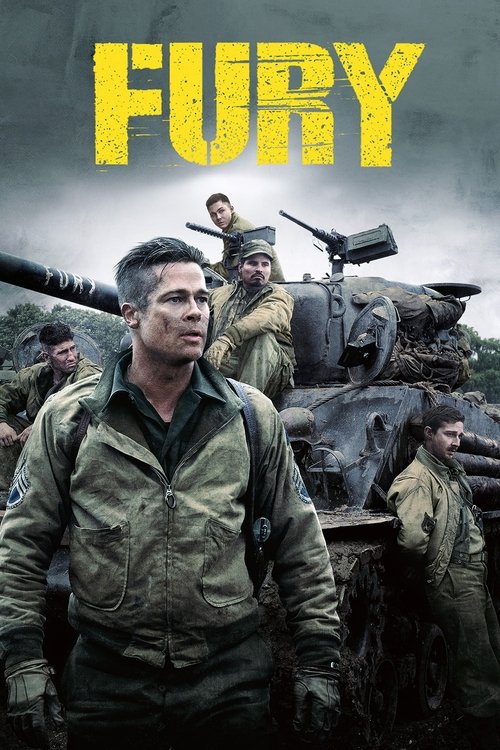
Fury (2014)
Directed by David Ayer
No · Ultra Based
How we score movies →Consciousness Markers
The crew includes Michael Peña as a Hispanic soldier and Jon Bernthal as a Jewish soldier, but their identities are treated as background details rather than narrative focal points. Representation exists but lacks thematic emphasis.
While the cast includes racial diversity, the film does not engage with race as a thematic element or examine systemic racial dynamics within the military structure.
While the film carries moral weight through its depiction of warfare's psychological toll, it prioritizes visceral action over preachy messaging or explicit social instruction.
No LGBTQ+ characters, themes, or narrative elements are present in the film.
The film features an all-male military crew with no female characters of significance or any feminist thematic content.
No environmental or climate-related messaging is present in the film.
The film contains no anti-capitalist themes or critique of economic systems.
No body positivity themes or representation are present in the film.
No neurodivergence representation or thematic engagement is evident in the film.
The film adheres to historical WWII events without attempting revisionist reinterpretation of historical narrative.


Synopsis
April, 1945. As the Allies make their final push in the European Theatre, a battle-hardened army sergeant named Wardaddy commands a Sherman tank and her five-man crew on a deadly mission behind enemy lines. Outnumbered and outgunned, and with a rookie soldier thrust into their platoon, Wardaddy and his men face overwhelming odds in their heroic attempts to strike at the heart of Nazi Germany.
Why it received this score
Fury arrives as a deliberately unadorned war film, one concerned with the sensory brutality of tank combat and the moral calcification that follows prolonged exposure to violence. Director David Ayer constructs a narrative around five men in a metal box rolling through Nazi Germany in April 1945, and the film's ambitions remain confined to that intimate, claustrophobic space. The crew includes one Hispanic soldier, one Jewish soldier, and a rookie, yet the film treats these facts as incidental to the immediate problem of survival rather than as opportunities for commentary on identity or representation.
The film's refusal to engage with social consciousness is its defining characteristic. There is no examination of systemic inequality within the military structure, no interrogation of American power or foreign policy, no suggestion that warfare itself might be questioned. Instead, we get the visceral experience: the shock of artillery, the mechanical reliability of violence, the way men bond under extreme duress. This is the film's actual thesis, delivered through sound design and editing rather than dialogue. Ayer spends considerably more effort on the logistics of combat than on the interior lives of his characters, a choice that evacuates the film of the kind of psychological depth that might invite progressive reexamination.
For those tracking the specific markers of contemporary cultural sensibility, Fury offers almost nothing. It is an artifact of mid-2010s filmmaking when war films could still be made as straightforward genre exercises. Whether this represents artistic virtue or limitation remains a matter of perspective, but the film's indifference to the social consciousness that would come to dominate discourse by the following decade is absolute and consistent.
Analysis generated by our Consciousness Algorithm
Critic Reviews
“At its best, Fury examines the psychological experience of warfare. ”
“Fury is a guided tour through a manmade hell.”
“In a way, Fury and 1970's "Patton" could be considered companion pieces. Both deal extensively with tank warfare but from different perspectives.”
“Fury is a war movie with balls of steel and marbles for brains.”