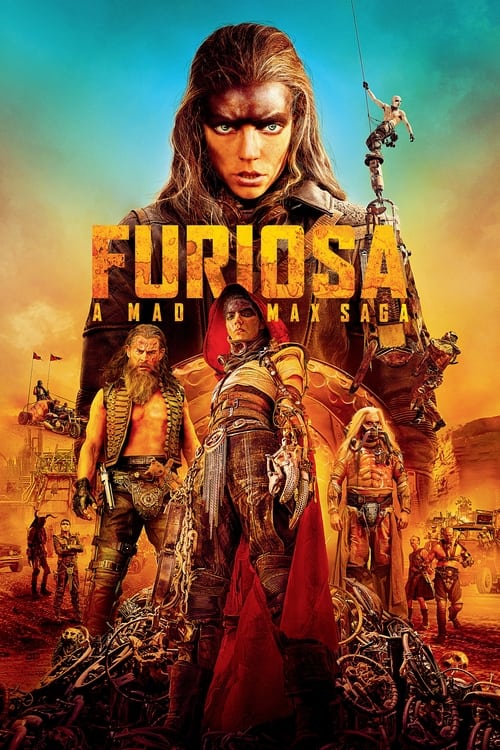
Furiosa: A Mad Max Saga (2024)
Directed by George Miller
No · Based
How we score movies →Consciousness Markers
A female protagonist drives the narrative and demonstrates agency, competence, and strategic thinking. Yet the film does not pause to celebrate or theorize this arrangement; it simply depicts it as the nature of the story.
The cast includes performers of varied ethnic backgrounds, and the lead role is female. However, the film makes no explicit point of this diversity, presenting it as a natural feature of the world rather than as a statement.
The narrative depicts brutal resource competition and warlord economics, which could be read as critiques of power consolidation. However, the film presents this as the nature of the world, not as a system to be dismantled by collective action.
While the cast includes diverse representation, the film makes no effort to interrogate or comment upon racial dynamics. Diversity exists within the world without becoming thematic material.
The post-apocalyptic setting implies environmental collapse, but the film does not engage with climate activism or sustainability messaging. The wasteland is backdrop rather than argument.
The film maintains narrative momentum and rarely pauses for thematic exposition. It trusts the audience to understand the world without explanation, resulting in minimal preachy moments.
No LGBTQ+ themes, representation, or subtext are present in the film. The narrative contains no characters whose identity or relationships suggest queer themes.
The film contains no messaging about body acceptance, body diversity, or body positivity. Characters are depicted according to the logic of the narrative world.
No representation of neurodivergent characters or themes related to neurodiversity are present in the film.
As a work of science fiction set in a fictional post-apocalyptic future, the film contains no historical revisionism or reinterpretation of real events.


Synopsis
As the world falls, young Furiosa is snatched from the Green Place of Many Mothers into the hands of a great biker horde led by the warlord Dementus. Sweeping through the wasteland, they encounter the citadel presided over by Immortan Joe. The two tyrants wage war for dominance, and Furiosa must survive many trials as she puts together the means to find her way home.
Why it received this score
Furiosa arrives as a film almost quaint in its refusal to genuflect before the altar of contemporary social consciousness. Here stands a two-hour-and-twenty-minute action prequel that commits the cardinal sin of being primarily interested in what it purports to depict: a woman surviving in a dystopia, not a woman surviving in a dystopia while the film pauses periodically to acknowledge her oppression. The female protagonist, Furiosa, is granted the courtesy of competence without a lecture. She fights, she plans, she endures. The narrative does not interrupt itself to celebrate her agency or explain how her physical prowess represents a challenge to patriarchal norms. This restraint, whether intentional or not, renders the film almost refreshingly indifferent to the machinery of modern cultural validation.
The supporting cast reflects a certain diversity of appearance, though the film makes no particular point of it. Chris Hemsworth's Dementus and the various inhabitants of the wasteland include performers of varied backgrounds, but they are present as characters rather than as representatives. The world of Furiosa is harsh, brutal, and essentially indifferent to the identity politics that preoccupy the contemporary discourse. The film's focus remains on kinetic spectacle, world-building mythology, and the logistics of survival. One might observe that this dedication to narrative momentum over preachiness becomes almost countercultural in an era where many tentpole productions feel obligated to interrupt their plots for moments of thematic clarity.
What prevents Furiosa from scoring even lower is its fundamental commitment to depicting female characters as central agents in a story of power and survival. Furiosa's agency is never questioned or diminished within the text, though this emerges from the logic of the narrative rather than from an explicit commitment to representation. The film operates within a framework established by George Miller's previous entries in the franchise, where gender becomes secondary to competence. This is not progressive messaging dressed as entertainment. It is simply entertainment that happens to center a woman without making that fact the subject of its own analysis.
Analysis generated by our Consciousness Algorithm
Critic Reviews
“The chassis may look familiar but there is a very different engine driving Furiosa from that of Fury Road: it’s a rich, sprawling epic that only strengthens and deepens the Max-mythology. It shall ride eternal!”
“It’s hard to overstate how immaculately crafted Furiosa: A Mad Max Saga is, both as a prequel to Max Max: Fury Road and as a stand-alone story of how the Wasteland created a powerful character. ”
“Director George Miller combines speed, grace and explosive violence, emulating Sam Peckinpah westerns and even, at times, the work of Charles Dickens – Furiosa is a bit like a young Artful Dodger, using her wits and courage to stay alive.”
“It’s awful. But it could be where movies are going — into a wasteland. ”