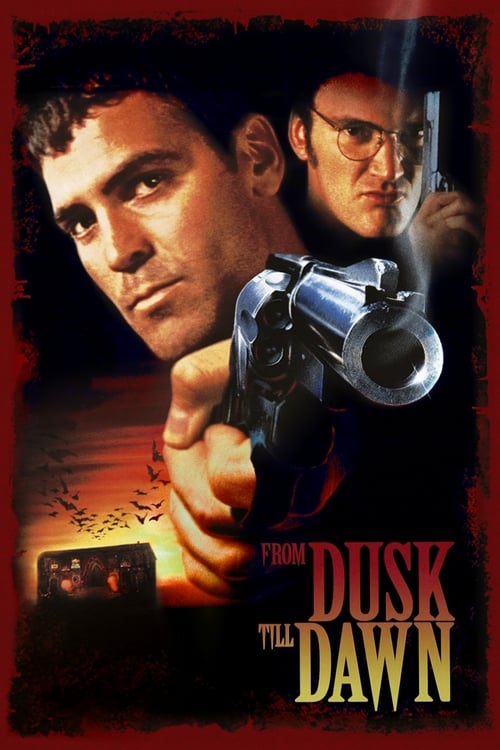
From Dusk Till Dawn (1996)
Directed by Robert Rodriguez
No · Ultra Based
How we score movies →Consciousness Markers
The film features a diverse cast including Salma Hayek, Cheech Marin, Danny Trejo, and Fred Williamson, but these actors occupy supporting roles and are not part of an intentional progressive casting strategy.
The film's treatment of female characters is problematic by modern standards, with Hayek's character primarily objectified and other women relegated to passive roles.
While set at a Mexican border bar with Latino characters, the film does not engage in explicit racial consciousness or cultural commentary.
No LGBTQ+ representation or themes are present in the film.
No climate-related themes or messaging appear in the film.
Though criminals are protagonists, the film lacks any critique of capitalism or economic systems.
No body positivity messaging or representation is present in the film.
No neurodivergent representation or themes appear in the film.
The film does not engage with or attempt to revise historical narratives.
The film is pure entertainment without preachy impulse or social messaging of any kind.


Synopsis
After kidnapping a father and his two kids, the Gecko brothers head south to a seedy Mexican bar to hide out in safety, unaware of its notorious vampire clientele.
Why it received this score
From Dusk Till Dawn stands as a product of its era, a 1996 genre exercise that predates by nearly two decades the modern progressive sensibilities that would come to dominate film criticism. Robert Rodriguez's direction and Quentin Tarantino's screenplay create a stylish, entertaining hybrid of crime thriller and vampire horror, but the film operates entirely outside frameworks of contemporary cultural consciousness. The cast is genuinely diverse, featuring Mexican-American and Chicano performers alongside established Hollywood names, yet this diversity feels incidental to the narrative rather than intentional in any progressive sense. Salma Hayek's famous dance sequence, while visually striking and culturally iconic, presents her character primarily as a sexualized object of desire rather than a complex human figure, a choice that reflects the film's pre-2010 sensibilities without apology. The female characters throughout remain largely passive elements in a story driven by male criminal protagonists. The setting of a Mexican border bar could have served as a space for cultural exploration or commentary, but instead it functions as mere backdrop and plot device. This is not a film that lectures or educates or attempts to expand consciousness about social structures. It simply wants to entertain us with gunfire, vampire attacks, and stylish violence. In that narrower ambition, it succeeds admirably. But measured against the cultural metrics of contemporary progressive cinema, it registers as a historical artifact, interesting precisely because it lacks any impulse toward the social consciousness that would become increasingly central to serious filmmaking in subsequent decades.
Analysis generated by our Consciousness Algorithm
Critic Reviews
“This is horror with a wink and a nod to drive-in theatres and sweaty back seats. This is how it's done.”
“A deliriously trashy, exuberantly vulgar, lavishly appointed exploitation picture, this weird combo of road-kill movie and martial-arts vampire gorefest is made to order for the stimulation of teenage boys.”
“Quentin Tarantino and Robert Rodriguez had their fun with From Dusk Till Dawn, and now they need to stay away from each other. For their own good. Forever.”