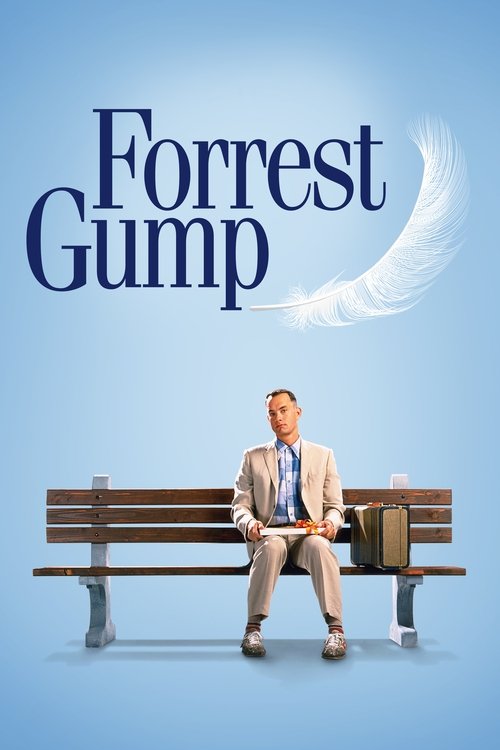
Forrest Gump (1994)
Directed by Robert Zemeckis
No · Ultra Based
How we score movies →Consciousness Markers
The film deliberately fictionalizes historical events for narrative purposes, but does so in service of personal story rather than ideological revision. It treats history as malleable but not in a progressive direction.
Forrest's intellectual disability is central to the narrative, but presented as something to transcend rather than accommodate. The film suggests that success requires moving beyond or overcoming neurodivergence.
The film's central conceit involves overcoming physical disability, but frames this as individual triumph rather than systemic change, leaning on inspiration-porn aesthetics.
The cast reflects some racial diversity, but characters of color exist primarily as supporting players in Forrest's narrative rather than as fully realized protagonists with their own agency and arcs.
The film depicts historical racial events but treats them as backdrop rather than subject. Race is acknowledged but not interrogated, with Black characters serving primarily as supporting figures.
Female characters exist in the narrative, but Jenny's arc is primarily defined through her relationship to Forrest and her struggle with victimization, rather than through independent agency or feminist consciousness.
The film maintains a light, sentimental tone that avoids heavy-handed moral instruction, though its underlying message about perseverance and maternal devotion carries preachy weight.
The film contains no meaningful LGBTQ+ representation or themes. The AIDS crisis is depicted as a backdrop but not engaged with substantively.
The narrative celebrates entrepreneurial success and wealth accumulation without critique. Forrest's financial success is presented as an unambiguous good.
No environmental or climate themes present in the film whatsoever.


Synopsis
A man with a low IQ has accomplished great things in his life and been present during significant historic events—in each case, far exceeding what anyone imagined he could do. But despite all he has achieved, his one true love eludes him.
Why it received this score
Forrest Gump occupies a peculiar position in the cultural landscape, a film so aggressively apolitical that it has managed to confound critics across the ideological spectrum. The narrative's disinterest in interrogating the historical events it depicts—Vietnam, the Civil Rights movement, Watergate, the AIDS crisis—renders it largely immune to charges of progressive grandstanding, though not to accusations of profound moral evasion. What we have instead is a film that treats American history as a series of photogenic backdrops for a private love story, a choice so thorough in its indifference to systemic analysis that it achieves an almost monastic purity of sentiment.
The film's representation of disability, its central conceit, operates less as genuine social commentary than as narrative scaffolding for an inspirational fantasy. Forrest is not presented as a figure who challenges ableist structures or demands systemic change; rather, he succeeds precisely by transcending his disability through sheer force of will and maternal guidance, a message that trades in the most conventional inspiration-porn aesthetics. The film's treatment of race is equally circumspect, featuring Black characters primarily as supporting figures in Forrest's journey rather than as subjects of their own narrative urgency.
What we see in Forrest Gump is not progressive sensibility but rather a kind of aggressive sentimentality dressed in period costumes. The film won Best Picture in 1995, a choice that now reads as a triumph of emotional manipulation over cultural awareness. It remains a product of its era: earnest, commercial, and deeply allergic to the notion that history might require more than nostalgia and platitudes to understand.
Analysis generated by our Consciousness Algorithm
Critic Reviews
“Passionate and magical, Forrest Gump is a tonic for the weary of spirit.”
“Clean up the language, and this little roach of a movie could play the bottom half of a double bill with Rowan and Martin's “The Maltese Bippy.” [26 March 1999, Life, p.9E]”
“It is also glib, shallow, and monotonous, a movie that spends so much time sanctifying its hero that, despite his "innocence," he ends up seeming about as vulnerable as Superman.”