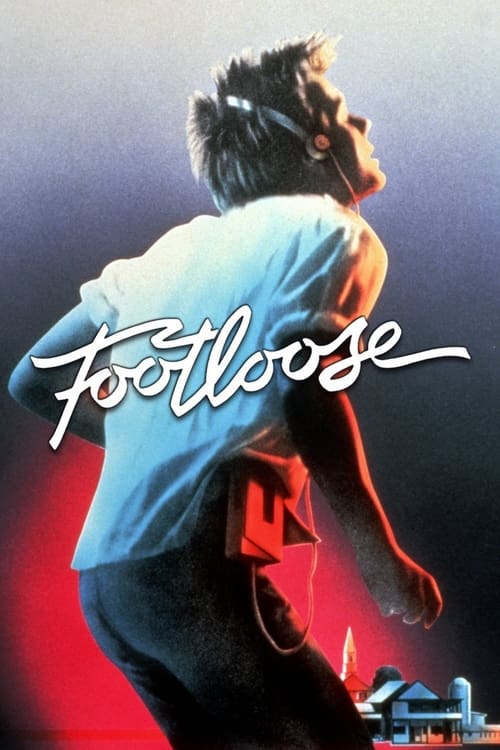
Footloose (1984)
Directed by Herbert Ross
No · Ultra Based
How we score movies →Consciousness Markers
While the female lead is active and sympathetic, she serves primarily as a romantic interest and supporter of the male protagonist's goals rather than pursuing her own independent arc.
The cast is predominantly white with no meaningful ethnic or racial diversity. Female characters are present but occupy supporting roles primarily defined by their relationships to male characters.
The film occasionally lapses into heavy-handed moralizing about artistic freedom and religious intolerance, though it avoids sustained preachiness in favor of spectacle.
No LGBTQ+ themes, representation, or subtext are present in the film. The narrative focuses exclusively on heterosexual romance.
The film contains no engagement with racial issues, inequality, or the experiences of people of color. The setting and narrative are racially unmarked and implicitly white.
Environmental concerns are entirely absent from the film's thematic framework. There is no acknowledgment of ecological issues or climate consciousness.
The film presents no critique of capitalism, class structures, or economic systems. It does not examine the material conditions that shape the town's conservatism.
There is no celebration of diverse body types or body positivity messaging. The dancers featured are conventionally attractive and fit.
No characters with neurodivergent conditions are depicted, nor is there any representation of autism, ADHD, dyslexia, or similar conditions.
The film does not attempt to reexamine or reframe historical events. It is a fictional contemporary narrative set in a small town.


Synopsis
When teenager Ren and his family move from big-city Chicago to a small town in the West, he's in for a real case of culture shock after discovering he's living in a place where music and dancing are illegal.
Why it received this score
Footloose arrives from an era before cultural discourse had been systematized into discrete social justice categories. The film concerns itself with youth rebellion against parental authority and religious conservatism, themes that are politically liberal but not particularly modern in their execution. Kevin Bacon's Ren MacCormack represents the free spirit challenging small-town censorship, which reads as a straightforward defense of artistic expression rather than an interrogation of systemic power structures. The narrative framework is entirely conventional: the outsider comes to town, makes friends, falls in love, and ultimately triumphs through the power of music and dance.
Examined through a contemporary lens, the film exhibits minimal markers of modern progressive sensibility. The female characters, while present and active, exist primarily as romantic interests and supporters of the male protagonist's agenda. Lori Singer's Ariel receives some character development as the preacher's daughter caught between two worlds, but her arc remains secondary to Ren's journey. The cast is predominantly white, which reflects 1980s Hollywood conventions rather than any statement about representation. There are no discernible attempts to address systemic inequality, environmental concerns, or the internal contradictions of capitalism, nor would we expect such attempts in a film about teenage rebellion in a fictional Midwestern town.
What the film ultimately demonstrates is the fundamental distance between 1980s liberalism and contemporary cultural consciousness. The narrative mistakes generational conflict for social analysis and treats musical performance as sufficient commentary on censorship and conformity. Its appeal rests on the strength of its soundtrack and choreography, not on any deep engagement with the forces it depicts. This is not a condemnation, merely an observation: Footloose is interested in entertaining its audience, not in educating them about their complicity in systemic injustice.
Analysis generated by our Consciousness Algorithm
Critic Reviews
“Stepping into sacred shoes once worn by Kevin Bacon, Wormald handily owns the role for a new audience. Same goes for a terrific Miles Teller (Rabbit Hole) in the sidekick role of Willard so memorably originated by the late Chris Penn. ”
“Brewer, who spent most of his childhood in Memphis, is one of the few contemporary filmmakers I know of who can make movies about the South without sentimentalizing it, glorifying it or looking down on it.”
“Wormald won't make anyone forget Bacon, but he dances better, and without a stand-in. Hough's dance ability is well-known, but she also displays flashes of acting skill. ”
“This new Footloose is a film without wit, humor or purpose. ”