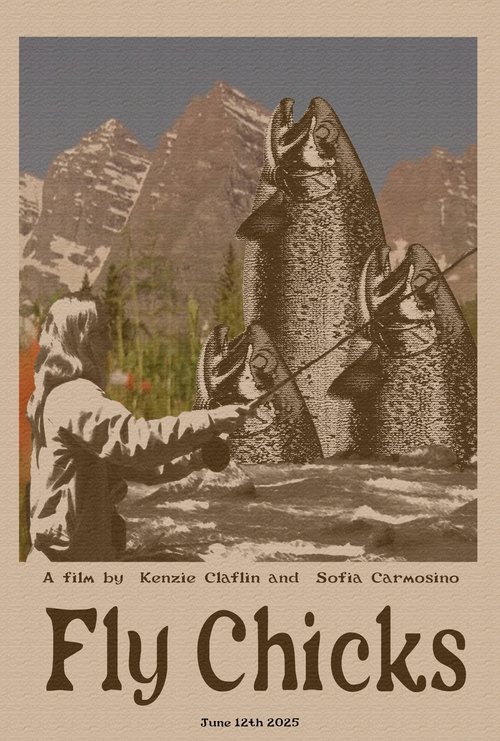
Fly Chicks (2026)
Directed by Kenzie Claflin
Yes · Woke
How we score movies →Consciousness Markers
The film explicitly adopts a feminist lens as stated in its description and marketing materials. Centering women's experiences and challenging male-dominated recreational spaces is the film's primary organizing framework.
The entire documentary centers on female subjects in a sport traditionally associated with masculinity, making representation the core organizing principle. The deliberate focus on three women fly fishers functions as counter-programming to historical male dominance of the sport.
The film appears to let its subjects and the sport itself speak rather than imposing heavy-handed narration or preachy messaging. However, the explicit feminist framing suggests some level of interpretive guidance for viewers.
While the film involves rivers and aquatic environments, there is minimal evidence it foregrounds climate crisis or environmental activism. The river appears primarily as setting rather than as subject of ecological concern.
The documentary may implicitly challenge historical narratives of fly fishing as exclusively male, but there is no evidence of deliberate historical revisionism or reframing of the sport's past.
No evidence suggests the documentary engages with racial dimensions of outdoor recreation access or participation. The focus remains on gender without apparent interrogation of how race intersects with fly fishing participation.
The documentary does not appear to critique the class dimensions of fly fishing, which remains an expensive sport requiring equipment, travel, and leisure time. No evidence of systemic economic critique.
No evidence of LGBTQ+ themes or representation in available information about the film. The documentary focuses on gender representation in fly fishing without apparent engagement with sexual orientation or gender identity.
No available information suggests the film engages with body positivity discourse or challenges appearance-based standards in sports or outdoor recreation.
No evidence of neurodivergence representation or inclusion in the documentary. The film focuses on gender representation without apparent engagement with neurodivergent accessibility.
Synopsis
Fly Chicks explores the practice of fly fishing through a feminist lens. The film follows three fly fisherwomen and their relationship with the river and its inhabitants, the sport, and their identities.
Why it received this score
Fly Chicks arrives as a modest documentary intervention into the male-dominated world of fly fishing, proceeding from the assumption that women's presence in outdoor recreation spaces constitutes a narrative worth examining through an explicitly progressive framework. The film follows three Colorado-based fly fisherwomen as they navigate their relationship to the river, the sport, and their own identities, which is to say it treats the act of women fishing as inherently meaningful subject matter. There is a refreshing lack of apology in this approach, though one must observe that the fishing itself remains the actual content rather than serving as mere vehicle for ideological exposition.
The documentary's commitment to centering female perspectives in a traditionally male recreational sphere does register as genuine cultural consciousness work, even if the execution appears relatively straightforward. The film aligns with broader contemporary movements toward gender parity in outdoor spaces and sports, as evidenced by initiatives like the Orvis 50/50 On the Water campaign. However, the specificity of its focus, combined with its deliberate feminist framing, suggests a project more interested in representation and visibility than in systemic critique. We see women fishing presented as both aspirational and ordinary, which occupies an interesting middle ground in contemporary progressive documentary practice.
What prevents a higher score is the film's apparent restraint regarding broader social interrogation. Fly fishing remains a sport requiring considerable disposable income and geographic proximity to quality rivers, factors the documentary does not appear to foreground. The focus on three individual women and their personal relationships to the water and the sport, while emotionally resonant, stops short of the kind of structural analysis one might expect from a film so deliberately framed through a progressive lens. Still, Fly Chicks represents the sort of niche documentary that contemporary streaming platforms and film festivals now actively seek out, fulfilling a specific cultural appetite for representation narratives in heretofore unconsidered domains.
Analysis generated by our Consciousness Algorithm