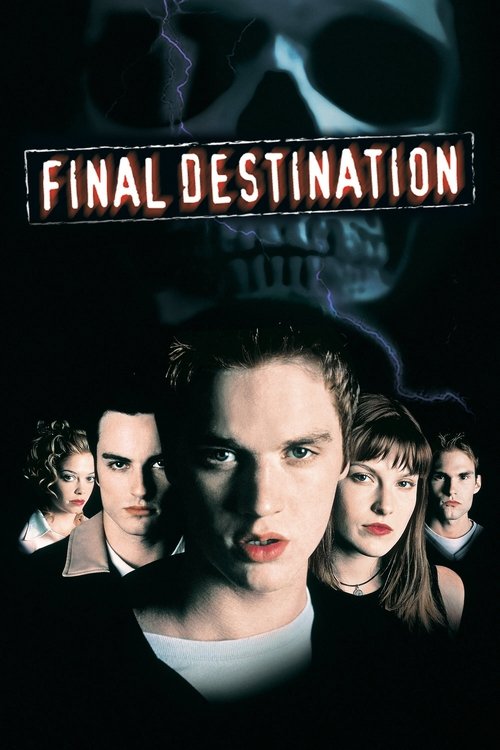
Final Destination (2000)
Directed by James Wong
No · Ultra Based
How we score movies →Consciousness Markers
The cast includes performers of color, but their inclusion appears incidental rather than a conscious choice. No character is defined by or centered on their racial or ethnic identity.
Female characters exist in the narrative but are not presented through any conscious feminist lens. The film treats them as interchangeable with male characters in the death sequences.
No LGBTQ+ characters, themes, or storylines present in the film.
The film contains no exploration of racial themes, racial dynamics, or racial consciousness of any kind.
No environmental themes or climate-related content present.
No critique of capitalism, wealth systems, or economic inequality present.
No themes or representation related to body diversity or body positivity.
No representation or engagement with neurodivergence or disability themes.
The film contains no historical elements or attempts at historical revisionism.
No preachy or preachy moments about social issues. The film remains focused on plot mechanics rather than social commentary.


Synopsis
After a teenager has a terrifying vision of him and his friends dying in a plane crash, he prevents the accident only to have Death hunt them down, one by one.
Why it received this score
Final Destination arrives as a pure, uncomplicated work of genre horror. The film concerns itself entirely with the mechanics of elaborate death sequences and the supernatural vengeance of an abstract force, leaving little room for social commentary of any kind. Director James Wong crafts a narrative that moves from premonition to pursuit without pausing to examine the world in which these killings occur. This is not a condemnation. The film succeeds on its own terms as a thriller that respects the audience's desire for spectacle over substance.
The cast includes performers of various backgrounds, though this diversity appears accidental rather than intentional. No character is defined by their race, gender, or any aspect of identity that would suggest conscious representation efforts. The screenplay focuses on the mechanics of fate rather than the experiences of the individuals subject to it. In this sense, the film remains pleasantly indifferent to the social consciousness that would come to dominate cinema decades later.
One observes in Final Destination a film that exists in comfortable ignorance of the cultural debates that would eventually reshape Hollywood. The absence of progressive sensibilities is not a failing but a feature of its era. It is precisely the kind of movie that would make contemporary critics weary, should they be forced to analyze it through the lens of modern expectations. Yet there it stands, immune to such scrutiny by virtue of its singular focus on the pursuit of death itself.
Analysis generated by our Consciousness Algorithm
Critic Reviews
“An unexpectedly alert teen-scream disaster chiller.”
“A terrific theatrical feature debut for television veterans Glen Morgan and James Wong.”
“Will no doubt be a hit and inspire the obligatory sequels.”