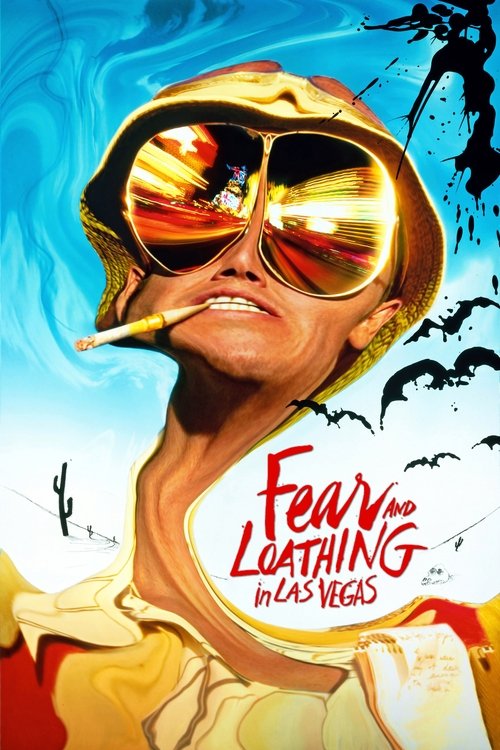
Fear and Loathing in Las Vegas (1998)
Directed by Terry Gilliam
No · Ultra Based
How we score movies →Consciousness Markers
The film critiques American institutions and capitalism through anarchic rejection and countercultural rebellion, but this operates as lifestyle nihilism rather than systematic ideological critique.
The film engages with 1970s American history through the lens of countercultural disillusionment, but without the contemporary revisionist framing that seeks to center previously marginalized perspectives.
The cast is overwhelmingly white and male, with female characters relegated to minor, objectified roles. No deliberate effort toward diverse representation is evident.
No LGBTQ+ themes or characters are present in the film. Sexual orientation is not addressed or explored.
Female characters exist primarily as objects within the male protagonists' narrative, with no feminist perspective or examination of gender dynamics.
The film contains no engagement with racial themes, racial consciousness, or systemic racial issues. Race is simply not a concern.
Climate change or environmental consciousness does not appear in the film. The desert setting is purely aesthetic and symbolic.
No engagement with body positivity or acceptance of diverse body types. Bodies are treated as vehicles for excess and intoxication.
Neurodivergence is not addressed or represented. Drug-induced altered states are treated as comedic rather than as neurodivergent experience.
The film eschews preachy messaging or moral instruction. It presents excess and chaos without attempting to educate or persuade the viewer toward particular values.


Synopsis
Raoul Duke and his attorney Dr. Gonzo drive a red convertible across the Mojave desert to Las Vegas with a suitcase full of drugs to cover a motorcycle race. As their consumption of drugs increases at an alarming rate, the stoned duo trash their hotel room and fear legal repercussions. Duke begins to drive back to L.A., but after an odd run-in with a cop, he returns to Sin City and continues his wild drug binge.
Why it received this score
Terry Gilliam's adaptation of Hunter S. Thompson's hallucinogenic memoir is a film of spectacular visual excess that documents the dissolution of the American Dream, yet it remains largely indifferent to the social justice frameworks that would later define progressive cultural discourse. The film's critique of American capitalism and institutional power operates on a countercultural wavelength rather than a contemporary progressive one, targeting the hypocrisy of law enforcement and the corruption of the political establishment through satire and psychedelic spectacle rather than through the lens of systemic oppression or demographic representation.
The film's approach to gender is notably thin. Female characters appear primarily as objects of the protagonists' drug-fueled misadventures, serving as backdrop to the male-centered narrative of disillusionment. There is no effort to center women's perspectives or to examine the gendered dimensions of either the counterculture movement or the systems the film critiques. The racial composition of the cast reflects 1998 Hollywood conventions rather than any deliberate commitment to representation, and the film contains no substantive engagement with racial consciousness or contemporary identity politics. The film's anti-capitalist energy is real but diffuse, channeled through anarchic behavior and hedonistic rejection rather than through structured ideological critique.
What we have here is a film preoccupied with the interior states of privileged white men navigating institutional systems that have failed to deliver on their promises. It is an important document of 1990s cinema and of Thompson's literary achievement, but it operates in a register altogether separate from contemporary social consciousness. The film's refusal to moralize, to educate, or to center marginalized perspectives places it outside the orbit of modern progressive sensibilities, even as its anti-establishment sentiment might superficially suggest otherwise.
Analysis generated by our Consciousness Algorithm
Critic Reviews
“It is as deeply satisfying as only the yowling, primal trashing of several rental cars and hotel rooms while in the grips of a hopelessly depraved ether jag and several sheets of blotter acid can be... A cinematic masterpiece.”
“Does for psychedelics what "Boogie Nights" does for cocaine; displaying in graphical detail the ultimate failure of drugs as an escape route.”
“The strongest magnet in this psychedelic morass is Johnny Depp who, as the story's antic, disgusting and seductive spirit guide, is impossible to look away from.”
“One long offensive treatise on just how vile two human beings can be.”