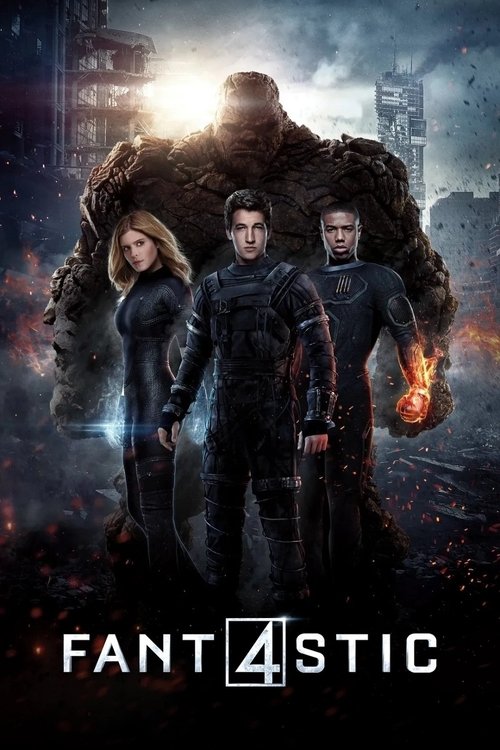
Fantastic Four (2015)
Directed by Josh Trank
No · Ultra Based
How we score movies →Consciousness Markers
Michael B. Jordan's casting as Johnny Storm represents notable diversity in a traditionally white superhero team, though the film makes minimal narrative effort to engage meaningfully with this choice or its implications.
The narrative centers on bodily transformation and physical alteration, but treats these changes as problems to be solved rather than exploring acceptance or positive reframing of physical difference.
While the casting of Michael B. Jordan as a traditionally white character invites racial discourse, the film itself engages with no substantive themes of racial identity or social dynamics.
Kate Mara plays Sue Storm, one of two female characters, but the film offers no substantive feminist commentary or meaningful character development beyond standard superhero tropes.
No LGBTQ+ themes, characters, or representation present in the film.
No climate-related themes or environmental consciousness present in the narrative.
The film contains no critique of capitalism, wealth inequality, or corporate power structures.
No representation or thematic engagement with neurodivergence or neurodivergent characters.
This is a contemporary superhero narrative with no historical content or revisionist historical claims.
The film contains no expository dialogue designed to educate audiences about social issues or progressive values.


Synopsis
Four young outsiders teleport to a dangerous universe, which alters their physical form in shocking ways. Their lives irrevocably upended, the team must learn to harness their daunting new abilities and work together to save Earth from a former friend turned enemy.
Why it received this score
The 2015 Fantastic Four represents a curious artifact in the contemporary superhero landscape, a film that possessed the raw materials for progressive casting choices yet lacked the cultural coherence or artistic conviction to leverage them meaningfully. Michael B. Jordan's casting as Johnny Storm generated considerable discussion upon the film's release, marking a notable diversification of the traditionally white superhero team, but this decision exists largely in isolation from the film's broader concerns. The narrative makes no substantial effort to engage with themes of racial identity, prejudice, or systemic barriers; Jordan's character is simply inserted into a story that might otherwise have been told with any actor of any background. One finds here the peculiar phenomenon of representation deployed as a checkbox rather than as an organic element of storytelling.
The film's engagement with body transformation and physical alienation, while thematically present, remains disappointingly superficial. The four protagonists experience radical bodily mutation as a consequence of dimensional exposure, a premise that might have yielded commentary on disability, bodily autonomy, or acceptance of difference. Instead, the narrative treats these transformations primarily as a source of angst and inconvenience, resolved through the application of scientific intervention and heroic teamwork. There is no interrogation of what it means to exist in a transformed body, no genuine reckoning with the social dimensions of physical difference. The film is content to view the body as a problem to be solved rather than a subject worthy of complexity.
Director Josh Trank's vision, hampered by well-documented production troubles and studio interference, ultimately collapses under the weight of its own dysfunction. The result is a film that stumbles toward inclusive casting without understanding why such choices matter, a film that touches upon themes of alienation without committing to their exploration. This is not progressive cinema; it is merely cinema that happens to include progressive casting decisions, a distinction that matters considerably when one is attempting to understand the cultural work a film actually performs rather than the work it pretends to perform.
Analysis generated by our Consciousness Algorithm
Critic Reviews
“It's done with an agreeable confidence and flair, the actors all fit comfortably in their roles and the effects are fun.”
“Blessedly unimportant, Fantastic Four cruises along on modest yet genuine comic-book pleasures.”
“A funky, fun film version of the famous Marvel superhero concoction, one of the earliest of the revisionist wave of supes and in some ways the most lovable or at least the most knowable.”
“From less a purist's standpoint than a seeker of serviceable junk food, this comprehensive waste of time is too bouncy to be an "Elektra" bummer, but should make Marvel mascot Stan Lee think twice about burning another lucrative bridge with unintentional hilarity.”