Fantastic Four (2005)
Directed by Tim Story
No · Ultra Based
How we score movies →Consciousness Markers
The cast includes Kerry Washington in a minor supporting role and Michael Chiklis as Ben Grimm, but casting appears colorblind rather than intentional. Diversity exists without conscious representation politics.
Sue Storm is presented as a capable scientist but functions primarily as romantic interest and emotional support. Her role lacks agency or feminist reframing of the character.
Ben Grimm's transformation into the Thing is played for comedic horror rather than body positivity. His appearance is treated as tragic disfigurement rather than celebrated difference.
No LGBTQ+ themes, characters, or representation are present in the film. The narrative focuses entirely on heterosexual relationships.
No racial themes, discussions, or consciousness are present. The film treats race as invisible and irrelevant to its narrative.
No environmental or climate-related themes appear. The cosmic accident that transforms the heroes raises no ecological concerns.
Dr. Doom's villainy stems from personal vengeance rather than systemic critique. No anti-capitalist messaging or examination of wealth inequality is present.
No neurodivergent characters or themes are present. The film makes no effort to represent or discuss neurological diversity.
The film contains no historical revisionism or reexamination of past events. It is a science fiction narrative divorced from historical context.
The film avoids preachy moralizing or lecture-like exposition about social issues. Its tone is purely entertainment-focused.


Synopsis
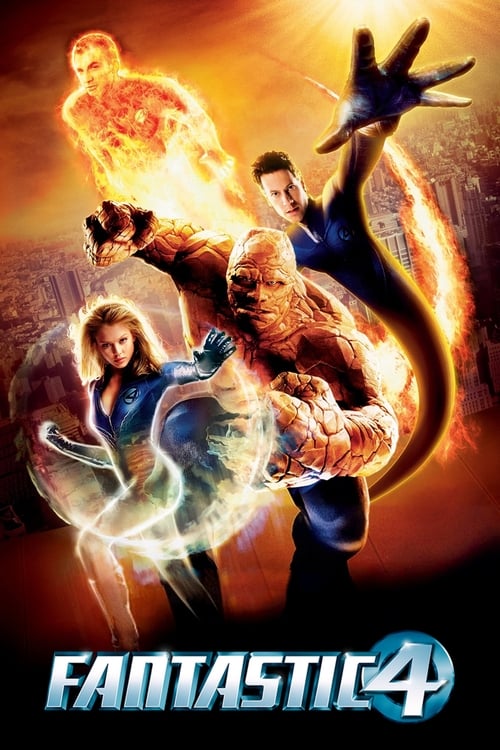
During a space voyage, four scientists are altered by cosmic rays: Reed Richards gains the ability to stretch his body; Sue Storm can become invisible; Johnny Storm controls fire; and Ben Grimm is turned into a super-strong thing. Together, these "Fantastic Four" must now thwart the evil plans of Dr. Doom and save the world from certain destruction.
Why it received this score
Fantastic Four arrives as a mid-2000s blockbuster entirely untethered from the social consciousness that would come to define contemporary cinema. The film presents its heroes and villains with the moral simplicity of a bygone era, where spectacular action sequences and quippy banter substitute for any meaningful engagement with identity or systemic structures. The cast is demographically varied in ways that feel incidental rather than intentional, the product of colorblind casting practices that preceded our current moment of heightened cultural awareness. Sue Storm occupies the screen primarily as a romantic interest and object of male anxiety, her scientific credentials a backdrop to her function as emotional anchor for the narrative. There is no visible concern with representation as a conscious choice, no nod to contemporary sensibilities about who deserves to be seen and in what capacity.
The film's ideological framework is thoroughly corporate and individualistic, focusing on personal transformation and scientific hubris without a whisper of systemic critique. Dr. Doom emerges as a villain motivated by wounded pride and capitalism, but the film treats these not as systemic problems worthy of examination but as the character flaws of a single deranged man. The Fantastic Four themselves are celebrated as exceptional individuals whose talents mark them as superior, a fundamentally conservative narrative that valorizes the extraordinary rather than interrogating the structures that produce inequality. There is no discussion of environmental cost, no reckoning with the ethics of cosmic experimentation, no body diversity beyond the Thing's monstrous transformation played entirely for comedy.
What emerges most clearly is the film's complete indifference to the markers that would later become cultural touchstones. This is not a film that debates its own values or anticipates progressive critique. It is a product of its moment, made in earnest ignorance of the conversations that would reshape Hollywood discourse within a decade. One must respect such purity of purpose, however much it might be read as cultural blindness in retrospect.
Analysis generated by our Consciousness Algorithm
Critic Reviews
“It's done with an agreeable confidence and flair, the actors all fit comfortably in their roles and the effects are fun.”
“Blessedly unimportant, Fantastic Four cruises along on modest yet genuine comic-book pleasures.”
“A funky, fun film version of the famous Marvel superhero concoction, one of the earliest of the revisionist wave of supes and in some ways the most lovable or at least the most knowable.”
“From less a purist's standpoint than a seeker of serviceable junk food, this comprehensive waste of time is too bouncy to be an "Elektra" bummer, but should make Marvel mascot Stan Lee think twice about burning another lucrative bridge with unintentional hilarity.”