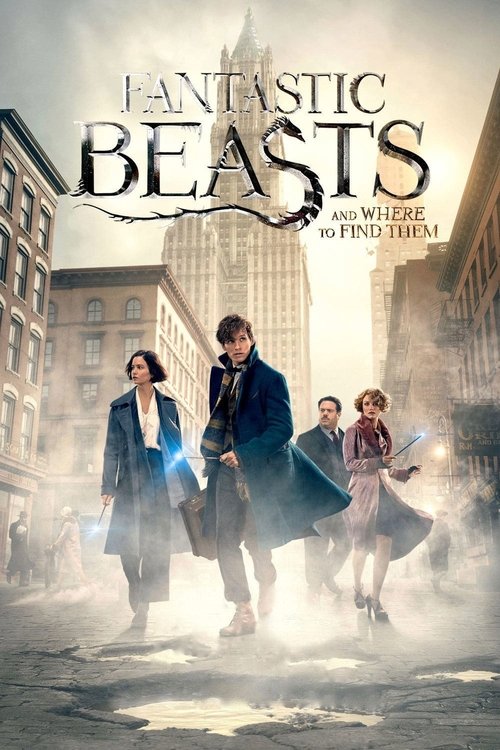
Fantastic Beasts and Where to Find Them (2016)
Directed by David Yates
Partly · Woke-Adjacent
How we score movies →Consciousness Markers
The film features Carmen Ejogo as MACUSA's president and includes performers like Zoë Kravitz and Ezra Miller, yet received criticism for insufficient overall diversity in the 1920s New York setting.
The film engages with persecution and hiding as metaphors, and the casting of a Black woman as the authority figure registers as deliberate, but the film does not deeply explore race or racism.
The film occasionally delivers messages about tolerance and fear of the other, but generally trusts its audience to understand the parallels rather than spelling them out relentlessly.
The film uses 1920s New York as a backdrop but does not significantly revise historical understanding. The magical world exists alongside history rather than reframing it.
The conflict between magical and non-magical societies suggests some critique of power structures, but the film does not meaningfully develop anti-capitalist themes.
Katherine Waterston's character is competent but not foregrounded as a feminist statement. The narrative does not center gender dynamics or women's agency.
Newt Scamander's awkwardness and social difficulty might suggest neurodivergence, but the film does not explicitly engage with or explore this characterization.
The film makes no particular statement regarding body diversity or body positivity. Characters are presented conventionally.
No LGBTQ themes are present in the film itself. Dumbledore's sexuality remains unaddressed here, only becoming a point of contention later in the franchise.
No climate consciousness is present in this fantasy adventure film set in 1926.


Synopsis
In 1926, Newt Scamander arrives at the Magical Congress of the United States of America with a magically expanded briefcase, which houses a number of dangerous creatures and their habitats. When the creatures escape from the briefcase, it sends the American wizarding authorities after Newt, and threatens to strain even further the state of magical and non-magical relations.
Why it received this score
Fantastic Beasts and Where to Find Them arrives as a curious artifact of a transitional moment in mainstream cinema's relationship with progressive messaging. J.K. Rowling, having positioned herself as a politically engaged voice, channels contemporary anxieties about othering and intolerance into a 1920s fantasy narrative. The film gestures toward these concerns through its central conflict, wherein magical beings must hide from a non-magical society that fears and would persecute them. This metaphorical framework possesses a certain earnestness, though the film seems uncertain whether to develop it meaningfully or simply deploy it as thematic wallpaper.
The casting decisions register as deliberate if somewhat perfunctory. Carmen Ejogo's presence as MACUSA's leader and the inclusion of performers like Zoë Kravitz and Ezra Miller suggest an awareness of contemporary expectations around representation. Yet the film faced legitimate criticism for failing to fully commit to diversity in a setting like 1920s New York, where such representation would not only serve progressive sensibilities but also reflect actual historical demographics. The later revelation that Johnny Depp would anchor the franchise introduced a complicating factor entirely outside the film's control, though the studio's continued association with him despite allegations of domestic abuse reflected a troubling set of priorities.
Where Fantastic Beasts most clearly stumbles is in its refusal to engage with any of the specific markers that define modern cultural consciousness. There are no LGBTQ narratives, no meaningful feminist project, no climate anxiety, and no systematic critique of capital. The film instead occupies an awkward middle ground, neither fully embracing its fantastic premise nor seriously interrogating the social anxieties it claims to address. One watches it and understands what the filmmakers intended, yet cannot quite shake the sense that the whole enterprise amounts to a series of gestures toward progressive thought rather than an actual engagement with it.
Analysis generated by our Consciousness Algorithm
Critic Reviews
“That entertainment enchanter JK Rowling has come storming back to the world of magic in a shower of supernatural sparks - and created a glorious fantasy-romance adventure.”
“The filmmakers beautifully balance goofy moments with Gothic darkness.”
“Shares the magical appeal of the “Harry Potter” movies, which should come as no surprise.”
“The problem with this spinoff is, like homework, you’d rather be doing something else with your time.”