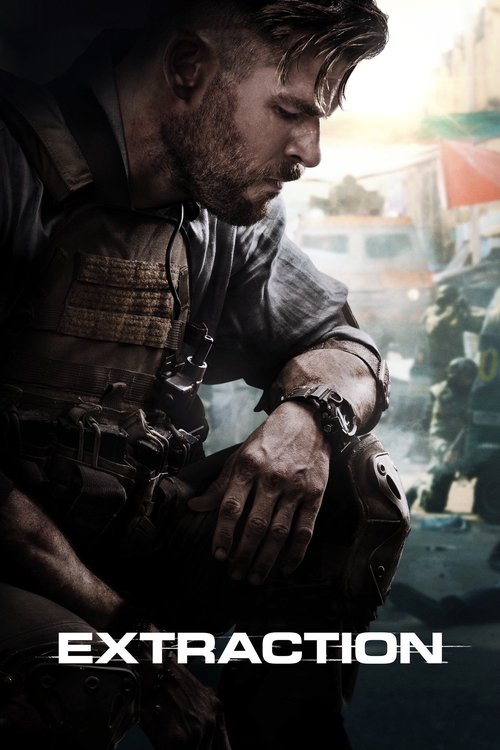
Extraction (2020)
Directed by Sam Hargrave
No · Ultra Based
How we score movies →Consciousness Markers
South Asian actors appear in supporting roles, but the narrative centers on a white American protagonist, and casting choices reflect demographic diversity without advancing any deliberate representation agenda.
While set in Bangladesh with South Asian characters throughout, the film does not engage with racial themes, systemic inequities, or cultural specificity beyond surface-level setting.
The antagonist is a drug lord, suggesting criminal enterprise is morally wrong, but no systematic critique of capitalism or wealth inequality emerges.
Minimal moralizing or preachy messaging; the film prioritizes action sequences over social commentary or character reflection.
No LGBTQ+ themes, representation, or subtext present in the film.
The narrative is male-dominated with minimal female presence and no feminist themes or critique.
No environmental themes, climate messaging, or ecological consciousness present.
The film adheres to standard action genre aesthetics with no body positivity messaging or representation.
No representation of or engagement with neurodivergent characters or experiences.
The film contains no historical elements or revisionist historical narrative.


Synopsis
A hardened gun-for-hire's latest mission becomes a soul-searching race to survive when he's sent into Bangladesh to rescue a drug lord's kidnapped son.
Why it received this score
Extraction represents the action genre in its purest, most unreflective form: a mercenary thriller content to stage elaborate set pieces across an exotic location without pausing to interrogate the political or social dimensions of its premise. The film assembles a multinational cast and shoots extensively in Bangladesh, yet these choices serve logistics rather than any larger cultural conversation. Chris Hemsworth rescues a child from a drug lord with the same emotional engagement one might expect from a man retrieving his car keys. The supporting cast, drawn largely from South Asian talent, functions primarily to populate the action sequences and provide local flavor to what remains fundamentally a white American hero narrative. There is no pretense here toward progressive sensibilities. The film simply does not care. This is, perhaps, the only honest thing about it. One watches explosions detonate across Dhaka with the knowledge that the geography exists only insofar as it provides interesting rooftops and congested streets for the protagonist to traverse. The absence of social consciousness is not a bug but a feature of the enterprise.
Analysis generated by our Consciousness Algorithm
Critic Reviews
“Extraction’s also not, by any stretch of the imagination, “good.” But at least it doesn’t waste everybody’s time.”
“Extraction constantly tries to score a flashy TKO — but never lands a decent body blow. ”
“Willis really might as well have phoned in his performance. Part of me doesn’t blame him, but another part of me would like him to cut it out. ”
“Lutz and fellow operative Carano are as warm and responsive as Ping-Pong paddles, batting lines back and forth lifelessly.”