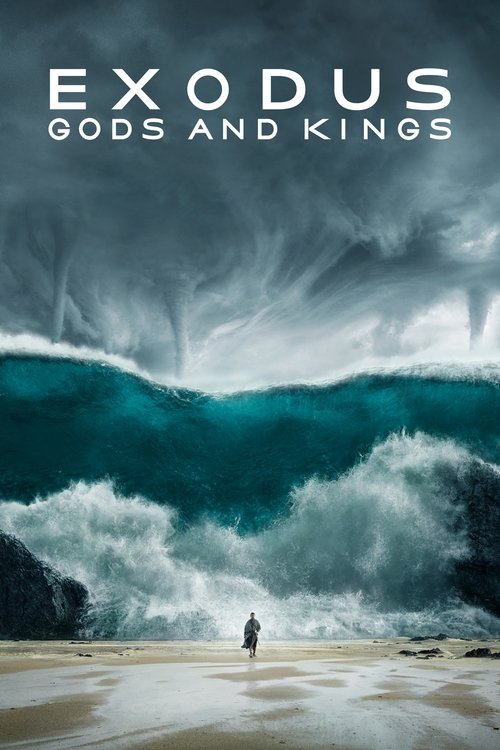
Exodus: Gods and Kings (2014)
Directed by Ridley Scott
No · Ultra Based
How we score movies →Consciousness Markers
The film substantially revises the Exodus narrative, rationalizing biblical plagues as natural disasters and significantly altering the story for cinematic purposes.
The film features significant whitewashing with white actors in Egyptian lead roles, though supporting cast includes non-white actors like Golshifteh Farahani, Ben Kingsley, and Hiam Abbass.
The narrative involves rebellion against authoritarian oppression and slavery, though this stems from biblical source material rather than modern anti-capitalist critique.
Female characters are minimal and relegated to background roles, with the narrative entirely male-centered around Moses and Ramses.
Some expository moments explain the plagues and political situations, but the film prioritizes action-adventure spectacle over preachy messaging.
While depicting historical slavery and oppression, the film does not engage with modern racial consciousness or commentary on contemporary racial issues.
No LGBTQ+ themes or representation present in this biblical epic.
No environmental themes or climate messaging present in the film.
No body positivity messaging or representation present.
No neurodivergent characters or representation present.


Synopsis
The defiant leader Moses rises up against the Egyptian Pharaoh Ramses, setting 400,000 slaves on a monumental journey of escape from Egypt and its terrifying cycle of deadly plagues.
Why it received this score
Ridley Scott's Exodus: Gods and Kings arrives as a textbook case of how a prestige production can stumble when confronted with the most basic questions of casting. Here we have a biblical epic set in ancient Egypt, populated primarily by white British and American actors in the leading roles, a choice that seemed contentious even in 2014 and has only grown more glaring in retrospect. Christian Bale's Moses and Joel Edgerton's Ramses dominate the screen with the confidence of men who have never been told no, while a more diverse supporting cast (Golshifteh Farahani, Ben Kingsley, Hiam Abbass) occupies the margins like an afterthought to the studio's accountants.
The film's broader approach to progressive sensibilities is equally muted. Scott treats the enslavement of 400,000 people as a historical backdrop for action sequences rather than a subject demanding serious moral reckoning. The female characters drift through the narrative as wives and mothers, their agency consistently subordinated to the male-driven plot. There is no contemporary consciousness at work here, no attempt to interrogate power structures through a modern lens. The story is instead a straightforward adventure tale dressed in the language of biblical spectacle, complete with rationalized plagues and CGI-assisted miracles.
What emerges is a monument to 2014 filmmaking sensibilities: expensive, internationally cast enough to mollify the appearance of diversity, yet fundamentally unconcerned with representation or contemporary social consciousness. The film does not attempt to preach progressive values, nor does it meaningfully engage with the historical and moral weight of its subject matter. It is simply a big-budget historical action film that happened to be made in an era when such films were beginning to face questions they were not equipped to answer.
Analysis generated by our Consciousness Algorithm
Critic Reviews
“As a fictional, big-budget, 3-D, epic interpretation of Moses’ journey, Exodus: Gods and Kings is spectacular.”
“What’s remarkable about Scott’s genuinely imposing Old Testament psychodrama is the degree to which he succeeds in conjuring a mighty and momentous spectacle — one that, for sheer astonishment, rivals any of the lavish visions of ancient times the director has given us — while turning his own skepticism into a potent source of moral and dramatic conflict.”
“Scott operates on a suitably Biblical scale and grounds the spectacle with rock-solid turns from Bale and Edgerton.”
“I can’t fault Ridley Scott for wanting to stage a version of this saga, just as I can’t ignore the fact that my dad tells the same tale every spring, but much more engagingly, in half the time and drunk on Manischewitz. ”