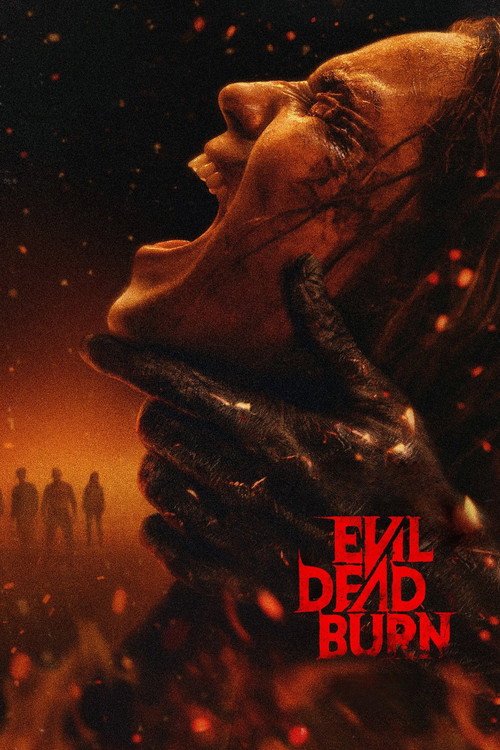
Evil Dead Burn (2026)
Directed by Sébastien Vaniček · $31.5M domestic
No · Based
How we score movies →Consciousness Markers
Swiss-Tunisian lead Souheila Yacoub and Māori-descent Luciane Buchanan anchor a deliberately diverse international ensemble. The casting serves the outsider-vs-insular-family narrative rather than functioning as pure demographic signaling, but the intentionality is visible.
The film centers a female survivor navigating coercive family control, continuing the franchise's pattern of female-led horror allegory. The feminist underpinning is genuine but expressed through genre mechanics rather than explicit advocacy.
The domestic abuse allegory is legible and intentional enough that critics debated whether the film's extreme gore undermined its serious thematic ambitions. However, the film withholds the pamphlet and trusts its imagery, keeping the sermonizing quotient low.
Alice's French heritage is used as a target for family xenophobia and micro-aggressions, establishing prejudice as a narrative texture. This is character-level detail, not a sustained racial consciousness argument.
No LGBTQ+ themes, characters, or subtext are present in the available research or metadata.
No climate themes, environmental messaging, or ecological subtext are present in any available material.
No anti-capitalist themes are present. The conflict is domestic and supernatural, not economic.
No body positivity themes are present. Bodies in this film are treated primarily as sites of extreme physical horror, which is a different thing entirely.
No neurodivergence themes or characters are identified in the research or metadata.
The film has no historical setting or revisionist historical framing.
Synopsis
After her husband's abrupt death, Alice seeks solace with his remaining family — descendants of a leading researcher on demonic possession. As her in-laws transform one by one into creatures that feed on fear, she comes to discover that the vows she took in life survive even in death.
Why it received this score
Sébastien Vaniček arrives at the *Evil Dead* franchise with the solemn air of a man who has read every bell hooks essay and still wants to film someone swallowing hot candle wax. *Evil Dead Burn* is the third entry in the franchise's modern standalone era, and it continues the series' admirable tradition of anchoring supernatural carnage in a specific social wound: addiction in 2013, maternal anxiety in 2023, and now domestic abuse and coercive family control. The result is a film that is, by most accounts, the bleakest and most humorless of the lot, which is saying something for a franchise built on a woman being assaulted by a tree. The domestic violence allegory is present and legible. It is also, per several critics, being illustrated with a jackhammer. Literally.
The film's most coherent progressive gesture is its casting. Souheila Yacoub, a Swiss-Tunisian actress of genuine intensity, plays Alice as an outsider subjected to the quiet cruelties of a family that has already decided she does not belong. The xenophobic micro-aggressions directed at her French heritage function as the film's social conscience, establishing that the real horror precedes the Deadites by several dinner conversations. Luciane Buchanan and Hunter Doohan round out an internationally diverse ensemble that feels less like a mandate and more like a natural consequence of a New Zealand shoot with a French director. The film is not lecturing. It is, however, brooding heavily, the way a person broods when they have a very important point to make and are trying to make it using dismemberment.
What keeps *Evil Dead Burn* from scoring higher on the cultural awareness index is its fundamental commitment to being a horror film first. Vaniček has stated his intention to blend Nouvelle Vague realism with grindhouse physicality, and the resulting tension between seriousness and splatter is the film's defining characteristic. The domestic abuse theme is real, the allegory is coherent, and the female lead's survival arc carries genuine emotional weight. But the film does not stop to explain itself. It does not issue a pamphlet. It trusts the audience to connect the bruises to the Deadites, and then it gets back to the business of being extremely unpleasant in a New Zealand farmhouse. In the current landscape, that restraint is almost conservative.
Analysis generated by our Consciousness Algorithm