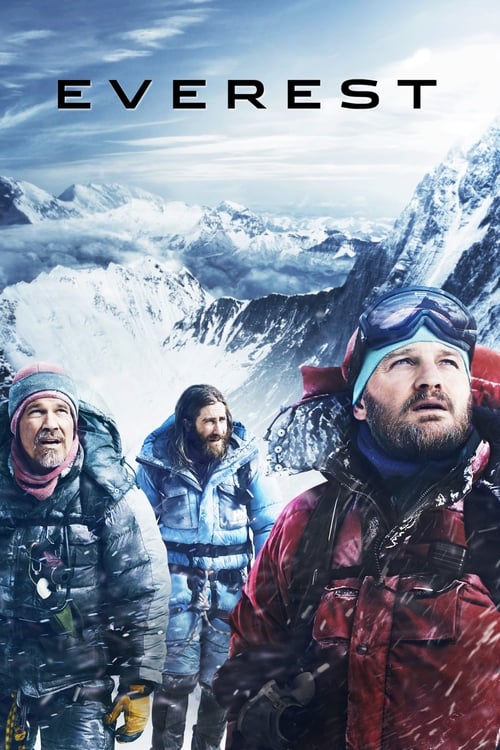
Everest (2015)
Directed by Baltasar Kormákur
No · Ultra Based
How we score movies →Consciousness Markers
Sherpa guides are depicted and represent some ethnic diversity, but they are treated as supporting infrastructure rather than developed characters with agency.
Cast is predominantly white and male. Female characters appear in supporting roles without meaningful agency or development in the narrative.
Women are present as wives, companions, and administrative support but lack agency or meaningful perspective in the male-dominated survival narrative.
A straightforward survival drama with minimal preachy social commentary or preaching, though some survival sequences carry implicit themes about human determination.
No LGBTQ+ representation, themes, or representation in the film.
No environmental messaging or climate consciousness. The mountain is portrayed as a natural obstacle without commentary on environmental impact.
Wealthy climbers paying for expeditions are depicted without critique or irony. No anti-capitalist messaging or class consciousness.
No body positivity themes or relevant representation in this survival-focused narrative.
No representation of neurodivergence or related themes in the film.
The film is based on true events and maintains historical fidelity rather than revising or reinterpreting the 1996 Everest disaster.


Synopsis
Inspired by the incredible events surrounding a treacherous attempt to reach the summit of the world's highest mountain, "Everest" documents the awe-inspiring journey of two different expeditions challenged beyond their limits by one of the fiercest snowstorms ever encountered by mankind. Their mettle tested by the harshest of elements found on the planet, the climbers will face nearly impossible obstacles as a lifelong obsession becomes a breathtaking struggle for survival.
Why it received this score
Everest stands as a monument to the enduring appeal of masculine struggle against insurmountable odds, a film so committed to its traditional survival narrative that it barely glances sideways at the broader cultural moment. The cast is substantially white, substantially male, and substantially focused on the individual will to conquer nature. Women appear in the frame, certainly, but primarily as wives, base camp administrators, or brief emotional anchors to justify the men's obsessions. The Sherpa guides who form the actual backbone of any Everest expedition are present but largely unmemorable, serving their historical function without much in the way of dimensional characterization.
The film's relationship to its source material (the 1996 Everest disaster) is one of respectful adherence rather than revisionist interpretation. Director Baltasar Kormákur treats the mountain as a simple, terrible fact of nature, not as a vehicle for commentary on climate, class, or environmental stewardship. The wealthy climbers paying for their summits are depicted without irony or critique, as participants in an expensive but morally neutral pursuit. There is no suggestion that perhaps the conquest of Everest raises uncomfortable questions about privilege, carbon footprint, or the exploitation of local labor.
What emerges is a thoroughly conventional disaster film, competent in its execution but utterly indifferent to social consciousness. It is the rare film that manages to be both earnest and empty, and Everest achieves this balance with remarkable consistency.
Analysis generated by our Consciousness Algorithm
Critic Reviews
“This is a movie you feel deeply in the pit of your stomach. Sometimes, it literally hurts to watch it.”
“This is what filmed spectacle used to look like — a trip to a place or time most of us could never see.”
“The mountain, grim and unforgiving, remains the star.”
“The director was Baltasar Kormákur, a gifted filmmaker from Iceland who shouldn’t be blamed for a case of industrial filmmaking gone wrong — the culprits in elaborate clunkers like this are usually the producers and the studios. ”