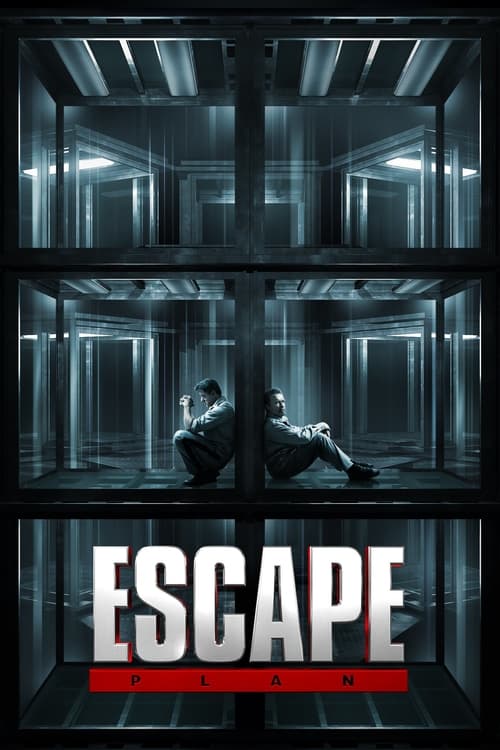
Escape Plan (2013)
Directed by Mikael Håfström
No · Ultra Based
How we score movies →Consciousness Markers
The cast includes diverse actors in supporting and prominent roles, but their casting appears incidental rather than intentional representation. Diversity exists without thematic engagement.
No LGBTQ+ themes, characters, or narrative elements are present in the film.
The film contains no feminist framework, gender critique, or female-centered narrative perspective.
No racial themes, perspectives, or consciousness regarding identity or systemic issues are evident in the narrative.
The film makes no reference to environmental concerns or climate issues.
There is no critique of capitalism, wealth inequality, or institutional power structures from a progressive perspective.
The film contains no body-positive messaging or interrogation of physical standards.
No neurodivergent representation or themes related to neurodiversity appear in the film.
The film does not engage with historical narratives or offer revisionist perspectives on history.
The film contains no preachy moments, speeches, or attempts to educate the audience about social issues.


Synopsis
Ray Breslin is the world's foremost authority on structural security. After analyzing every high security prison and learning a vast array of survival skills so he can design escape-proof prisons, his skills are put to the test. He's framed and incarcerated in a master prison he designed himself. He needs to escape and find the person who put him behind bars.
Why it received this score
Escape Plan is a specimen of remarkable cultural inertia, a film that has apparently received no transmission from the modern world. Sylvester Stallone and Arnold Schwarzenegger team up to break out of a prison, and the narrative proceeds with the mechanical efficiency of a 1985 action picture, simply relocated to 2013. The film demonstrates no awareness of contemporary social consciousness, progressive frameworks, or cultural concerns of any variety. It is, in the purest sense, a film about men doing things in a confined space.
The ensemble cast includes actors of various ethnic backgrounds and Amy Ryan as a supporting character, but this demographic reality carries no thematic weight or narrative significance. They are simply present, occupying the roles that the plot requires. There is no engagement with identity, perspective, or experience. The prison itself functions as nothing more than a set piece, a location for sequences of violence and problem-solving. One observes no critique of incarceration, no examination of justice systems, no feminist consciousness, no environmental concern, and certainly no attempt at cultural commentary of any kind.
The film exists in a hermetically sealed world where social consciousness has never emerged as a concept. It is neither good nor bad on the spectrum of progressive sensibility because it does not acknowledge that such a spectrum exists. This is not a political position so much as an absence of position, a film from no particular moment in cultural history despite its October 2013 release date.
Analysis generated by our Consciousness Algorithm
Critic Reviews
“Though this movie can’t match the formal qualities that made the pair’s most iconic films work, it goes a long way toward recapturing their sense of cheesy fun.”
“So chalk Escape Plan up as a pretty good action movie given an extra edge by the intelligent use of its two main actors.”
“Here are two action stars having fun; watching them work together as a team is a lot more entertaining than you might have expected. Try not to think too hard about it, and Escape Plan is stupid, stupid fun.”
“A dim anti-privatization parable that preaches a familiar strain of cynical, unchallenged self-righteousness in the face of widespread abuse of civil liberties. ”