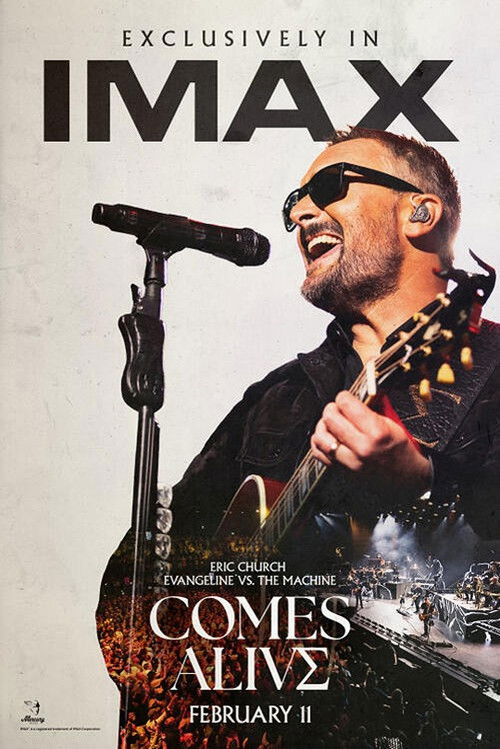
Eric Church: Evangeline vs. The Machine Comes Alive (2026)
Directed by Reid Long
No · Ultra Based
How we score movies →Consciousness Markers
Joanna Cotten provides vocal representation as a female performer in a supporting role, though this appears to serve the musical arrangement rather than any explicit diversity initiative. The ensemble is large but composition data is limited.
While the album carries thematic weight regarding spiritual matters and the good-versus-evil framework, it remains fundamentally a concert performance rather than preachy or preachy in its delivery. The spiritual content is expressed through music rather than explicit instruction.
The ensemble includes a diverse mix of musicians, and the album incorporates blues and soul influences, but this reflects musical tradition rather than explicit racial consciousness or commentary on systemic inequality.
While Joanna Cotten provides a female vocal presence, the album's thematic concerns are largely gender-neutral spiritual matters rather than explicitly feminist critique or consciousness.
While the album contains traditional country themes of authenticity and resistance to superficiality, this reflects artistic sincerity rather than anti-capitalist ideology or critique of economic systems.
The album's historical references appear traditional rather than revisionist, drawing on established country music lineage and Christian theological tradition without apparent reframing of historical narratives.
No identifiable LGBTQ+ themes or representation are evident in the album's lyrical content or the concert film's presentation. The work exists in traditional country-music territory.
No climate-related themes, environmental advocacy, or ecological consciousness appear in the album's content or the concert's presentation.
No body positivity themes, size inclusivity messaging, or related content is evident in the album or concert presentation.
The album contains no identifiable engagement with neurodivergent representation, mental health advocacy, or related contemporary frameworks.
Synopsis
Experience Eric Church's groundbreaking Evangeline vs. The Machine exclusively in IMAX. Filmed over two electrifying, sold-out nights at The Pinnacle in Nashville, TN. this one-of-a-kind concert event captures the CMA Entertainer of the Year performing his eighth studio album front-to-back before reimagining fan favorites like "Desperate Man," "Give Me Back My Hometown," "Sinners Like Me," "Mistress Named Music," and "Springsteen." Backed by a 6-piece band, 4-piece horn section, 4-piece string section, 8-piece choir, and powerhouse vocalist Joanna Cotten, Church transforms the stage into a thrilling fusion of country, rock, blues, and soul.
Why it received this score
This concert film documents Eric Church performing his latest album, a project steeped in Christian spirituality and the cosmic struggle between good and evil. The production features a formidable ensemble of musicians arranged by genre and function, creating a theatrical presentation that Church himself has described as deliberately cinematic. The film exists almost entirely in the register of faith-based art rather than contemporary cultural critique, which is to say it concerns itself with eternal matters rather than the specific anxieties of progressive cultural movements in 2025.
Church has positioned himself explicitly as a non-political independent who resists partisan identification while defending artists' rights to speak their minds. The album's thematic content revolves around loyalty, authenticity, resilience, and spiritual conviction. The choice to include vocalist Joanna Cotten, who brings additional vocal power to the proceedings, represents a modest gesture toward vocal representation without any apparent ideological subtext. The string and horn sections, though musically rich, serve purely aesthetic purposes.
The film's cultural consciousness registers as minimal. It contains no identifiable engagement with contemporary social justice frameworks, climate advocacy, body positivity metrics, or neurodivergent representation. It is, essentially, a high-production concert film wrapped in Christian theology. For those seeking progressive cultural markers in their entertainment, this will read as pleasantly inert. For those fatigued by such markers, it offers a respite into older artistic traditions.
Analysis generated by our Consciousness Algorithm