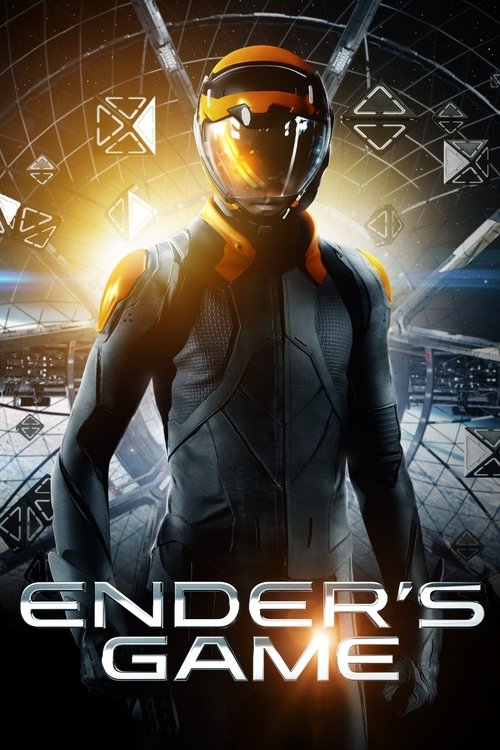
Ender's Game (2013)
Directed by Gavin Hood
No · Ultra Based
How we score movies →Consciousness Markers
The film includes Viola Davis and Nonso Anozie in supporting roles, reflecting demographic diversity in secondary positions. However, the narrative structure privileges the white male protagonist, and minority characters lack substantive agency in the story's moral framework.
Hailee Steinfeld's character exists as a functional military officer without particular emphasis on gender dynamics or feminist critique. The film does not explore or foreground feminist themes.
While the cast includes actors of color, the film demonstrates no conscious engagement with racial themes, identity, or systemic racial dynamics. Minority characters are integrated into the military hierarchy without commentary.
Ender's exceptional intelligence and strategic brilliance might be interpreted as neurodivergent traits, but the film does not explicitly frame or explore neurodivergence. The portrayal remains within conventional genius archetype conventions.
While the film explores moral themes about the ethics of warfare and childhood exploitation, it presents these through narrative and character action rather than explicit preachy lecturing. The tone remains dramatic rather than preachy.
No LGBTQ+ themes, representation, or subtext are present in the film. The narrative contains no gay, lesbian, bisexual, or transgender characters or storylines.
The film contains no climate-related themes, environmental critique, or climate consciousness. The narrative focuses on interplanetary military conflict, not environmental concerns.
No anti-capitalist or class critique themes are present. The film does not interrogate wealth, corporate power, or economic systems.
The film contains no body positivity themes, disability representation, or non-normative body discourse. Characters conform to conventional physical standards without question.
The film does not attempt to revise historical narratives or present alternative interpretations of historical events. It is set in a fictional future.


Synopsis
Based on the classic novel by Orson Scott Card, Ender's Game is the story of the Earth's most gifted children training to defend their homeplanet in the space wars of the future.
Why it received this score
Ender's Game presents itself as a straightforward adaptation of Orson Scott Card's 1985 novel, concerned primarily with the philosophical and moral dimensions of childhood, warfare, and complicity. The film assembles a cast that includes Viola Davis and Nonso Anozie in supporting military roles, satisfying the baseline expectation that supporting characters reflect contemporary demographic realities. These actors perform competently within the film's military hierarchy, though the narrative structure reserves all substantive moral complexity and agency for its white male protagonist. The film does not interrogate this distribution of narrative weight or suggest any consciousness that it might merit interrogation.
The adaptation maintains the novel's thematic focus on abstract questions of ethics and the burden of knowledge. It does not layer contemporary social commentary onto its material, nor does it attempt to foreground issues of identity, representation, or systemic power beyond the film's central conceit of a military meritocracy. The female characters, including Hailee Steinfeld's Mazer Rackham, occupy functional positions within the narrative apparatus rather than serving as vessels for exploring modern progressive sensibilities. The film's militaristic setting and hierarchical worldbuilding remain fundamentally unconcerned with how power structures might reflect or reinforce contemporary social anxieties.
This restraint, whether intentional or incidental, leaves the film largely untouched by the cultural markers that define modern progressive cinema. The result is a work that feels genuinely indifferent to contemporary social consciousness, operating instead within the registers of classical science fiction adventure and moral philosophy.
Analysis generated by our Consciousness Algorithm
Critic Reviews
“Like its hero, Ender’s Game relies on brains more than brute force. An absorbing portrait of Lord Of The Flies-style morality housed in imaginative sci-fi casing.”
“At times Ender’s Game throws so many metaphors and moral dilemmas our way, we almost forget to appreciate the stunning and gorgeous visuals covering every inch of the screen. Almost.”
“Ender’s Game is more than a parable about bullying, or a disquisition on the concept of the “just war.” It’s also a rousing action film, especially in Imax.”
“Not only does Ender's Game have many scenes in zero gravity, but this zero-sum fiasco has zero drama, zero suspense, zero humor, zero charm and zero appeal.”