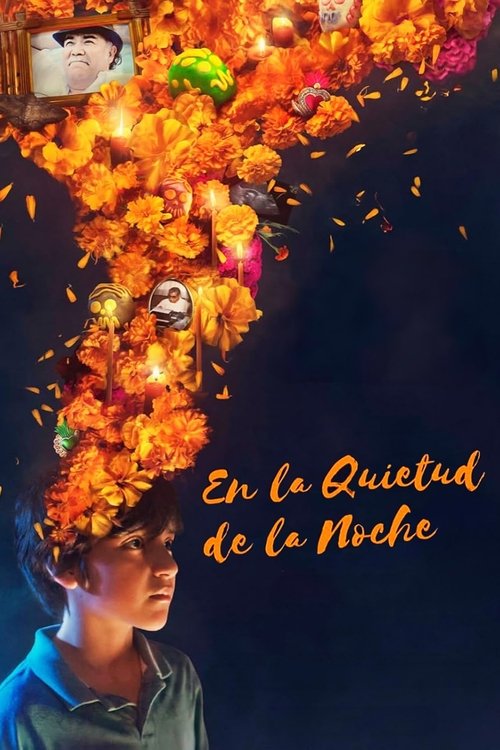
En la Quietud de la Noche (2026)
Directed by Aristides Mantilla
No · Ultra Based
How we score movies →Consciousness Markers
The cast is predominantly Mexican with Yalitza Aparicio, a notable indigenous actress, in a supporting role. However, the casting appears driven by story authenticity and cultural specificity rather than representation strategy.
The film celebrates Mexican cultural traditions and features indigenous representation, but does not appear to foreground systemic racism or racial justice as explicit thematic concerns.
The film centers on family bonds and maternal care, but these themes appear organic to the narrative rather than expressions of feminist ideology or contemporary gender politics.
The film engages with Mexican indigenous traditions and Day of the Dead customs, but does not appear to reframe or reinterpret historical events or colonial narratives.
While the film explores themes of belief versus skepticism, it does not adopt a didactic or preachy tone. It prioritizes emotional storytelling over ideological instruction.
No LGBTQ+ themes, characters, or subtext are evident in this family-centered story about intergenerational connection during Day of the Dead.
No climate consciousness, environmental messaging, or ecological themes appear in this intimate family drama set during a spiritual celebration.
The film contains no critique of capitalism, class struggle, or wealth inequality. It is focused entirely on personal and spiritual matters.
Body positivity messaging is absent. The film does not foreground or celebrate diverse body types, nor does it critique beauty standards.
No representation of neurodivergent characters or exploration of neurodiversity themes are present in this narrative about family and memory.
Synopsis
On the Day of the Dead, a 10-year-old kid anxiously awaits a visit from his grandfather from the afterlife to finally meet him
Why it received this score
This short film presents itself as an intimate family meditation on Mexican death rituals and intergenerational memory, anchored by Yalitza Aparicio's return to cinema six years after her Oscar nomination for "Roma". The narrative centers a child's longing to meet his deceased grandfather during the Day of the Dead, exploring how memory and familial bonds transcend mortality. While the subject matter involves indigenous Mexican traditions and features a predominantly Mexican cast, the film appears motivated by genuine cultural specificity rather than contemporary progressive signaling.
The film's cultural grounding in Veracruz traditions and its focus on family authenticity over didactic social messaging keeps it largely free from the markers we track. Aparicio's presence carries certain contemporary cultural weight, but her casting functions within the story's organic context rather than as a diversity checkbox. The exploration of parental skepticism toward the supernatural encounter suggests a conflict between modern rationalism and traditional belief, though this appears to be a thematic concern rather than a vehicle for progressive commentary about epistemology or indigenous knowledge systems.
The work remains primarily concerned with human connection across the boundary between life and death. There is no evidence of climate consciousness, anti-capitalist messaging, body positivity advocacy, or deliberate neurodivergence representation. The film neither lectures about systemic injustice nor revises historical narrative. It simply attempts to capture something emotionally true about how the dead persist in memory and love.
Analysis generated by our Consciousness Algorithm
Critic Reviews
“However, the climax appears clumsily contrived in order to get a conventional ending. Too bad, since themovie'smood and well-placed ambiguities deserve better.”
“On the Day of the Dead, a 10-year-old kid anxiously awaits a visit from his grandfather from the afterlife to finally me…”
“El director tiene nulo conocimiento del lenguaje cinematográfico,laformaenque está hecha esdelo más simplona y hasta floja, una verdadera lástima porque el tema daba para más, ojalá que los organizadores eleven sus estándaresenfuturas ediciones respecto a cortos.”