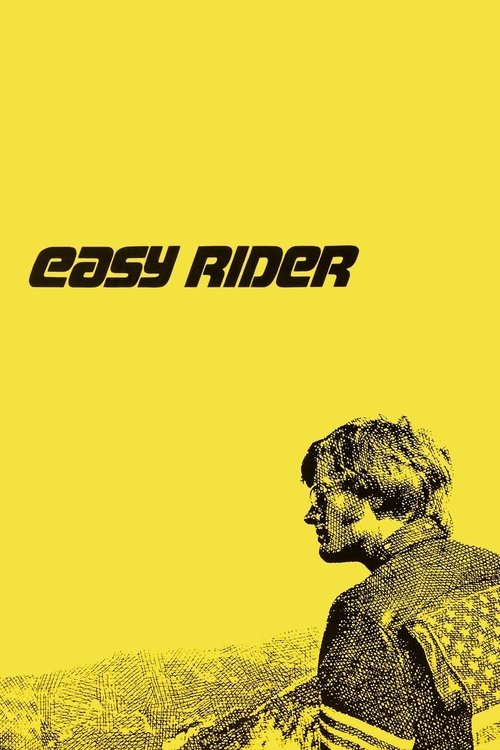
Easy Rider (1969)
Directed by Dennis Hopper
No · Ultra Based
How we score movies →Consciousness Markers
The film celebrates rejection of materialism and consumer culture through its hippie protagonists' dropout lifestyle and spiritual quest, though this remains tied to individual freedom rather than collective action.
While the film is primarily experiential and narrative-driven, it contains some preachy moments about freedom versus conformity and includes a final monologue critiquing American hypocrisy.
While the film depicts American racism through the hostility faced by the protagonists, it does so without centering Black perspectives or including meaningful representation of other races.
The cast is almost entirely white and male. Women appear only in peripheral, sexualized roles with no character development or agency.
Women are depicted as objects of desire or prostitutes. Female characters lack agency and exist primarily to serve the narrative of male protagonists.
No LGBTQ+ themes, characters, or representation present in the film.
No environmental themes or climate-related content present in the film.
Body positivity as a concept does not apply to this 1969 film, which does not engage with modern body image politics.
No representation of neurodivergence or disability in the film.
The film does not engage in historical revisionism, instead depicting contemporary 1960s counterculture and politics.


Synopsis
Wyatt and Billy, two Harley-riding hippies, complete a drug deal in Southern California and decide to travel cross-country in search of spiritual truth.
Why it received this score
Easy Rider arrives as a relic of 1960s counterculture, celebrated for its critique of American conformity and materialism, yet compromised by its inability to imagine meaningful roles for women or substantive engagement with racial inequality. The film's two protagonists peddle their rejection of the establishment while remaining entirely absorbed in a masculine fantasy of freedom, one populated by female characters who serve as scenery or sexual objects. The narrative does position these bikers as victims of intolerance and violence, which speaks to an awareness of social conflict, but this awareness extends only as far as the white male experience.
The film's anti-capitalist sensibilities are its strongest modern credential, though even these feel more incidental than intentional. Wyatt and Billy's rejection of materialist ambitions and their quest for authentic experience reads as genuine critique of consumer culture, yet it remains bound to a kind of self-absorbed individualism that prioritizes personal liberation over collective struggle or systemic change. The famous final passage offers a devastating commentary on American violence and hypocrisy, suggesting the filmmakers understood something fundamental about the nation's contradictions.
Ultimately, Easy Rider functions as a historical document of a specific moment in progressive thought. It captured important truths about 1960s America while being blind to others. Modern viewers will recognize it as an artifact of its era, one that celebrated a certain kind of social consciousness while remaining trapped within the limitations of its own perspective. The film's legacy is complicated by what it failed to see.
Analysis generated by our Consciousness Algorithm
Critic Reviews
“Fonda and Hopper’s now-classic film hit the old guard with the force of a rifle shot to the head. [Review of re-release]”
“Someday it was inevitable that a great film would come along, utilizing the motorcycle genre, the same way the great Westerns suddenly made everyone realize they were a legitimate American art form, Easy Rider is the picture.”
“A finely observed film but insufficiently developed as a satire of middle America. [Review of re-release]”
“Looked at from the vantage point of more than three decades later, the movie is frequently incoherent; the dialogue sounds like it was being made up on the spot; and the acting is spotty in many cases. [01 May 2004, p.70]”