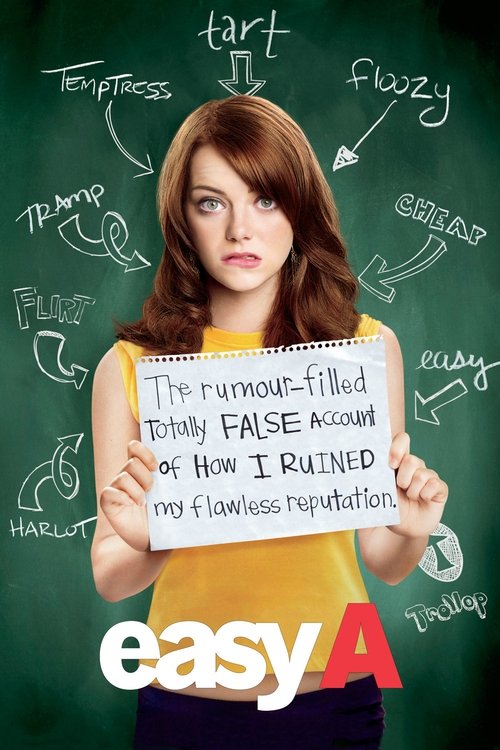
Easy A (2010)
Directed by Will Gluck
No · Based
How we score movies →Consciousness Markers
The film engages with gender double standards and slut-shaming critique, with characters explicitly articulating the unfairness of policing female sexuality. However, this remains comedic rather than systemic analysis.
Gay male students appear in a subplot where Olive helps them gain acceptance through false rumor-spreading. The portrayal is comedic and somewhat reductive, suggesting they need heterosexual validation rather than authentic representation.
Some scenes contain explicit articulation of problems with double standards and slut-shaming, but these are relatively light-handed and integrated into comedic moments rather than preachy lectures.
Emma Stone leads with a reasonably diverse supporting cast for 2010, but there's no deliberate progressive representation strategy. The casting reflects era norms rather than conscious inclusion.
The predominantly white cast and setting receive no commentary or deliberate representation. Racial consciousness is entirely absent from the film's concerns.
No climate-related content or messaging appears in the film.
The film contains no anti-capitalist critique or messaging. It operates as a straightforward teen comedy without economic analysis.
No body positivity messaging or celebration of diverse body types. The film operates within conventional beauty standards.
No representation of or engagement with neurodivergence.
While the film references The Scarlet Letter, it does not attempt historical revisionism. It's a contemporary high school setting.


Synopsis
Olive, an average high school student, sees her below-the-radar existence turn around overnight once she decides to use the school's gossip grapevine to advance her social standing. Now her classmates are turning against her and the school board is becoming concerned, including her favorite teacher and the distracted guidance counselor. With the support of her hilariously idiosyncratic parents and a little help from a long-time crush, Olive attempts to take on her notorious new identity and crush the rumor mill once and for all.
Why it received this score
Easy A arrives as a film caught between two eras, its sensibility rooted firmly in pre-woke comedy while its subject matter concerns itself with the very double standards that contemporary social consciousness would later foreground. Olive's navigation of slut-shaming and sexual reputation at her high school does constitute a critique of gendered hypocrisy, but the film deploys this critique primarily as comedic fodder rather than as explicit social commentary. The screenplay allows characters to articulate the unfairness of the scarlet letter dynamic, yet the overall tone remains one of entertainment first, consciousness second.
The film's treatment of its supporting cast reveals its limitations when measured against contemporary standards. The gay male students whom Olive assists function largely as punchlines and objects of her strategic social maneuvering rather than as characters with agency or interiority. They require Olive's heterosexual intervention to gain acceptance, a dynamic that reads as reductive even by 2010 standards. Meanwhile, the racial composition of the cast and school remains unremarked upon and unmarked, reflecting the casual whiteness of teen comedies of that period without any attempt at deliberate representation or acknowledgment.
The film articulates certain feminist grievances through the grammar of mainstream comedy, offering legitimate observations about how women's sexuality is policed while male sexuality is celebrated. Yet this remains more instinctive cultural critique than conscious progressive positioning. The film lacks the lecture energy, the explicit social consciousness, the deliberate representation choices, or the intersectional awareness that would characterize a genuinely progressive project. It is, in essence, a smart teen movie that happens to notice sexism without organizing itself around the project of dismantling it.
Analysis generated by our Consciousness Algorithm
Critic Reviews
“This is the kind of movie about teenagers that an adult audience should embrace. It's simply that good, and Stone is nothing short of wonderful. ”
“Why, then, am I so pleased with Easy A? Because the movie, despite a few flaws, seems to have been made by higher intelligence, and because it catapults Emma Stone into a higher place reserved for American actors who can handle elevated language with casually dazzling aplomb.”
“It's a funny, engaging comedy that takes the familiar but underrated Emma Stone and makes her, I believe, a star. ”
“The script, credited to one Bert V. Royal, seems to have been run through an out-of-control sass machine (seriously, it'll make you appreciate Diablo Cody's tact). ”